Thursday, 17 March 2022

Stephen Carr - Golden Goal

STEPHEN CARR 


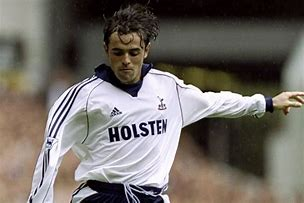
For a three year period, Stephen Carr was possibly the most consistent right-back in the Premier League. A robust, stout individual but one who despite the perception of being unathletic could and did not stop running for the full 90 minutes. A reliable defender who would hassle left wingers not allowing them opportunities to deliver killer balls, but it was in the other final third that he became a somewhat hidden gem.

On October 23rd, 1999 he famously scored a rocket against Manchester United in a rain-soaked encounter, the goal soared past Fabien Barthez from a 45 degree angle from 30 yards out, the shot was as true as an arrow.

That goal won Carr great acclaim, and anytime he ventured forward he was encouraged to repeat the trick and while lightning rarely strikes twice, there is another goal he scored that deserves further appraisal.

On the last day of the season, Sunday 14th May 2000 – the same season as the Manchester United strike - Tottenham were at home against a Sunderland side that had exceeded expectations finishing 7th with Kevin Phillips scoring over 30 goals in a season.

In a drab typical end of season affair not much is memorable in a 3-1 home victory apart from near the end in the 82nd minute.  With Sunderland throwing bodies forward for an equaliser, Carr intercepted a cross from the right hand side and pounced on his own interception 30 yards from his own penalty area. He headed the ball clear away and gave chase when others would have deemed it a lost cause, he kept the ball in play by the touchline and found open space ahead of him due to the over-commitment of Sunderland going forward. Then Carr found himself alone 25 yards from goal devoid of support from teammates.  As he entered the penalty area he tried something.  

Ahead of him the Sunderland keeper Thomas Sorenson is off his line not sensing danger and with the ball at the corner of the 18 yard box, he attempted to pull off an audacious chip to the far corner and has the chip went in the air, a hush descended around the stadium as they waited for the ball to land.

When it landed in the far side of the net, a beautiful roar of disbelief, admiration and joy.  Stephen Carr had just put the icing on a convincing win with a goal that was more unbelievable due to it being achieved by a right back - it was a goal of speed, determination and at the end pure grace akin to another former Tottenham hero who scored a wonderful chip – Glenn Hoddle (v Watford, 1984).

Being Tottenham fan, it seems without the promise of glory in competitions, we still have great goals to savour and remember from Hoddle to Waddle and Gascoigne to Ginola.  Stephen Carr provided it not once but twice in a season; the United goals is more fondly remembered – the opposition, the weather, the surprise of the strike and it lives on in the annals of Sky Sports’ coverage. Yet the only clip of the goal is a grainy YouTube clip that seems to be running at a different speed, yet you can see how audacious the goal is. A goal scored by a player at the height of his confidence capable of taking on a whole team on his own as if you were in the playground.


Playing right back yourself growing up there is an affinity towards players like Carr and those who came before and after him; at Tottenham there have been some good versions of the right back from Dean Austin and Alan Hutton to the modern day Kyle Walker and Kieran Trippier.  Carr was at the forefront of an altering landscape for full backs. Gone were the days were you were meant to just defend like Lee Dixon and Nigel Winterburn, a full back could venture forward if your end product of crossing or shot was worthwhile and you can see it now in the development of players such as Gareth Bale, Seamus Coleman and now Trent Alexander Arnold – these players dazzle and entertain but all bomb forward seeking to score goals but they can do so due to the initial ventures of players like Stephen Carr.


Monday, 7 March 2022

FILM RE-VIEW: The Lost City of Z


James Gray is an established American film director, one who is capable of making rich dramatic pictures based around class and hierarchy in small structures creating fissures of tension as two male protagonists go head-to-head such as Mark Wahlberg and Joaquin Phoenix as small time hoodlums in The Yards and the pair reuniting again in We Own The Night as Wahlberg and Joaquin Phoenix take down the mob.

Gray has a fondness for America especially the city of New York, yet following a miss with Two Lovers (Phoenix again) he made the admired The Immigrant, an attempt at dealing with the history of New York and the Ellis Island influx of immigration following the first world war. A rich looking film detailed in production design, costume and faithfulness to the era.

His next film was to be his most ambitious film to date, a story about one man's desire and obsession in finding proof of an early civilization deep in the Amazonian jungle. 

We first meet Major Percy Fawcett (Charlie Hunnam) in Cork, Ireland in 1906 - a servant of the British Army on placement in need of career elevation but let down by a 'poor choice of ancestors' and so stuck in his ways. Until salvation comes from the Royal Geographical Society who request him to London to help with their need to mark out the correct border between Bolivia and Brazil, where the prize is rubber at the end result. Fawcett has done studies of cartography and longs to gain credit for his work in his own right and the adventures of an explorer to boot.

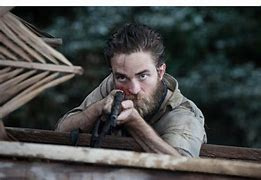
The first trip sees him accompanied by his aide-de-camp Mr. Costin (Robert Pattison) who with native guides travel along the treacherous River Verde to find the source of the said river. After much tension and obstacles - tribes, disease, piranhas - they reach the start of the river, a mystical looking waterfall that once explored further offers trinkets of a by-gone civilization older than that of Machu Picchu, evidence that natives in the jungle forged a lifestyle of precision living off the land wholly, uniquely and succinctly banishing the idea that they be savages and less than human.


Fawcett returns to give his findings and is met by resistance by the entitled pomposity of his privileged world, he promises to return with a new member James Murray - who conquered Antarctica - in his stead. Murray turns out to be a deadweight, unfit for the jungle and unbecoming to the work involved. He restricts their progress, and save killing him they send him to a camp but Murray pours oil all over their supplies cutting short Fawcett's attempt. His rancour towards Murray back in London in 1914 is overshadowed and forgiven as the world is at war with Germany. 

Fawcett is then given a brigade in the Somme in 1916, the push leads him to falling ill succumbed by chlorine gas. He survives and is given a promotion he craved to Lieutenant Colonel and this gives him the chance if his body allows to return to the jungle for one last attempt to find the lost city. He sets off on his trip with his son Jack (Tom Holland) in 1923, the world has changed following the Great War and the chance to seek something for fear of a war happening again is Jack's wish.

Fawcett's obsession is dealt with expertly, he is not a white saviour but a man who respects those who are living off the land and as he states, 'we are all made of the same clay'; yet the undying wish to find this civilization is not his undoing but more so a man who was a few years too early for his wishes to come true and if there was no war perhaps he would have made his discovery.


The point to be made of this film and one Fawcett attempted to make was that for us as a modern day civilisation to progress and change we need to look back at that which came before, learning from mistakes and setting about change with respect to others and all. Fawcett's generation did not learn as following his disappearance in 1925 only 15 years later the world was at war again. And as a write this, another tyrant is attempting carnage and chaos in Ukraine.

Like all of Gray's work there is an attention to period detail in terms of costume and make-up, the mise-en-scene of production design, and the set design of the drawing rooms of London from the Geographical Society to the club when Fawcett meets Costin asking for him to join him for one last hurrah. 

There are also some lovely painterly shots captured by Gray and his DoP, Darius Khondji, especially when Fawcett and Son are leaving for their last expedition, as the car looks back at wife Nina (Sienna Miller) and the remaining children the camera lingers and the house overshadowed by a large tree and beautiful cloud filled skyline is reminiscent of the work of Constable or Turner.


The final act is expertly handled, the dread of impending doom upon the two Englishmen in the darkest of territories a la Apocalypse Now and the flashback of Fawcett at the christening of Jack, where Nina reads a letter to her husband she wrote in case she did not survive childbirth, borrowing a quote from Robert Browing 'A man must learn to reach beyond his grasp, or what's a heaven for?'

That encapsulates Fawcett neatly, a flawed man almost in name and in life, an idealist whose desire to seek wisdom and make up for those other white men who enslaved the natives before him, he calls to mind a quote I read recently, 'the search for wisdom is lost on that man who is wise', Fawcett had wisdom but it was perhaps the unwillingness of his contemporaries and peers that remains the most worrying aspect of this period. The complacency of this gilded age set in their ways, fearful of change and the new.


An attempt by Hunnam to reach for the mainstream attention by playing a flawed lead across many years, Pattison's attempt to stay hidden from his good looks in the media's age and a platform for Holland to show some range.

The final scene with Nina seeking one last rescue attempt of her departed Percy and Jack, is met by her leaving the Royal Geographical Society through a foliage entrance of the premises, as if she is returning to nature amidst all the chaos and to borrow from The Man Who Shot Liberty Valance, 'when we left it was a wilderness, now it is a garden' yet sometimes we yearn for those stiller, more quieter times in our life but perhaps the shot is Nina making peace with the realisation that her two men will not return to her and so she is accepting of that and joining them spiritually in their resting place amidst the jungle. 

When this film was first released it was marketed as a mature adult tale of adventure and yarn yet for me it is more like a Sunday afternoon matinee film that needs to be re-assessed as a cautionary tale full of adult themes but enveloped by ambition and opportunity. A good film that should be seen by many and all as it serves as a reminder that the only thing that can hold a man back is himself. A film that will grow in popularity and influence in years to come. A film about teaching humanity compassion and humility amidst the ever-growing chaos that surrounds it, more prevalent today than ever.


Wednesday, 2 March 2022

The Natvral Returns


Kip Berman returns from a brief hiatus following the release of his highly acclaimed 2021 release, Tethers, with a new single 'A Portrait of Sylvie Vartan', a limited 7" single released on 26th April on Prefect Records.

For fans familiar with the sumptuous release the single is a reminder of his amazing Laurel Canyon summery sound with his heartfelt delivery married with sun kissed folk guitar, stemming from his days as frontman The Pains of Being Pure at Heart).


Of the track, Berman says, 'A Portrait of Sylvie Vartan’ is about the allure and the limits of self-invention, and the ways we relate - or don’t - across oceans, language, and time'

Berman is slowly becoming the troubadour of the post-pandemic world, his album Tethers reached critical acclaim and reminded this listener of the early works of Ryan Adams from his Gold period of 2001 - touching lyrics, heartfelt delivery with a breezy upbeat feeling.

The single is a special 7" limited edition vinyl restricted to 240 copies on green vinyl. It can be ordered here.

In further news, The Natvral will be touring in the UK in late April after Easter starting in Cardiff with stops in Scotland and with a headline show at The Grace in London on April 26th before dates in Spain and Portugal. Tickets are available here. 


New music from any new artist is a joy, and for old and new listeners, Kip Berman/The Natvral is one to watch this year.

Tuesday, 18 January 2022

Book of Boba Fett: Episode 2&3 thoughts


THE TRIBES OF TATOOINE

While the second episode in the new Disney+ series was a better overall outing than the premiere episode by this viewer - it for me showed the problems with streaming in both a positive and negative context.

The episode again used the present day of Boba Fett after the Sarlaac Pit and laying claim to Jabba's throne coupled with a flashback narrative of Boba being taken in by the Tusken raiders of Tatooine and being embedded into their tribe.

The use of the contrasting flashbacks and present day narrative, is that while both is necessary the flashback ultimately overstays its welcome. Too much is made of the tribe life, yet the introduction of the train (an homage to actual history of colonials shooting buffalo as they rode past on trains in the days of the Old West) is another feather in the cap to build upon the world of Tatooine and the ignorace of it being just Mos Eisley.

The tropes and cliche of donning tribal garb is there, the trippy journey to obtain his branch for his stick are predictable as well as telegraphed.


THE STREETS OF MOS ESPA

The third episode for me was again an improvement, a shorter running time yet it was very much by the numbers in terms of building character arc and narrative.

Boba is done with the flashback, and the flashback ending abruptly with the re-introduction of Black Krrsantan as an assassin on Boba's head. The fight is okay but shouldn't a crime lord have better protection in his own home. What follows is a visit by the twin Hutts who apologise and give Boba the black wookie as a gift, one that Boba immediately releases.

Then a visit to the mayor leads to the slowest chase since Barnaby Jones was on the air, with some bad CGI with many an obstacle in the busy streets of Mos Espa - culminating in information being given up far too easily.

The early introduction of Stephen Root in a supporting character role bodes well for future episodes, and the formal announcement of the Pykes as the main villains with the prospect of war incoming.

After three episodes, I remain indifferent and underwhelmed by the show thus far, this is a combination of pacing and the back and forth. Now we may have the prospect of an actual story in real time taking place, yet the action feels forced and predictable yet the anticipation cannot be ignored

Episode Four for one cannot come soon enough


Tuesday, 4 January 2022

A Very British Scandal - Review


The 3 part BBC series starring Claire Foy and Paul Bettany about the very public divorce of the Duke and Duchess of Argyll in 1963 was broadcast over the Christmas holidays and is currently available on BBC iPlayer.

A bit of history before we commence, the Duke and Duchess were married in 1951 culminating in a bitter divorce battle in 1963 after a tumultuous marriage, where the Duchess Argyll was shamed for her promiscuity and those reports in the court case were made public, most damningly the knowledge of a photograph where Margaret is giving oral sex to a headless body.

The series borrows heavily from The Crown, none more so than the casting of Claire Foy against type as a sexual creature in contrast to that of her noble majesty. Whereas, Bettany cranks up the villainy of the Duchy as a man-child, who merely wants to live a good life and be left alone to his own devious devices.

However, the script plays out both leads as nefarious individuals, heinous beings who are not very nice at all in all honesty - the Duke is a drunk who merely wants Margaret for her money, and the Duchess makes no apologies for enjoying the sexual company of any man.

The contrast between the two genders is startling and played to the hilt - whereas the Duke can have many an affair, it is the female requirement to tally and keep record that proves the Duchess' downfall as her diary with the pinpointing of social engagements marks her out as everything a woman and wife should not be.

The Duchess was one of the first women to be shamed by the media, while the Duke was made out as a shining beacon of aristocracy hurt by a woman beneath his status. 

The film is as much about status, class and the hush hush nature of sexual conduct within the upper crust, Margaret's friend, Maureen (Julia Davis) makes it clear that he way the upper class fornicate and run around with each other should not be made for the gossiping working-lower classes, and 'they will close ranks' if it so happens.

Funny that all this occurs in 1963, mere years later the swinging 1960s come into full force where sexual promiscuity was rife and mindsets altered.

Yet all in all this series was a missed opportunity, it attempts to make a statement about shaming women in this post #MeToo era yet the Duchess is not a likeable individual much like her husband, you do not show her pity and yet you do feel sorry that her situation was one she had to endure. Yet the film is so besotted with the aristocracy that it is afraid to formally admonish them.

A shame to report that this scandal was a meek affair

A Very British Scandal is on BBC iPlayer now

Book of Boba Fett: A Template Laid Bare


The Book of Boba Fett premiered on Disney+ on 28th December, providing a treat for Star Wars fans around the world during the festive period.

Using a now common narrative tool of dual narratives - we begin where the post-credits Mandalorian sequence ended with Boba Fett taking the seat once held by Jabba the Hutt in his eponymous palace flanked by Fennec Shand.

The episode starts with Boba in a tank recuperating from exertions and his nightmares return as he reflects, with us the viewer thrust into his dreams as he is within the Sarlaac Pit where he famously fell during the Return of the Jedi. We see Boba fight out of the creatures stomach, his hand bursting through the sand a la many a horror imagery, reaching for the sky.


Once out of the desert, he lays awaiting rescue. Unfortunately, the first people to encounter him are the scavenging Jawas who strip him of his mandalorian armour leaving him to waste away. Then he is taken in by a Tusken raider tribe where he has to endure slavery and torture from a youngling raider who is going through a rite of passage with Boba as the task at hand to overcome.

This story of Boba overcoming adversity to reach the level of nomadic stature when we encountered him in the second series of the Mandalorian where he retrieves his armour is next to the story of him becoming a crime lord in the same guise of Jabba. He meets many a new suitor, people wishing to win his favour and encounters a representative of the Mayor of Mos Espa, Tatooine's second city. Usually these people pay the crime lord, but the majordomo wishes for payment from Fett. 

Boba wishes to meet the Mayor but as they leave The Sanctuary they are ambushed and the best set piece of the first episode takes place with plenty of action, fighting and the opportunity for Shand (Ming Na) to parkour around buildings chasing the attackers.

That strand of the episode ends with Fett on his haunches being held up by now loyal duo of Gamorreans. We then return to five years prior where Boba is in servitude to the Tusken raiders - he and a Rodian have to dig for water by the teenage Tusken. They then encounter a Harryhausen-esque creature with four arms.


Boba shows industry and inventiveness to defeat the monster with only his hands and the chain that binds him. The Tusken allows Boba to walk unaccompanied back to the village where he is given a gourd - a sign of respect and that he is made in their eyes. He is now on a voyage to learn the ways of the desert which takes us up to his first (re)appearance in the Mandalorian when dressed in Tusken robes and garb.

While the episode is not as kinetic or thrilling as other chapters of the Mandalorian would eventually be, yet if memory serves the first ever episode of that series was along the same lines with the need to build up character and atmosphere. There are going to be lulls in this series due to the quiet intense character that Boba is along with the equally reserved Shand.

The bond between Fett and Shand will be key to this series - the mutual respect the two have for each other as outlaws in an albeit lawless galaxy - this wish to live and die by their own sword; they share looks that speak volumes to each other and can say things with a raise of an eyebrow merely to instruct the other. This is empowered by the totem that is Temeura Morrison as the title character, years of wear and tear on his face and body exuded a host of emotions to convey.

Directed by Robert Rodriguez and written by Jon Favreau, the template of the western has long been establised with the outsider being welcomed into a forbidden tribe to earn his spurs so to speak, to then rise up and take control of a town or county through his grit. In this instance, the western genre has been extrapolated and put onto the science fiction/fantasy world of Star Wars again to winning effect.

Whilst watching I may have been guilty of looking at my phone on occasion, but there was enough to maintain my attention and ultimately look forward to the next episode on Wednesday in the New Year. As always, this is appointment viewing and not to be missed.

Follow me on Twitter @NextToTheAisle

Thursday, 9 December 2021

CHAMPION - Blu-ray review


One of the greatest boxing films of all time released by Eureka Entertainment now.

Made in 1949, directed by journeyman Mark Robson, Champion features an Oscar nominated performance (his first) by Kirk Douglas for his portrayal of Michael 'Midge' Kelly a boxer whose rise to the top makes him popular with fans, yet behind the scenes he is an egomaniac who will not let anything stand in his way - not even his best friend portrayed by Arthur Kennedy.


After winning a fight he was meant to throw and threatened by the mob, Midge is saved by the love of a woman and he ventures back into the ring one more time but face his fiercest opponent, himself.

Shot in gorgeous black and white photography by famed cinematographer Franz Planer; this film is one of those sporting films that is forgotten about all too easily but deserves re-discovery and thanks to the Blu-ray presentation here it surely will do.

Champion is up there with Raging Bull and Rocky for best boxing films in the long distinguished relationship between cinema and pugilism.

The new disc features an audio commentary by film scholar Jason A. Ney; collector's booklet by critic Richard Combs.

Champion is available via the Eureka Store