Showing posts with label Urbane Publications. Show all posts

Tuesday, 14 April 2020

Perdition's Child - Anne Coates


Fourth book in Hannah Weybridge series by Anne Coates from Urbane Publications
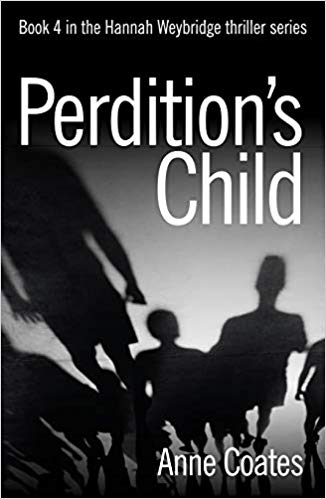
Image

Since I started writing book review blogs a few years ago, I happened upon a writer called David Barker who wrote a sterling action thriller Blue Gold about the threat of water having wars fought over it.

Barker has since written three books featuring his protagonist, Sim Atkins, but the book read with such a zip full of vigour, great set pieces, easy to follow narratives and page turning pleasure.

Published by Urbane Publications, a small independent publisher that brings diverse voices to an eager audience. That word eager is key to their Twitter bio, a word that breeds enthusiasm and joy in writing and that is systemic in the work of Barker.

This reviewer is pleased to report that the book reviewing today, Perdition's Child by Anne Coates, repeats much of the same Urbane DNA - a different sort of book, a pacy thriller that was gorged in one day of reading over a long Bank Holiday weekend.

Anne Coates - Author of Hannah Weybridge series
Hannah Weybridge, is a freelance journalist, who seeks for the truth. This is the fourth book in the series, previously Hannah has combated crime against sex workers while trying to raise a young child without a father figure.

We find her on holiday with a new beau, the abrupt parting at the airport leads to her returning to work and walking into a string of strange murders connected by the link that they are all Australian citizens, back in the UK looking for the truth of their heritage and lineage.

Weybridge finds herself embroiled in the mystery of odd deaths, a bag lady taking over her deceased brother's residence thanks to the help of a lofty QC acquaintance, a gentleman who appears at inopportune times and the relationship between orphanages and religious bodies.

Coates writes with a whip-crack narrative, dialogue flies off the page providing characterisation, exposition and structure in multitude that is both pleasing and effective.  This effortless style of plotting and character helped this reader entering a four-book strong universe which is always the key to a good writer of crime fiction - being able to create a universe where someone can enter without feeling like a stranger.

The placing of the narrative in 1994 before the advent of global media taking ahold of all people helps - a world where people would be somewhere when they said, papers were trusted before becoming gossip-mongers - giving an unlikely nostalgic spin on matters.

If you like this work, go seek out the David Barker books and also Simon Michael's Charles Holborn series about a barrister in the 1960s in the shadow of the Kray twins hold over London.

Perdition's Child is out now from Urbane Publications.
My thanks to them for the review opportunity

Friday, 7 February 2020

Jonathan Whitelaw - Interview


Exclusive interview with Jonathan Whitelaw, author of Hell Corp and The Man in the Dark, published by Urbane Publications

Jonathan Whitelaw is one of the most distinctive authors to appear in Britain in recent years, his utilisation of the Devil as his main protagonist in two books now has served up a richly black sort of humour that had this reader in hysterics and guffawing out loud by the climax.

By having such an iconic person at the thrust of the story can be both rewarding and daunting, after reading the book I took the opportunity to ask Mr. Whitelaw via social media about the possibility of answering a few questions. It is nice to say he did respond and here is my interview with Jonathan Whitelaw.


- What was the genesis of writing Hell Corp and writing about a character as universally known but misunderstood as The Devil?

I guess I had always wanted to write a crime novel - but I'd never thought I was clever enough! As a reader and reviewer yourself, you'll know that there are lots of great writers out there doing some fantastic work in the crime and thriller genres. But we've seen every type of antihero under the sun. If a cop isn't an alcoholic, they're a workaholic. If they don't see their family enough they see them too much. On and on it goes. 

So I got to thinking about writing an antihero like no other. And I started at the anti-part. Every culture on earth has an antagonist in their folklore and mythology. An embodiment of evil so awful that their mentions are usually the stuff of horror. So that, naturally, is where I started. 

I conjured up this image of The Devil as being somebody growing tired of being that bad guy, always being the villain. I figured if he wanted to go on holiday he'd still need all of his wicked ways to be carried out - hence the eponymous HellCorp. And from there, really, the story grew. 

I knew I needed a foil for The Devil and I suppose there really wasn't much choice - it had to be the Man Upstairs. Although sometimes its the Woman Upstairs of course! Having Him challenge The Devil to solve a murder mystery seemed like such a perfect medium and outlet for this Old Nick character I had created. And from there it all just grew arms and legs!


- Do you have a black humour yourself?

I think I do. I'm often told by my wife that the things I find funny I probably shouldn't. It's not my fault of course. I blame all the top-notch comedy on the BBC in the 90s when I was a kid growing up. Seriously, if I wasn't watching The Fast Show I was glued to the League of Gentlemen and Bottom. So blame all of those people!

When I'm not being a full-time writer I'm a full-time journalist. And I'm pretty sure its a pre-requisite to be a hack that you have a black sense of humour. My career has predominantly been in the digital world so you always get a lot of change and different types of stories across your desk. Being able to laugh in adversity and get on with your colleagues can actually be quite therapeutic. Especially if it's being a particularly brutal day. 

But yes, I'd say I have a black sense of humour. It clearly helps when you're writing about The Devil solving crimes!


- How long/How many drafts did this novel take and was it easier following the reception of the first book?

This is the first time I've ever written a sequel. So that was a big adjustment to my normal writing process. I sat down with a vague idea for The Man in the Dark and thought 'oh, here is a cast of characters that I already know - what fun, dangerous and thrilling situations can I put them through?'

It was a little strange at first. But one thing I enjoy about writing is getting to know the characters I'm creating. Dialogue is a big part of my work. Getting into the nitty-gritty, the psychology of a character is key to creating that dialogue. If you don't understand your characters then you won't be able to write what they would think, say and ultimately do. Having that already established in a way was quite liberating, even if it took me a while to get used to it. 

In terms of drafts, I'd say about 75% of my first draft of the book was cut. It suffered from what I call the 'Fast & Furious' effect. As a quick explainer - the first Fast and Furious movie is about street racers and stolen cars. The last one had international crime syndicates, nuclear submarines and a supercar jumping between skyscrapers in Dubai. In short, things got out of hand very quickly - spiraling way out of control. 

The very first draft of The Man in the Dark had helicopter chases and all kinds of other huge, mind-boggling madness. And as I wrote it I knew it was never going to fly - pun intended. So I finished the draft, all 80,000 words, before scrapping it. Writing can be like that. Sometimes you need a warm-up to get yourself going. You wouldn't run a marathon without prepping or getting in the right frame of mind. 

So yeah, I think the start and finish of the book on the shelves now survived The Great Purge. And ultimately it was for the best. The story I wanted to write wasn't the one I had written before. I needed to go through that process. It made for a better story in the end. And I'm extremely proud of The Man in the Dark. 


- You paint the Devil as a know all but powerful, this contrast of emotions and characteristics is it difficult to balance?

Balance has always been at the heart of the HellCorp novels. I've always loved authority figures who get cut down to size. And I love watching them still try to maintain that arrogant air and sophistication, even when there's metaphorical egg on their chin. 

That's a very artsy way of saying that I like to put my characters in situations I know they'll hate. The Devil in my books is all-powerful, all-knowing but also all too aware of his lot in the universe. He knows the proper way of doing things and, oddly, abides by the rules - he's made a lot of them up himself. He does, of course, get up to mischief and, like most authority figures, is always willing to stack the cards in his favour so that he wins. 

I like that about his character. I like that he's prone to mistakes and, while he would rarely, if at all, admit to them publically, he knows that he's just as prone to making them as everyone else. The difference being that if he drops the ball then there are huge ramifications and consequences. He's a realist and a pragmatist, a skeptic at heart in a world filled with the illogical, bizarre and downright strange. 


- Was it fun to write the good cop/bad cop scenes? The chemistry between the two is done well.

You're very, very kind. The fiver is in the post!

I love dialogue. And actually, it's always been a big part of my enjoyment of other literature, film and TV. Some of my fondest books and movies feature a strong relationship that's brought entirely to life through the dialogue. The Lethal Weapon movies always stick in my mind. It's clear on-screen that everyone involved in those movies, in front and behind the camera, had an absolute ball making them. And that only continues as the franchise went on. 

The dialogue is snappy, it flows, you're drawn into the world of these characters and the veil of fantasy completely envelopes you. It's not Mel Gibson and Danny Glover on there, it's two LA cops who've been through hell and high water together and have become family. 

I always strive for genuine interaction and dialogue with my characters - even if it's The Devil and God having an argument about the end of the world. It's something I like in work that I read and watch. So I always strive to make it come alive in my own. 


- What is next for the Man in the Dark?

Well he's been left in a bit of pickle by the end of the second book. So I supposed we should probably find out what happens shouldn't we?

Being all cryptic aside, the third novel in the series is with my publisher. Which is very exciting. 

And being the money-grabbing, starving author I am - I'm not giving away any more than that! You'll just have to read it and see!


- What is your writing process?

The million-dollar question! I get asked about my process quite a bit. And it's not normally until I'm asked about it do I actually give it a lot of thought.

I'm lucky in that I can write at any time, really anywhere. When my first novel, Morbid Relations, was written, I definitely had a process. I was working in Glasgow but living in Edinburgh so I had two hours commute every day to just sit and write. It was a pretty intense process but it worked for the story and the characters etc. 

Thankfully I don't have that commute anymore. And as such my writing isn't quite as focussed and distilled into those two hours a day. So some writing days now I can be going for hours and others I struggle to craft 50 that even make sense. 

One thing that's a must for any writer though is... actually writing. I was told by a very lovely tutor of mine at uni that you can't edit a blank page. And that still rings true today. If I'm asked about advice from anybody wanting to make a living from writing I always tell them that. You can have the greatest novel and story ever living inside your head. But if you don't get it out of there, in some way, shape or form, nobody is ever going to be able to enjoy it and share the experience and talent. 

It's a surprisingly motivating mantra actually. And it's one that's served me well in the five or so years I've been a professional author. 


- Can you speak about the partnership/relationship with Urbane Publications?

The amount of support, backing and general love I've had from my publisher has been nothing short of amazing. They have, quite literally, made my dreams come true by giving me a platform and outlet to tell my stories. I genuinely can't thank them enough. 

A good example was just before Christmas. The authors and staff of Urbane genuinely feel like a family - one that I've been welcomed in to with open arms. We all have a strong bond with each other - brothers and sisters in arms. That's why we were all so shocked last year at the sudden death of writer Dan Proops.

I wanted to do something, anything, really, to honour him. So I wrote a HellCorp short story - The Fright Before Christmas - with the intention of asking for donations for charity for anybody who wanted to give. But Matthew at Urbane went above and beyond. We got the short story published on Amazon as a special e-book - and all proceeds were being donated to The Samaritans. It was a really wonderful, special gesture that meant a great deal to me. A level of support and unwavering faith that, ultimately, meant we could make a difference and help a really worthy cause. 

The feedback we got was fantastic. And I am, truly, very grateful for the support that Urbane offered to me and my desire to help out. That and they let me write about The Devil solving crimes. I really couldn't ask for a better publisher!

The Man in the Dark is available now from Urbane Publications across all formats

Friday, 10 May 2019

White Gold - David Barker

White Gold

Sim Atkins returns in the concluding part of the Gaia Trilogy by David Barker, out from Urbane Publications


David Barker returns with the final part of his trilogy of books featuring everyman action hero Sim Atkins who must stop terrorism while working for the Water Department

The action takes up a few days after the conclusion of Book 2 - Rose Gold - the thriller set on a Moon base where Sim stopped a suicide bomber destroying the base and exposing crew to an ebola virus; but not being able to stop the death of his child in the wake of this.

Atkins returns to Earth, and goes home to his new wife Rosie, and wants to be able to have a normal sort of work life balance now; yet the threat of corruption and global terrorism is never far away.

Mattias Larsson, a Swedish mogul, is eager for the plan which started with the moon attack to move forwards regardless of the set back. This includes the use of a hollow iceberg which is brought to the attention of the submarine Endeavour captained by the enigmatic,

Not to forget the unsung hero of the trilogy, Freda Brightwell, who was left in a Russian gulag and awaiting a co-ordinated jail break by Wardle who oversees all of his work from his base in Birmingham.

Barker again is able to crank up the thriller and action elements to maximum effect; swiftly shifting from differing landscapes with ease and clarity as we bare witness to jail breaks, hovering drones able to carry adults, shifty moles and snappy dialogue on land, sea and underwater.

Culminating in the classic race against time narrative, and featuring a neat resolution Barker who grew up on larger-than-life antics of Connery and Moore as 007, has created a believable hero in Atkins - a man like us all able to achieve extraordinary things when the odds are against you.

Written with a brevity similar to more renowned page turners, Barker has delivered a succinct and satisfying conclusion to his thrilling trilogy with assuredness and poise.

White Gold is out from Urbane Publications from Thursday 9th May.

Thursday, 25 April 2019

Unfinished Business

Unfinished Business


Thomas Hocknell's 2nd tale of The Life Assistance Agency is out now from Urbane Publications


Hocknell returns with the Agency eager to stay away from anything involving angels following the fallout of the first novel's conclusion in Prague.

Ben and Scott though are drawn into another angelic tale when the phone rings and they are asked to write the autobiography of a 1980s has-been pop star from the band Elev-8.  When they meet said pop star, they also encounter 'Blind' Billy Fury a wrestler and his pretty assistant, Amber.

What follows is a very droll and story which is full of witty observations of life itself, understanding your place in the role. Ben the main protagonist of the lead pair, becomes a puppy dog when he encounters Amber and while he is not looking for love, he did not know he was until he saw her.

The back and forth of dialogue is done cleverly without forcing narrative nor plot, the characters are the ones who force this plotline.  The reveal of the plot about forty pages from the end, is a nicely done twist which hits Ben and Scott over the head like an anvil falling from the sky upon Wily. E. Coyote.

This is written with a real clarity and brevity which is rare to see, partly because it is an intriguing set-up and Hocknell likes his characters; not treating them with disdain for being cynical at times but embracing that personality he has imparted upon them.

Unfinished Business is a win-win for Hocknell; a great continuation and sequel to his first book and the start of a true series to follow.

Out now from Urbane Books and available on all formats at Amazon.

Friday, 3 August 2018

Night Driver by Marcelle Parks


Out from Urbane Publications on Thursday 2nd August, the debut novel by Marcelle Perks


Frannie is an English woman living in Germany, married to her Deutscher spouse and heavily pregnant expecting the birth of her first child; she feels like a fish out of water both hopeless with her minimum language skills and struggling to pass her driving test in a foreign country.

In an effort to cope when her baby is born, she attempts to instill herself with some independence and after passing she takes to driving at night to gain confidence on less crowded roads.

She enjoys the freedom the night gives her yet an encounter with a Polish motorcyclist looking for his missing sister leads to her being sucked into a world of nightclubs, autobahn prostitutes and organ trafficking.

Perks is a doyen of horror cinema, having written for publications including British Horror Cinema, Fangoria and Kamera.  This in-depth knowledge comes to the fore, with Perks creating a sinister at times horrific world one that is at times frightening and shocking to read; the author does not hold back during the sexual encounters of these villains leaving nothing to the imagination of gruesome gory detail.


The book whips along at a cracking pace and in the protagonist of Frannie, Perks has written a character that is fiercely independent and one that is on an arc of her own from naïve beginnings to strong ending; the influence of Alice Lowe's Prevenge is prevalent in the work as well as the literary work of J. G. Ballard and his famous Crash novel.

While sold as a thriller, the book is very much a horror novel in context and one that will definitely stay with the reader if my reaction to it is anything to go by - and married with a great cover it is a book that is sure to be discussed at length by many a book group and book lovers.

Night Driver is out from Urbane Publications on 2nd August

My thanks to LoveBooksGroupTours for the review opportunity.

Wednesday, 20 June 2018

Corrupted by Simon Michael


Published by Urbane Publications on Paperback on 21st June, Corrupted is the fourth book in the Charles Holborne series


Having never known of the Charles Holborne series you fear that you may be late to the party, much like the swinging dance parties and afternoon teas that take place at the Ritz in 1964, the year in which the latest Simon Michael novel is set.

There is no fear of that though, Michael has been lucky enough to create a central protagonist in the same vein as Jack Reacher; a likeable everyman who is one step ahead of most people, but one who is not afraid to throw punches (literally) nor get his hands dirty in the eternal pursuit of justice and truth.

Charles Holborne (or Horowitz - to show his birth name, and the still relevant anti-Semitism taking place in London), is 39 a Barrister working in Chambers at the Temple and the Old Bailey, he presides over a variety of cases - yet he himself has a criminal past which will not let go of him. He is well liked by his peers, colleagues and his unwillingness to fall in line with the old boy network does ruffle feathers, he nevertheless gets results.

The book is set in a hot summer of 1964, a year where the Beatles are returning home from conquering America, Sonny Liston just lost to Cassius Clay and the beginnings of the sexual revolution are slowly fermenting around the swinging London scene.  We first encounter Charles at home with his partner Sally, having recently moved in to a new house in North London; even Charles moans about the commute to work.

Upon his desk though comes a case involving his old nemesis, the Krays twins; the legendary Ronnie and Reggie whose criminal underworld dealings were known and held a vice like grip over London's night life.  The Krays are at war with the Mafiosa, and this leads to a footsoldier Mo Drake being murdered at his home supposedly by the Italians in revenge; yet there is more to the case than meets the eye.

It had long been rumoured for some time that Reggie Kray was homosexual and he was played as such by Tom Hardy in Legend as such; and yet the narrative revolves around a scandalous sex party that takes place at one of Reggie's residencies in Walthamstow, where all manner of high profile dignatries and cabinet members including Lord Robert Boothby attended indulging in fornication and sexual conquests.  In the narrative, a runaway boy Teddy is taken in by Mo and attends the party leading to Mo's death later that same night.

Charles takes on the case to clear the boy whom has been arrested for Mo's murder; yet Charles also has problems at home with Sally (who sadly vacates the scene somewhat abruptly) as Charles will not relent on his dream of fighting in the boxing ring one last time before his fortieth birthday, following a successful amateur career.   Charles goes for long runs on Saturday mornings and sometime evenings, which allows the author to write fondly of London before overpopulation took hold.

Even the premise of placing historical figures such as the Kray twins and all the mythos and legend they carry with them does not restrict nor overawe the character development of Charles Holborne, our protagonist remains front and center and the heart and soul of the book; you never feel your allegiance being swayed by the celebrity gangsters who themselves are written with great clarity and care by Michael, not becoming these overbearing larger than life figures, merely important people doing their job like anyone else.

Author Simon Michael

That is the beauty of this book, for all the gripping thriller elements and the page-turning quality of the narrative that rips along as quickly as that of Child or Grisham; Michael has gone to great lengths to paint a vivid picture of London at that time, as if it was the centre of the world - the glamour of the Ritz, to the stuffy tradition of the Old Bailey.

There is a vibrancy in the writing from the back and forth dialogue from each colourful character Charles meets to the vigour of the scene-setting of nightclubs and bagel shops, you feel a part of the story - something that this reader has not felt for quite sometime.

And with the protagonist Charles, Michael has created an anti-hero who is very much of his time - a chameleon like individual who is changing with the times much like his own city and world is in flux itself in terms of the rise of sexual freedom, feminism with Charles embodying the new breed of outsider and non-public schoolboy combating prejudices daily in his professional career; something the author had to confront during his career as a barrister.

As mentioned, the books 420 pages rips along at quite a clip that you will would be wanting more and with there still six years left in the 1960s for Charles to indulge in, it promises for more yarns for Michael to tell.  This reader for one will be looking back at the three previous installments of the series and looks forward with relish to the rest.

Corrupted by Simon Michael is released by Urbane Publications on 21st June.


In The Wake Extract


Helen Treverrow's debut novel is released from Urbane Publications on 28th June


In anticipation of the release of Helen Treverrow's gripping London based thriller, here is an exclusive extract which features our protagonist Kay heading home after a bad day at work and it encapsulates the psyche of the lead with her emotional upheaval at work, where she comes from and her fraught relationship with her father, Jim and the rewarding relationship with alcohol.


Check out my review here of In The Wake 

Follow Helen Trevorrow on Twitter @helentrevorrow
Follow Urbane Books on Twitter @UrbaneBooks

My thanks to #LoveBooksGroupTours for the opportunity to review

Tuesday, 12 June 2018

In The Wake - Helen Treverrow


Helen Treverrow's debut novel is released from Urbane Publications on 28th June


When a body is found floating in London's Royal Albert Dock, public relations expert Kay Christie is sent to quiet the media, but things become complicated when it emerges she knows the victim.

Centered around the Excel center in London, a major exhibition is overshadowed by this body being found.  A convoluted narrative structure involving Kay's father who works at the exhibition hall, and the tightly knit support network around her starts to unravel as secrets much like the body rise to the surface.

Opening with the disappearance of a French nurse from her London hospital around Christmas time - the imagery Trevorrow evokes the harshness and cold of the London winter is depicted succinctly, showing the combination of how lonely the big city can be when you are questioning your own decisions in life.

Kay is in her 40s, gay and partnered with Julia, a woman who is enjoying an Indian summer with high-profile media commitments; and yet Kay is not happy. Kay drinks regularly, she is in love with her job but not in love with her routine. The introduction of a female police officer, Polly - younger and vital stirs some lustful yearnings within her which has been absent for sometime.

This melodramatic shift to a women's narrative in unison with the crime story is a risky venture, and on occasion the crime story struggles to be heard beside the Sapphic storyline; at times this reader felt that the love scenes were overpowering the actual crime story narrative and the interest in the case being solved.  Kay is an intelligent, successful woman and yet her life is full of quandry with Treverrow delicately explaining her psyche following a sexual assault from years past; which is told to us in flashback.

Thursday, 17 May 2018

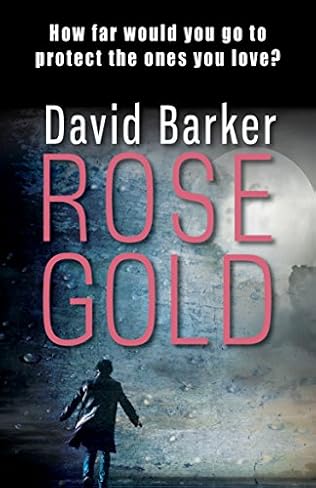
Rose Gold Interview with David Barker


book cover of Rose Gold

David Barker returns with the sequel to his hit novel, Blue Gold, featuring the returning characters of Sim Atkins. This is Rose Gold, I had the pleasure of being to ask Mr. Barker some questions for the #blogtour of Rose Gold.


You have come to writing later in your life, how did this come about?

I’ve always enjoyed writing, even while I was working as an economist. It’s a challenge to convey complex information in a fashion that is succinct, easy to understand and interesting. I had thought about a change in career towards financial journalism but more recently decided that I wanted to stretch myself and try my hand at creative writing.

What was the gestation of Blue Gold and Sim Atkins?

In my previous role I did a lot of research into commodity markets, and one recurring theme was the notion that fresh water would become a precious resource over the next 20 years. I realised that a world war for water would be a great setting for a novel and suddenly I knew what the opening and closing scenes would be for a story.

How long did the first book take to complete, how many drafts?

From that very first idea to the published book hitting shelves, it was about seven years. Talking to other authors I have come to realise this is not uncommon for first novels, especially because most of us write our debuts while working full time. And I think it was the ninth draft that went to print. The biggest changes happened between drafts one and two, which occurred after I had attended the Faber Academy novel-writing course.


What is your normal working day like, do you have a daily word target?

There are certain times of the year when I am just trying to think of new ideas for sticking points in the current project or for completely new future projects. At other times, I am focusing on the promotional side of things. But when I am in first-draft mode, then yes, I try to aim for 2000 words a day. I often get that done by lunchtime (I’m an early riser), so will tend to spend the afternoon reading novels. As Stephen King says, an author should split their time evenly between reading and writing.


What did you like to read growing up, there is a lot of Fleming in your work?

Funnily enough, I did not read a lot of his novels. I loved Douglas Adams, both his Hitch Hiker books and the Dirk Gently series. I read quite a bit of fantasy: Stephen Donaldson and, of course, Tolkien. And I enjoyed Frederick Forsyth’s global thrillers.

What do you read now?

An eclectic mix. I appear on a monthly Radio Berkshire show called Radio Reads, and we review a new book that can be chosen from any genre. I attend a local book club that focuses on Sci-Fi and Fantasy, so that’s my second book of the month. I normally find time for a third book each month, and that varies a lot. I get invited to quite a few book launches so often pick-up the latest best-seller then, or I’ll try to read something from one of my fellow Urbane authors.

Can you talk about the relationship with Urbane Publications?

They are a fantastic independent publisher with big ambitions. They are very supportive, without being proscriptive about what or how you should tackle your latest project. And one thing that really helps their books stand out is the beautiful design detail (in the physical book). For example, in my latest book Rose Gold, there is a double-page spread at the start of each of the three parts, showing a black background and a moon at a different stage of its cycle. In my first novel, Blue Gold, there were faint water droplets in the background of every page.

You have one more book in the trilogy to write, can you give anything away?

It’s called White Gold, and it should be out in May 2019. Something happens to Sim in Rose Gold that becomes the main driving force of his story arc in the final book (no spoiler alerts). But I also wanted to give more time and space to his old partner, Freda Brightwell, who was a big hit with female readers from book one, so you’ll see a lot more of her. And of course, the baddies are bigger and badder than ever!

What will you write after the trilogy is complete?

I’m not entirely sure yet. I have a couple of ideas that are rattling around inside my brain, but both are completely different to the Gaia trilogy.

Any advice for would be scribes?

Keep going – it’s a long slog to complete a novel, and even once it’s finished it’s a tough road to publication. Don’t be put off by the knock-backs or stumbling points. And don’t forget to write with passion – if you try merely to emulate some book trend that’s currently successful, chances are your own voice will disappear along with the fire inside your belly.
Rose Gold is out from Urbane Publications now on all formats

Thursday, 10 May 2018

Rose Gold - David Barker

book cover of Rose Gold

David Barker returns with the sequel to his hit novel, Blue Gold, featuring the returning characters of Sim Atkins.


The events of the world are still changing, following on from the adventures featuring OFWAT, Sim is thrown a curve ball from the off, learning a life-changing fact and then being asked to go to the moon.

The moon is the next landscape to be mined for the minerals that could help the forever changed Earth, perhaps as an outpost for new territories. Sim undergoes an intense changing regime and within 8 days is on the moon space station.  Yet this requirement to go to the moon, is a means to change the environment of the main character who must endure in a different milieu from previously.

Barker writes with a real lightness but swiftness; he is able to render an environment and atmosphere quickly utilising character dialogue to progress character development.  This is reminiscent of the writing of Matthew Reilly - whilst Reilly worked on a wider more outlandish scale with huge set pieces and explosions; Barker utilises the environment to his advantage. By having a base on the moon, you have people out of their comfort zone from the outset creating an underlying wave of tension and conflict as the diverse multi-ethnic world population of the base have to co-exist.

Image result for rose gold david barker
Author of Rose Gold - David Barker


However, the yarn is gripping and moves a breakneck speed, for me it did not reach the same heights as Blue Gold did. Yet, the book is certainly one of the better action-adventure novels this reviewer has read - Barker cleverly takes his influences of Ian Fleming, Tom Clancy, Dan Brown et al to make a winning favourite in Sim Atkins - the type of guy who usually sits behind a desk but elevates and surprises himself with how well he can become something better than he thought he was. 

That everyman quality shines through Barker's brilliant depiction of Sim as with the diverse cauldron of characters that pop up throughout the book from the erstwhile Lin to the detailed Piet as well as android Henry the AI who provides the key to the running of the whole base; and Barker does not waste pages with exposition and needless character thoughts, he uses dialogue as a means to shape story and extend plot with efficiency.

Barker is quite prescient in terms of future technology he grants his characters an item called tab rolls on their wrists, a sort of Apple watch which details your journey, time, sleep patterns but linked to a main body such as Henry who can monitor and advise on your behaviour, but has sinister reaches akin to Big Brother watching you. Having just been on a trip to Walt Disney World, they gave us magic bands a sort of GPS locator come money band where you can pay for items at leisure.

Barker leaves things up in the air - in terms of Sim quite literally - in readiness for the next part of the trilogy White Gold (out May 2019), where the heroine of Blue Gold Freda who we last see escaping a prison in Russia, is now front and centre at the beginning - thanks to an exclusive extract written at the book's conclusion.

Again, this is a brilliant thrilling novel from Urbane Publications who specialise in believing in under-appreciated authors whose work deservedly gets much needed exposure; Rose Gold is a thrilling addition to the Atkins trilogy, one more to go and this reader cannot hardly wait.

I will be featuring in the #RoseGold blog tour on 18th May

Rose Gold is out from Urbane Publications on Thursday 10th May


Tuesday, 9 May 2017

Blue Gold - book review


Published by Urbane Publications and due for release on 11th May, the debut author by David Barker Blue Gold tells the story of a future world where water is at a premium, a commodity that territories fight over and lives are lost over the ability to drink clean water.

Barker is a part-time economist, who has turned his hand at novel writing and he has successfully crafted a page-turning tub thumping action adventure that is fun to read and shows a real potential. 

Our hero is Sim Atkins, (he goes into why he is called Sim and not Simon) a data analyst for OFWAT, the Government agency for Water regulation, who gets summoned to the Overseas Division after becoming aware of unusual activity from his satellites.  Swiftly Sim is thrust into an odd couple/buddy relationship with Freda, an older female who has a limp as well as emotional baggage and does not welcome the burden of a bothersome partner.

In the same vein of Indiana Jones, James Bond and Bourne, the pair globe trot from Biggin Hill to Brazil to Mount Rushmore to China to the Himalayas.  They encounter many individuals including the brilliantly monikered Bo Brunswick, where swords are crossed and backs stabbed.
David Barker
Author David Barker's debut
Being British, Barker writes with a particular tongue in cheek imbued by the youthfulness of Sim - who is not familiar with any film from before Star Wars quoted by his partner - coupled with the older more mature Freda, who acts like she has seen it all before yet still keeps her cards close to her chest.

The set pieces and fight scenes are easy to follow and have a zip that reminds you not only of Dan Brown but the far superior work of Matthew Reilly who wrote huge elaborate action adventures with subtle characterisations in unison.

Urbane Publications are a new voice in the big world of publishing, but they continue to strike gold with these new authors with voices and stories to share not only on a small scale but ones that can travel and translate. 

Blue Gold informs us of a world where water levels will rise, water will be in such high demand that people will store ice from each other and it is thought over like oil has been in the late 20th century.  It is a neat twist on a familiar geopolitical tension in the current climate.

Blue Gold will be published by Urbane Publications on 11th May

Monday, 10 April 2017

A Monster by Violet


The debut novel by Laura Wake is a gritty to the bones drama about a young girl, the eponymous heroine who we follow on a week in her life.

Violet has abducted her best friend's baby, Maria. Her friend is an addict and the child would likely have died in her care, so doing what she thinks is best for the child and perhaps hopeful of starting afresh herself, Violet takes the child and withdraws what money she has in her account and heads for the Isle of Wight.

We follow Violet as she becomes a born again person doting on Maria and her feeds, looking after her and realising that she has to leave the temptations of drugs and addiction behind if she is too care for the child.

Violet thinks she can have the best of both worlds taking Maria to a house party that goes wrong when a snake is thrown into the mix and she has sexual contact with some other girl's boyfriend.

These dark episodes are merely the lead narrative, running parallel is the flashback to Violet as a ten year old and how she become a troubled teen and young adult; her home life is good but following the cot death of her younger brother she starts to rebel and her parents marriage hits the rocks.  There is also the unsettling storyline of a female teacher attempting to make Violet good again, which could have been construed as grooming in another plot.

However, Wake is better when following Violet and Maria on their journey around IoW yet the novel does somewhat lose its way nearer the novel's conclusion when they abscond a boat and head for France with a Portugese waiter, Sergio for company. On the boat, Violet's demons come to the fore and her paranoia regarding being possibly followed nearer brings down here downfall.

The book has good moments, especially as you see Violet becoming more maternal and the blossoming friendship between her and Sergio is nicely handled; yet the flashback storyline is dropped somewhat abruptly and does not fully explain her addictive future nor what her relationship with her parents is.

Some critics feel she is an abhorrent lead character, I think of her as reminiscent of the lead character Lily, Agyness Deyn played in the little seen film Electricity.  A smart girl who has her own mental demons to overcome, and is lost in the big bad world and is always attempting to run away from it.

A Monster By Violet is out now from Urbane Publications