Showing posts with label film interview. Show all posts

Thursday, 2 April 2020

Andy De Emmony Q&A


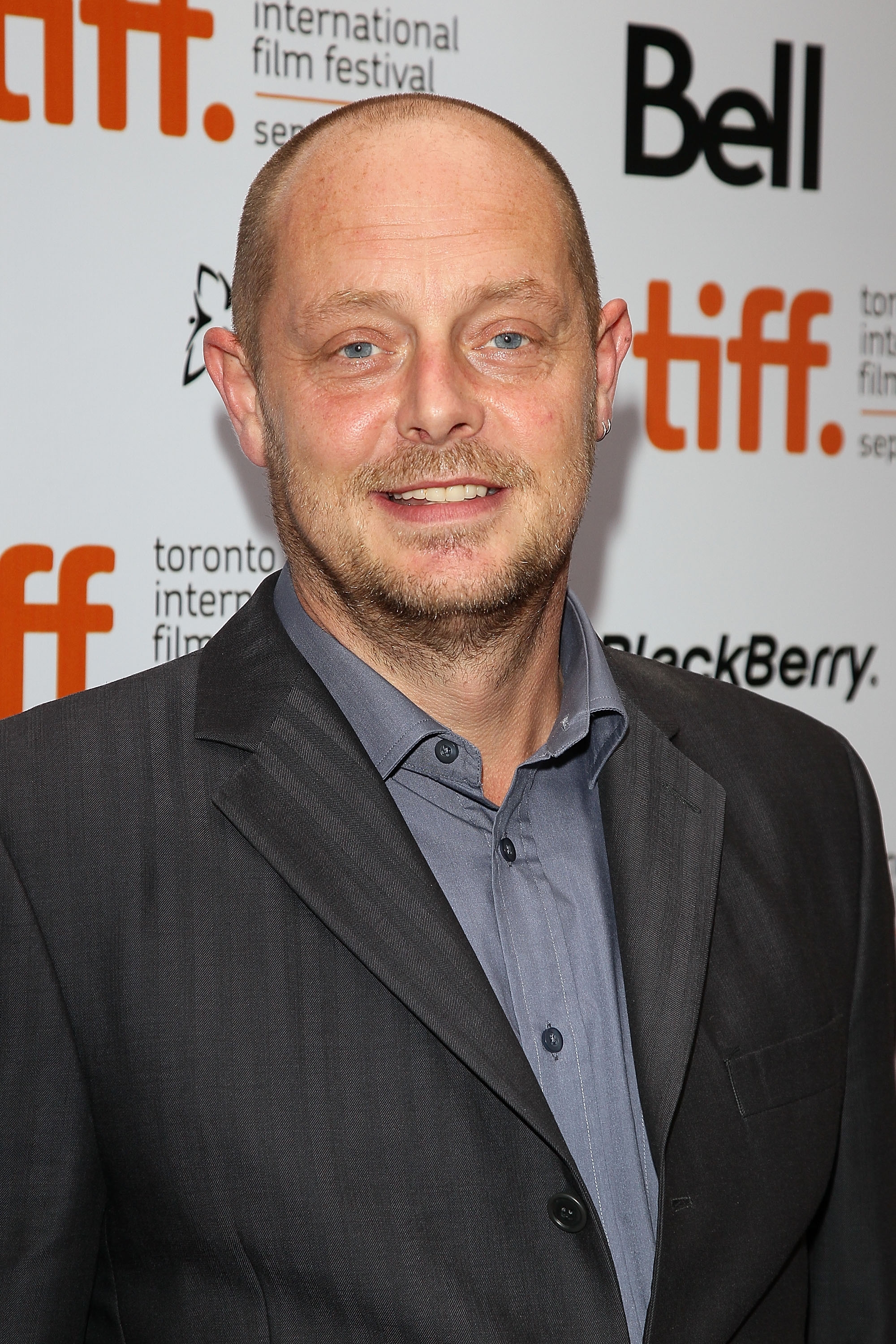
Director Andy de Emmony
My Q&A with director, Andy De Emmony, back in 2011. De Emmony is directing now THE NEST on BBC One starring Martin Compston and Sophie Rundle.
1. What firstly drew you to the film?

 I loved 'East is East', and found it quite daunting but on this occasion you get a more three dimensional character of George and it serves as a bookend to the first film. Ayub wanted to complete after the first film and it felt fresh even though it is the same family but on a different journey.

2. What do you remember of the original, 'East is East'?

I remember being drawn to the family aspect, and that generational gap within a family and where do you fit in.  But also the use of comedy as a release valve for the emotion presnt.

3. What was your working relationship with Ayub Khan Din?

We had a very good working relationship with Ayub, they came to me to collaborate after Damien O'Donnell did not chose to be involved.  And in spite of the autobiographical content he did not see it as a biopic, and instead lets just make the film work which gave us a lot of freedom.

4. What were the pros and cons of shooting in a foreign country?

 I found it quite daunting to work in India, but a pro was the manpower which allowed you flexibility (The house built by George in the film was built in 5 days by this manpower) and the long days allowed us to shoot longer in the days in comparison to England.  A pro would be the language barrier, as about 20% of the script is in Punjab and in the end it came down to reading looks of actors, and even some of the actors who spoke Punjab in the film had to have voice coaches for certain scenes. 

5.What happened to Jimi Mistry's role? And were you impressed by the debutant Aqib Khan

Jimi Mistry's role was written bigger, but the focus was on Sajid the youngest, his story and journey.  And Aqib was brilliant, he had a temperament that fitted the character and he was helped by the components and good actors we put around him.

6. Is there going to be a third film?

The producer, Leslee Udwin, has always seen the film as a possible trilogy and there is a proposal in place if people connect to this film like they did 'East is East'

7. How do you react to criticism of the film being 'quaint' or 'too much like a sitcom'.

I think when you make a film about a family it is hard to contain it and I hope the audience can reconnect and new audiences connect with these characters and laugh with them.  I felt if we had made a sweeping political statement about Pakistan, the family story and emotional bond would have been lost in the mix.

8. What have you been up to recently and what is next?

I have been shooting commericals in Australia, but we are waiting for funding [like most people in Britain] for a film written by William Boyd ('Chaplin', 'Any Human Heart') called 'The Galapagos Affair', based on John Treherne's novel, which we hope we start shooting soon.

Friday, 16 June 2017

Follow The Money - Ben Unwin Interview


Following on from my review of Follow The Money last week and on the eve of the film's European Premiere at the East End Film Festival at the Hackney Picturehouse on Saturday 17th June, I was granted the opportunity to interview Ben Unwin - one of the three intrepid British travellers - who follow a single $10 dollar bill across America where they encounter all manner of people from the centre of America to a shining sea in California.


follow the money documentary film poster

Where did the idea for the film come about?

Steve and John met to watch football and Steve told him that he was writing a book about his experiences following a ten dollar bill around the states. John thought it would be a great idea for a documentary and told me about it. We then got Steve drunk and persuaded him to do it again! 

When was this filmed? Did you plan the trip and say a specific time or was it a now or never situation to commit to?

We filmed it a few years ago but due to work commitments and being self funded it took around three years to edit and do all the post production. I guess we filmed it at the time as that was when we had the money to do it. I had just earned some extra money that I had never expected cutting a commercial and I thought well it is now or never. 

From left to right: Steve Boggan, John Hardwick, Ben Unwin


Watching the film it is like a documentary on how to make a film when you guys look at each other in point of view or at the conclusion when you don't know what to do? Was it fun or stressful?

I won’t deny that there were stressful moments most probably due to lack of sleep. We had to spend one night sleeping in the car and I remember thinking I am too old for this shit. However in general I loved the experience. At the risk of sounding pretentious how often does one have a truly existential experience with the process of decision making being removed form everyday life? 

You say in the film you preferred to not know what was coming. Was that the same for everyone?

For me yes and I think in general for all of us. Perhaps late on in the process it may have worn a bit thin for Steve but then he had been through the whole process before. 


Had you travelled to America previously? How different was this trip?

John had studied in America for a year, Steve had been a reporter there and I had lived in LA for a bit trying to make films. I had not experienced this amount of variety before though and that was what has made it a lifelong memory. I mean when else am I going to hang on a ranch with genuine cowboys? 

What was the most surprising experience?

In reality the fact that no body said no to being in the film. Americans just love a big idea and their warmth and hospitality never ceases to amaze me. 

Did any interview have to be cut? (i.e. the Texas trip in the bar?)

I would not say cut exactly but very careful thought was put it as to what to include and what to leave out. One individual had some views about Obama not being born in America. In an hour long program about them you would delve into this but when you only have five minutes to show on them that is not fair. They were decent kind-hearted people but just misinformed by certain media. I figured of you include that in a five minute segment it is what the viewer will remember about them rather than a true reflection of their characters. Obviously if they had been screaming members of the KKK that would be different but this was not the case. 


What did you take away from the whole trip?

That you can’t use phrases like “Americans think this or that”. The USA is like a hundred different countries under one flag. A person from Nebraska is very different from and person from Chicago. Having said that I was constantly amazed at how warm people were. At the end of the day real people may have differences of opinion but we just have a beer together and get on with it. We don’t end up shouting at each other like politicians. 

Have you been pleased by the critical response at film festivals?

Very much so and it has made me confront some of my own prejudices. In Mississippi we won the Audience Award which was a great honour (and  relief as they have lot of guns there and I did not want to be run out of town!) and also the fact that we were able to have great discussions after the film. I found myself having a beer with a Christian Pastor who was a staunch advocate of gay rights. You have to delve below the surface and you find that there is always a better story below the headlines. Also a guy in Kentucky (where we won best documentary) told me how great it was to see a documentary where Native Americans were portrayed in a uplifting light. You can’t help but feel good when you get that kind of response.  

ten dollar bill from belle fourche

What is the hope for this film in terms of release?

We just want as many people to see the film as possible. At the end of the day you don’t make documentaries to get rich but if in some small way it makes people feel a little bit better about how we can interact with one another and get on then I will be happy with that. I will also take an Oscar though if it’s on offer. 

What is next for the three of you or in a solo role?

We are all good friends so I am sure we will think of something. John has been mainly directing drama recently (Including the film Svengali, The Increasingly Poor Decisions of Todd Margaret and Delicious for Sky).  Steve has another great book out called Gold Fever and is working on another. As for me I am researching two projects one about the USA and one about Sport. I dare say we will all combine on something in the future but I am definitely not sleeping in the same car with them again! 

Follow The Money won Best Documentary at the Louisville International Film Festival, Audience Award at FSFX, Mississippi and was Highly Commended by the LA Film Review of Los Angeles.

If you have a spare evening then please attend the European Premiere at the East End Film Festival on Saturday 17th June and support British documentary film-making, Follow The Money is the sort of film that will leave you with something everlasting.


Wednesday, 4 February 2015

Jesse Moss Interview


With the forthcoming release of The Overnighters on DVD from Dogwoof, I had the pleasure to interview the director Jesse Moss and ask him some questions about the film and its production. To read my review of the film, please click here.

 Jesse Moss

What was the genesis of The Overnighters?
The genesis came from a clergy column written by Pastor Jay Reinke, that appeared in his local newspaper, the Williston Herald.  I read the column and called Jay, and he told me he was helping and housing some of these men and women who were flocking to North Dakota and had nowhere to sleep. I found Jay, but it took me while to come to understand what an extraordinary documentary subject he was.  He revealed himself slowly, and I found myself drawn in to his passion and his mystery. The overall filming took about 18 months to complete.


What is your background and have you always wanted to pursue a documentary film career?
I worked briefly in politics, but left in my mid 20s to pursue filmmaking and never looked back.  I had the good fortune to work with some exceptional filmmakers when I was young which was my film education.

What filmmakers influence you and does any particular documentary resonate?
The direct cinema tradition has strongly influenced me, including the work of Albert & David Maysles, DA Pennabaker & Barbara Kopple.  Salesman is one of my favorite films as is Harlan County USA.  

So why do these stories never get covered until the story turns sour in America's mass media market?
I think the mainstream media has a big blind-spot, and they're impatient.  The luxury I had was time to let this story develop.  I felt there will little serious long-form reporting about the ground-level experience of people coming to Williston and trying to survive.


Did you watch any films during the production?
I watched very little while I was making the film.  I read - or I should say re-read - some George Orwell, specifically Down and Out in Paris and London, and The Road to Wigan Pier, both moving, compassionate chronicles of the working poor.

Was a lot of the story start to develop in the cutting room or did you edit as you progressed?
I started editing while I was still shooting, and there was a constant dialogue between the field and the cutting room - which was very important.


Reason I asked earlier about watching films was because I sensed a similarity to American westerns, the lone crusader in a town and so on
I did come to see The Overnighters as a western.  The parallels were strong: a story set in a boomtown, a struggle between hope and fear, a flawed hero, who ultimately is cast out by the community.

Have you been surprised by the critical response to the film?
I have been grateful for the critical support the film has received, and how willing audiences and critics have been to embrace the complexities and ambiguities of Jay's character and the story.

What are you working on now? Will you follow in the footsteps of Kevin MacDonald and James Marsh into feature films?
I'd love to follow in the footsteps of James and Kevin, filmmakers I greatly admire.  In fact, I'm developing a scripted feature that is based on factual material.  And I've begun a new documentary on 1970s icon Burt Reynolds - which couldn't be more different than The Overnighters.

The Overnighters is out on DVD from Dogwoof on Monday 9th February

Friday, 5 December 2014

Anthony Wilcox Interview

HELLO CARTER is in cinemas 5 December and on DVD & Digital 8 December


In anticipation of the release today of Hello Carter, I was granted the opportunity to interview the director Anthony Wilcox (@wilcoxant) who was more than happy to talk about his debut feature length movie:

 Anthony Wilcox Director Anthony Wilcox attends a screening of "Hello Carter" during the 57th BFI London Film Festival at Odeon West End on October 12, 2013 in London, England.

What was the genesis of Hello Carter, and is Carter based on yourself personally?
It started life as a short film. Although the story of the feature is quite different, the central character and tone remained the same. There probably are elements of me in Carter inadvertently but I never set out to do that. I wanted an unconventional lead character, someone who's aspirations for the end of the story would probably only be the starting point for a more conventional movie 'hero'.

You made quite a leap from short films to a debut feature as both writer and director. Was that always the intention or was the time just right?
I've worked on feature films for a long time as an assistant director so the thought of directing in that form never felt overwhelming. I made three short films as a writer/director before this.

The influence that jumped out to me was Scorsese's 'After Hours', why does that film resonate with you?
I watched After Hours when I was about 16 and remember immediately thinking I'd never seen london depicted in a film that way. How we represented the city was really important from the outset.

 Anthony Wilcox (L-R) Director Anthony Wilcox, Jodie Whittaker and Christian Cooke attends a screening of "Hello Carter" during the 57th BFI London Film Festival at Odeon West End on October 12, 2013 in London, England.

Any other filmic influences to take note of? in my review I say Charlie Cox channels Hugh Grant but this is far removed from the Curtis universe of perfect Britain in 'Notting Hill'?
I looked at British and American films mainly. I was interested in the aesthetic of ‘London' films like Naked and Wonderland but wanted to try a story with a splash of magical realism. More like we're perhaps more used to seeing in American indies like 500 Days of Summer or Eternal Sunshine of the Spotless Mind, things like that.

Did you always want to film in London on the streets? How long was the shoot?
We shot for 5 weeks. Yes, I very much wanted this to be a Londoner’s view of London, rather than a movie view of the city. So we tried to keep the journeys and locations as real as possible.

What was Paul Schneider like to have on set? Coming from Hollywood to a British independent debut feature might have been a fish out of water experience?
Paul has such an enthusiasm and passion for filmmaking that he's a gift to have around. He'll know every single person's name on the crew within 24 hours plus he’ll care and be interested in what they contribute to the film. His energy kept us going. I'd worked with him on Bright Star when I was an AD so we knew each other and how British independent crews work was no surprise to him.

How much do you value your relationship with DoP Andrew Dunn?
As highly as it's possible to. He's not only brilliant at understanding how his work can enhance and develop story but he's such a calming influence on set too. For me, as a first time director, to collaborate with someone of his skill and experience was invaluable.

How did Michael Winterbottom get involved?
I first worked for Revolution films on 24 Hour Party People a long, long time ago when I was a 3rd AD. Since then I’ve worked on 8 or 9 films with Michael and his producer Andrew Eaton in various roles. They’re always keen for people they work with to make their own films so were very supportive with this. They were never involved in a hands-on way but I always had them and their wisdom to call on when it was required.

Are you pleased by the general positive response to the film? What is next?
I’m probably someone that will never be pleased by their own work! I’ve learnt a tremendous amount through the experience of Hello Carter and can’t wait to use that experience when shooting the next film. I’ve been writing and developing a script with the BFI which is an ensemble piece - about a group of British people in a European holiday resort for a wedding. We aim to shoot next year.

HELLO CARTER is in cinemas 5 December and on DVD & Digital 8 December

Monday, 17 February 2014

Kieran Evans: Bafta Winner


Last night, Kieran Evans won a BAFTA for Most Outstanding Debut by a British Director, Producer or Writer for his work on the critically acclaimed Kelly + Victor a love story based on the original novel by Niall Griffiths set in Liverpool and featuring two stand out turns by Antonio Campbell-Hughes and Julian Morris. Evans adapted the book into the screenplay for which he directed the film also.

The young director afforded me the chance to answer some questions about the gestation of the film, and from the answers I hope you get a sense of how intelligent and thoughtful an artist he is.

Kieran Evans

What drew you to the original source material?
Ten years ago, I'd just finished work on Finisterre, a film about London that I'd made with my friend Paul Kelly. Janine Marmot, (producer of Kelly+Victor) had seen it at the onedotzero Festival and had seen some of my promos and short film work and approached me to see if I was interested in moving in to features. Which I was! We talked a lot about the type of films I liked and what I wanted to make and Janine advised me to look for subjects with a twist or stories with a Welsh angle. So I went off for a few months to research some ideas and search out some stories that might appeal. I was a big fan of Niall's first two novels Grits and Sheepshagger and had been talking to BBC Wales about making a short film about him so I got hold of his number and got in touch. We met up and got on really well, so much so we skipped on the film about him and started working on an original short film idea called 'Wanderlust'. Whilst we were developing it, Niall gave me an advance copy of his new novel Kelly + Victor to take on holiday with. Due to the subject matter, it was hardly a light holiday read but over the course of that week, the writing was so vivid and the characters drawn so well that i slowly got immersed in the story. I must have read it at least three times, each time being drawn more and more in to who Kelly + Victor were and why they did what they did. Images started flying around in my head and i just couldn't stop thinking about it so as soon as i got back to London, I phoned Janine to say i may have found the story I wanted to tell. She read it the next day and thankfully felt the same way about it...and so the journey began...

Did Niall Griffiths offer any input into your screenplay?
Niall and myself initially worked on breaking down the novel  in to a workable framework, creating a list of golden rules we agreed must be retained from the novel when we adapted and what we felt we could jettison. Once we had these elements in place, we began work on the first draft of the script together. We spent a lot of time on that first draft, partly just working out a system that worked for us both but after five months we had something resembling a first draft.
There was then quite a lot of work to be done on the second draft and Niall's availability became a problem as he needed to start writing his next novel. So we agreed I would take up the reins and carry on with developing and writing the script alone whilst Niall continued in a more advisory role, essentially becoming my script supervisor. Every step of the way, Niall was around and about so I could bounce ideas off him and run various sections of the script past him. 

Was it always an intention to use Liverpool as a character in the film- showing the light/dark side of a city in comparison to the light/dark of the story? 
One of the golden rules that Niall and myself drew up at the start of the scripting process was that the film could not be set anywhere other than Liverpool as the book was obviously set there. Over the years there were a few funding opportunities offered if we shifted the story to another city but there was something in the character and atmosphere of Liverpool that gave it that extra special something and so we stuck to our guns. Liverpool itself has this incredible rich cultural and trading history and was a real trading powerhouse in Victorian times, second only to London with wealthy philanthropists building museums and parks in giving something back to the city. Sadly over time, the city has slipped from its position of power and status in to a tragic crumbling state, punished by successive Tory governments to a point that it's a shell of its former glorious self.

So what you have now is an uneasy friction between outlandish office and apartment developments down by the regenerated Albert Dock area and some of the most deprived council estates and dilapidated housing conditions within ten minutes walk of those steel spires. Confronted with all that informed me so much of what to focus on and where to point the camera. But what people also don't seem to realise is how close to nature Liverpool is. You've got incredible swathes of coastline and marshland hugging its edges. Across the Mersey you have the ferry terminals and crumbling docks of The Wirral on one side and huge tracts of mud flats that provides a sanctuary for birds and wildlife on the other. It's all these incredible opposites that provided so much inspiration and ideas for how to capture Liverpool. That and the amazing local knowledge of location manager Tom Harnick.
 

How much rehearsal time did you spend with Antonia and Julian?
We spent about a week to ten days rehearsing up in Liverpool prior to shooting. That helped a lot due to the intense shooting schedule we were faced with. What was great was seeing the chemistry between them grow and develop over this period and really start to build the characters of Kelly + Victor.

Both put in brave performances, how much praise do you have for them?
I have such huge respect for Antonia and Julian and their commitment to the film. They were incredibly focussed, driven and passionate collaborators to be honest. We worked day in, day out on their roles and their approach to scenes. It was an incredibly rewarding experience as a director and made the job so much easier.

The sex scenes at times are difficult to watch. How much of your role as director was in the editing suite, for example, the scarring scene when we see Victor screaming and yet you use the soundtrack for effect?
I started my career in film as a trainee editor on a number of features and witnessed first hand how films can come alive in the edit suite. For me, everything comes together in the edit and it's the most exciting part of the process when ideas finally get realised and sequences really start to sing. It's especially so when you start playing with the soundtrack and start putting music and fx up against picture. Two film-makers I greatly admire are David Lynch and Nic Roeg who have always used sound as part of the storytelling process and they certainly influenced me and my thinking when approaching how to frame the story with sound in certain parts of Kelly + Victor. 

The approach I had for the scarring scene was very much an idea I had on set. As we prepped to shoot the scene, I just felt that we didn't really need to see Kellys actions or focus too much on what she was physically doing to Victor. My gut instinct told me it was more a case of seeing Victors physical reaction and the pain he was experiencing so I made a conscious decision to build the scene around a low angle on Julian's face as he writhed and bucked around in pain on the living room floor. What I thought might make it more powerful was if his screams slowly slip away in the mix so we can see what's happening but can't exactly hear it. Almost making it feel quite voyeuristic, as if we the audience were hearing his screams through an adjacent wall or from another room. We played around with a few treatments and ideas with Steve Fanagan the sound designer, working through a number of approaches and experiments on the sequence until we arrived at what we felt sounded right.  There was a lot of subtle changes to the mix that made a huge difference to how the scene played out. I remember spending an hour just playing with loads of sub frequencies and low end passes to get that dulled, distant treatment we wanted for Victors screaming. If it was hard to watch, it was harder to get it to sound right but we all knew when we had got it just right with that scene.. When we played it back in the dubbing suite to the producers, there was a rather large collective intake of breath at the end followed by a very long silence. I think that said it all. 

Can you comment on the role of funding from Film Agency Wales and Irish Film Board? 
Myself and Janine started work on developing Kelly + Victor over nine years ago and over that time we went through a number of changes in the films development funding. Luckily we had a quite few supporters of the project at Film Agency Wales who stuck with us through thick and thin and got us to the point of production funding. It was then that the Irish Film Board also came on board and provided the other half of the financing. The film would never have been made without the support from both of those funding bodies. We were extremely lucky to have a group of people who believed in the project and committed to making it the way we wanted. 

How has your life changed since the theatrical release?
Having a film released theatrically certainly gives you opportunities to get yourself out there and promote your work. Its a great calling card especially in the States and certainly does open doors to finally meet with people rather than just continually knock on them.
Other than that, nothing much has changed yet to be honest. There lots of exciting discussions and possible opportunities on the horizon with new film projects but for now I'm just carrying on trying to make the type of films I want to make and work with people I admire. If I can do that, I'll be happy.

Were you happy with the critical response to the film?
When I set out to make a feature, I wanted to tell a story that could move and startle the viewer. With the subject matter and areas we were exploring in Kelly + Victor, I always knew the film would divide people and their opinions so I was pretty certain some people would dislike  or reject the premise of the film. On the other hand I was also very confident that some people would really empathise with the story and be moved by it.  I think deep down, what I really wanted the film to do was connect with an audience and I think it has. Some of the reviews have been incredible and the response from people who've gone to see it has been wonderful. It's a film that's definitely touched a nerve. I'm not sure what else 

Were you surprised by your Bafta nomination for Outstanding Debut?
To put it bluntly....yes! It's a wonderful feeling to be nominated, especially when I think about how long its taken to get the film to the screen. For me the nomination is recognition for everyone who supported the film over the years and helped bring Kelly + Victor to the screen. Without them, I wouldn't be here now. 

What are you working on currently?
I've got two fiction and one documentary features lined up that are all in advanced stages of development which is very exciting. I can't talk too much about any of them due to usual contractual gubbins. The documentary is something I've been developing for over a year and revolves around leftfield electronic music and an artist I greatly admire. It's a real passion project and it's something I've been dying to make for a long time. Both fiction features are completely different in tone, style and subject matter to K+V. One is an adaptation of a wonderful book that I came across just as I finished shooting Kelly+Victor. I chased the option for quite some time and roped in quite a few people to help get it to the development stage so fingers crossed we're now in a position to move forward with it. It's an exciting step up, touching on meta-physical and supernatural themes but still very much character and story driven. The second is based on a tragic true event and centres around an inspirational character. The subject is very close to my heart as it's got a strong Welsh element to it. It's a very different challenge due to the decade when these events occurred and the location where most of the film is set but again the characters are so well drawn and story definitely needs to be told, I couldn't help but fall in love with the script. That's about all i can say for now. Fingers crossed 2014 is a green light type of year!

Kelly + Victor is out now on DVD from Viva Verve pictures

Monday, 6 January 2014

Meet Daniel Johnson - Part 3

"If you are going to tell people the truth,
be funny or they'll kill you."

- Billy Wilder

When you talk to a film-maker it is important you get to know people's influences and inspirations, as so many people have a direct impact on people's work.  Having previously skirted over such issues in my previous interviews with Daniel Johnson, I felt it important to get a bit more specific with him, what is it about his influences that strike a chord with him, and which films of his heroes are his favourites. Starting with the work of Charlie Chaplin.


You admire Charlie Chaplin greatly? Why does his work still resonate today? 


He was there at the beginning of cinema. He helped shape so many of the storytelling devices that we still use today. If you look at 'The Kid', from 1922, it feels so modern compared with everything else from that era. 

I think that Chaplin's 'The Tramp' was a real beacon of light, a piece of cinematic magic, the type that we have not had since. He was a character who brought out the best of human nature, both hilarious, heart-warming and heart-breaking. That image is iconic, and buried deep in the psyche of nearly everyone in the world! That's why it resonates.

My favourite film of his is Modern Times. It has so much originality. And more hilarious jokes in it than most writers are able to pull off in a lifetime. 


Cameron Crowe hit a rich vein of form with Jerry Maguire and Almost Famous, why has his style or brand of film-making become less popular?


Personal movies are really hard to get made in the studio system. I love Elizabethtown and We Bought a Zoo too. In fact, even though We Bought A Zoo is an adaptation, it is still very much a Cameron Crowe movie. 

I don't know if he got less popular, or if he just worked on other interests for a while? I think every director has a golden period. Jerry Maguire and Almost Famous are two absolutely perfect movies. Does he need to match them again? No. I'm just happy he's still creating movies. 
Almost Famous - I just relate to it so much. The love for music, the drive and ambition of William -- so much in that film just resonates deeply. 

Woody Allen is another person you admire, do you hope for a career to match his output and longevity?


I think Woody Allen is one of a kind. I don't think anyone is going to match his output and longevity. To begin with, I don't even think his kind of career is possible in this day and age. But even if it was - who could match the masterpieces he's created? 

Manhattan Murder Mystery - It's a film Woody himself dismisses as being merely a trifle, unimportant, etc - but it's Woody at his best -- a truly hilarious film. 


Billy Wilder, the original cinematic sceptic, and the first writer-director auteur in fact who put his signature on many a film. Elaborate on your admiration for him.


I wouldn't say he was the first auteur, but definitely one of the best. My admiration for him is that his movies fill me with wonder. They're magical. How can you not get swept away in Double Indemnity or Some Like It Hot?

The magic with Wilder was in the screenplays, his care for the words. Who do we have today who can do the same thing? Aaron Sorkin, perhaps, but compared to Billy Wilder he's an amateur
The Apartment. Every frame of it, every piece of dialogue, all of the music ---- just makes me extremely extremely happy.


Is there anyone else I have missed out, where do you stand on the Coens or David O Russell?


Coen's I can take or leave, and usually leave. David O'Russell I enjoy, but his work doesn't resonate with me personally in the way the people above do. 


And Spielberg, I've never heard you speak of him as glowingly as the other people.


I love Spielberg in the way I think any film fan does. I go through stages every few years where I'll watch all my favourites of his, which are usually Duel, Jaws, E.T and Saving Private Ryan. Maybe Jurassic Park too. 

I think my mind has gravitated in recent years to smaller, independent movies, so I spend less time watching the work of Spielberg. But he's one of the greats, of course.

If you would like to see more of Daniel Johnson's short films then please seek out his website http://www.danieljohnsonfilms.co.uk/ and follow him on twitter @danieljohnsonuk


Watch this teaser trailer of Sally the Life Coach, a web series Daniel has created with Natalie Gumede (Coronation Street, Stictly Come Dancing), the series should go live in early 2014.

Monday, 11 November 2013

Meet Daniel Johnson...Part 2

“I wanted nothing more than to be a foreign filmmaker, but of course I was from Brooklyn, which was not a foreign country. Through a happy accident I wound up being a foreign filmmaker because I couldn’t raise money any other way.”
 
- Woody Allen

Following on from my earlier interview with up and coming film-maker Daniel Johnson, now is the time to talk to Daniel about well, now.  What is he working on currently on a part-time basis and long-term what is on the horizon for him in the coming months, I also ask him about his feelings about social media and the current YouTube phenomenon for young film-makers.

Daniel, thanks for talking to me again. What are you currently working on?

My web-series, 'Sally The Life Coach', and working on a screenplay for another production company.. and considering starting a new script of my own. I'm also creating quite a few showreels for actors.
 
Do you do other work apart from your own screenplays and directing?  Many people must imagine that you sit around writing all day and editing.
 
Most of my work at the moment is creating showreel content for actors, and also some directing work I do in Rugby for Harlequins TV. Being a freelancer, lots of other things pop up -- could be writing a script for someone, or doing some editing -- last week I even did some sound recording for a job -- so it all varies! 

Where do you sit on the YouTube generation?

I think there is a new, younger generation coming through, who totally know how to find an audience on YouTube. I was there at the birth of YouTube, but it's not my generation. You get these kids now, aged 15 or 16, and they have millions of viewers -- but what they create is really niche stuff, specifically targeted at their generation. Like if you look at someone like Jenna Marbles, she makes a living through YouTube videos.  They have great talent and a connection with their audiences that I find us older directors find harder to make. 
 
Has the growth of social media been a positive for young filmmakers aiming to break into the mainstream? Or do you think young filmmakers can have a voice without having to pine for the mainstream due to the proliferation of the social media?
 
Social media is a great way to connect with people and to share your work - but I think people also get far too caught up into it. The key to success isn't nagging people on Twitter, the key is to keep creating great work, that's how you get better. So I think social media serves its purpose, but you don't want to focus on it too much. It can be great but it can also be distracting, so you need to think about how you use it.
 
Do you attempt to make films/stories that will appeal to a wider audience whilst still having your identity on the product?
 
It's difficult to get right. What draws me to making films is to do what I want to do, what I think will appeal to people. But my audiences are far lower than I would like, so it's tricky. There are TV shows and movies out there that I don't think are particularly good, but people really love them. So how should I deal with that knowledge? If I try to make things to fit a market need, then I'm likely to be losing a bit of myself.  I think essentially you need both. To create things that people want to see, but viewed through your own outlook, your own take on the world. It's not an easy thing to do. 

Can you elaborate a bit more on 'Sally The Life Coach': how did it gestate and what is it like working with an actress who has worked on a nationally loved show?
 
Working with Natalie [Gumede currently starring on BBC's Strictly Come Dancing] has been a really great experience. I think at first I felt a little bit of pressure, because she was coming off this huge, iconic show, and then here she is in my web-series, and I was thinking, "Oh God, what if my project is really shit? How will it make her look?"  But then I got over that. All you can do is what you do, and you try and create the best project you can. Working with Natalie is a blast, she's SO dedicated, and so hilarious too - it was really a lot of fun.  I've known Natalie for many years so more than anything we were just excited to be doing a project we both really believe in.

 
Where you apprehensive of working with Ms. Gumede giving her experience on bigger productions?
 
Working with more experienced actors like Natalie is actually a real pleasure. And we both knew what 'Sally The Life Coach' was, it's a smaller, more personal project that we both believed in. But definitely, when you're working with someone who is a TV star, it does make you pay extra attention -- you want to be professional and you want it to be valuable for the actor. 

 
What are your expectations of the web-series?
 
I just hope it gets seen by as many people as possible. My big hope is that people get to discover some great actors through it -- Will Hartley, Steve Mitchell, Elizabeth Guterbock and Tony Craig are all great actors, and they've all had some great successes already, but I'd love to help their work reach a wider audience. And with Natalie, I want people to see it because she's really funny in it. So far people have see the Kirsty character in Coronation Street, and they've seen her incredible dancing on 'Strictly Come Dancing', but I feel this project will really show people how versatile she is.   And for me, I guess this is my way of showing people I am capable of longer form projects, of writing episodically. I really like working on this format and I hope it leads to more for everyone involved. 

If you would like to see more of Daniel Johnson's short films then please seek out his website http://www.danieljohnsonfilms.co.uk/ and follow him on twitter @danieljohnsonuk

Natalie Gumede can be followed on twitter @NatalieGumede

Keep your eyes peeled for more interviews with Daniel Johnson

Wednesday, 25 September 2013

Meet Daniel Johnson...Part 1

"In the future, everybody is going to be a director. Somebody's got to
live a real life so we have something to make a movie about"
- Cameron Crowe
 
Welcome and thank you for taking the time to read this the first part of a series of interviews with the young, up and coming director Daniel Johnson.  Johnson has been making short films for quite some time over the last ten years, and is currently in the process of finalising his web series, Sally the Life Coach starring former Coronation Street actress and current member of the Strictly Come Dancing series Natalie Gumede.  The series is scheduled to go live in the early part of 2014.
 
 
dan_index
 
 
Dan afforded the opportunity to talk to him at length about many aspects of his film-making career, but as one singing nun once said, 'Let's start at the very beginning, its a very good place to start'. I started by asking where did Dan get his passion for film-making from?


I don't really know! I've always loved stories, I was a big reader as a kid. I remember my passion for film coming more in my teens; when I started watching films at a ridiculous rate.
 
 
What was the first film you remember seeing and thinking I can do that?
 
I actually think it's the bad films that make you think 'I can do better than that!'.  But I think with the films I really loved growing up, it was more an aspirational thing-- I'd think, 'I'd love to be able to create something that makes people feel something the way that film made me feel.'  The films that make me want to make films are the great ones, or at least ones I consider great -- films that resonate with an audience, that leave you thinking about them for days after.
  
 
What did you do to enhance your film education? Did you go to a film school?
 
I watched films and re-watched films and wrote films and made films and then did all those things a hundred times over.  I'm self taught in the sense that I have very little in the way of filmic education. I went to college at a time when the industry was going through a digital revolution, but they had us shooting on S-VHS and editing analogue. It was a really wasteful time for me, or would have been, but I kept making films in my own time and got to build contacts through my own work.  The college improved a lot in the years after I left, they were just behind things at that particular moment.  I got accepted at Bournemouth Uni but decided it wasn't for me. I started a film degree in London but quit after two weeks, I hated it.  Its strange because a bunch of people from my course applied to me years later to be runners on my productions. There are no guarantees in this industry, the most important thing is how you educate yourself and who you work with.
  
What was the first script you wrote?
 
I wrote a 50 page script called 'Growing Up'. It was a coming of age comedy drama about a bunch of small town kids who were reaching 18 and trying to figure their lives out.  It was pretty crap but my heart was in the right place.

Who are your major influences in writing and/or directing?
 
I like writer/directors who tell personal stories in their own unique ways; so in that respect I like Charlie Chaplin, Billy Wilder, Cameron Crowe and Woody Allen. They all have styles that are unmistakable. And they've alll made crap films too. But I much prefer a well-intentioned bad personal movie than a giant Hollywood film that dies in a puddle of intentional mediocrity.
 
Do you have a favourite film, or a film you keep going back to time and time again to remind yourself of your passion for cinema?
 
Nearly any Chaplin film. Or a Cameron Crowe film like 'Almost Famous' or Jerry Maguire'.
 
What's your favourite cinema? And most memorable cinema viewing experience with a full audience?
 
I love the Angelika in New York, and also the Film Forum. In London I like the obvious ones like the Prince Charles and the Screen on the Green.  I also really like the main screen in the Cineworld Haymarket, it's big and old.  I think the best screenings are on opening nights, when everyone is massively excited. Unfortunately I don't go to these much now, as they're not my type of movies but I think if there's a film like Harry Potter coming out, or a superhero movie, those audiences are massively energised and it becomes a communal experience.
 

What movies do you avoid and just generally avoid?
 
I find things that are very genre specific hard to watch. Like if something is clearly horror or sci-fi, I tend to get bored because those films are ruled by the conventions of their genre. And even if they break those rules, they're still doing it in reaction to an expectation.  I prefer films that feel kind of genreless, they just wash over you and tell a story, like 'Almost Famous' or 'The Apartment'. Unfortunately these types of films are a rarity..
 
I hope this portion of the interview has been of interest to you.  If you would like to see more of Daniel Johnson's short films then please seek out his website http://www.danieljohnsonfilms.co.uk/ and follow him on twitter @danieljohnsonuk
 
 
Stay tuned for more interviews with Daniel Johnson in the weeks to come all the way up to the release of Sally The Life Coach. Watch the trailer here