Showing posts with label Italian cinema. Show all posts

Thursday, 25 January 2024

Italian Doc Season - Pure Unknown


Screening as part of the Second Italian Doc House season at Bertha Doc House

A collaboration between contemporaries, screenwriter Valentina Cicogna and director Mattia Colombo; this true crime documentary stars protagonist and forensic pathologist Cristina Cattaneo; who is portrayed as a fiercely passionate activist for the dead.

Working in Milan and administering autopsies to those who have passed on; Cattaneo is a unique person with a singluar voice. As she works, many bodies arrive with no identification or name - from the homeless, to the young and old, to migrants who seek a better life and die tragically in the sea.

Cattaneo and her team are stringent in the belief that all people deserve the right to a burial no matter who that person may be and what life they may have led. The lack of dignity to some dead is startling as the people who may have known these unknown people adds to the grief, even more startling is the faith that the grieving put in a television show over the police in the search for answers.


Much like Colombo's last film A Steady Job (screened at first Italian Doc House), this is a document to a time that is changing amidst a global pandemic. Cattaneo wears a mask in her work but due to the crisis, she and everyone she encounters is wearing a mask all except those she treats in death.

The engaging character of Cattaneo is one that keeps you involved with the film that is as concise and precise as the doctor. Shot with clarity and accomplishment, this film serves as a reminder that life is too short and no matter how it ends, respectfully the life should be cherished in its conclusion. There is a care and attentiveness required for the dead that we have lost in the land of the living - Cattaneo strains to make that point clear to her peers and students.


Special mention to the music by Zeno Gabaglio which offers a touching sombre piece to this sensitive topic which handles its subject matter with such dignity.

Pure Unknown screens at BerthaDocHouse on Saturday 27th January 3pm with a filmmaker Q&A afterwards.

Home - Bertha DocHouse

My thanks to Stuart Haggas for the review opporunity.

Friday, 23 June 2023

Bella Ciao - Giulia Giapponesi


Smart documentary on protest song that still rings true

Bella Ciao is a song that has become the Italian national anthem of protest - a chorus that rings around the world in times of adversity. From the mosques of Istanbul to the mountains of Chile, the song holds a special resonance to those who hold it dear.

The history of the song is as rich as the song's lasting appeal from a song of defiance to one used as the theme music to Netflix hit television show Money Heist. The film starts with a showing of the song being used around the world from Iran to Turkey and back to the homeland of Italy.

The film takes a long period telling the story of the Partisans, those who opposed fascism. Veterans speak of giving to their country for the freedom, and how the mistakes of having a sixteen year old fight in a war are being repeated around the world by insurgents and ongoing warfare. Yet these veterans speak of how they did not sing the song during the war, and it only became an anthem some 15 years after the conclusion of World War 2 by the youth movement and uprising in the Eastern bloc of late 1950s and early 60s - as a song for the masses.


The song was given a life of its own and its own mythology began to circulate in the 1960s and the film shows many stories from around the world expressing how the song came into their life and remains.

This documentary is as stirring as the song it lauds, giving life and reason to a song that has stood the test of modern warfare and an ever changing society. The film is indicative of how we express our identity through song and singing alike giving us a sense of belonging and unity.

Bella Ciao receives its UK premiere as part of the Cinecittà Italian Docs series at London's Bertha DocHouse on Sunday 25th June at 3.30pm with a Q&A with director Giulia Giapponesi.


Monday, 19 June 2023

A Steady Job (Il Posto) - Cinecitta Italia Docs


New documentary highlighting the plight of full time employment in Southern Italy, screening as part of  Cinecittà Italian Docs


A Steady Job (Il Posto) focuses on graduate nurses and healthcare workers in Italy who compete for just a few vacancies in their desperate search for job stability. Filmed largely before, but ultimately impacted by, the coronavirus pandemic, it provides a disturbing overview of the labour market in Italy – a portrait of a tragically broken system.


Filmed in the hand-held form focusing on those trying to find work for these graduates, travelling to job fairs on long journeys, the documentary has this unfortunate air of resignation about the downfall of government to give jobs in a vital industry.

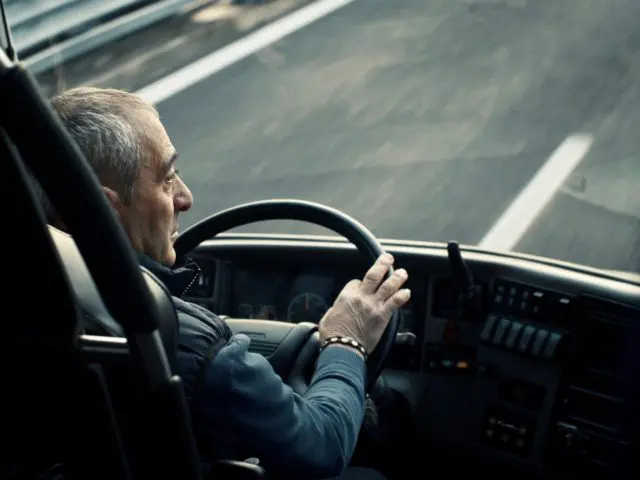
As the film notes in the beginning, one in two adults in Southern Italy are unemployed and so they travel on coaches to these job markets in the hope of gaining employment abandoning family with dreams still in their hearts.

A telling scene is when the man who arranges the trips for these hopeful souls is driving home with his business partner and he stops saying is it worth it for him to do this anymore in this recrutiment industry - the weight of the world and the burden he feels weighs heavy upon his shoulders. This moment is shot as an excised scene from Michael Mann's The Insider.


The ending of the film which poses more questions than supplying answers for those seeking employment, shows the individuals walking zombie-like with a melancholic ethereal electronic score underneath - this is a generation of souls lost without a direction in this world.

Filmed largely before but ultimately more impacted by the global pandemic, this overview of the Italian health system is both sombre and tragic. This film grips the audience and becomes an alternative road movie of sorts.

A Steady Job (Il Posto) will have its UK Premier and screen as part of the Cinecitta Italian Docs season at London's Bertha DocHouse on Saturday 24th June with a Q&A with directors Mattia Colombo and Gianluca Mattarese

Wednesday, 21 June 2017

La Strada

La Strada [Blu-ray] [1954]

Federico Fellini's "La Strada" (1954) tells a fable that is simple by his later standards, but contains many of the obsessive visual trademarks that he would return to again and again: the circus, and parades, and a figure suspended between earth and sky, and one woman who is a waif and another who is a carnal monster, and of course the seashore. Like a painter with a few favorite themes, Fellini would rework these images until the end of his life.

The movie is the bridge between the postwar Italian neorealism which shaped Fellini, and the fanciful  extravaganzas which followed. It is fashionable to call it his best work - to see the rest of his career as a long slide into over-elaboration.  However, the film won Best Foreign Language Academy Award in 1957.

In almost all of Fellini's films, you will find the figure of a man caught between earth and sky. You will find journeys, processions, parades, clowns, freaks, and the shabby melancholy of an empty field at dawn, after the circus has left. (Fellini's very last film seen in this country, 1987's "Intervista," ends with such an image.)

And you will hear it all tied together with the music of Nino Rota, who, starting with "I Vitelloni" in 1953, faithfully composed for Fellini some of the most distinctive film scores ever written, merging circus music and pop songs with the sadly lyrical sounds of accordions and saxophones and lonely trumpets.

Image result for Giulietta Masina La Strada

The cast is exemplary from Anthony Quinn's loveable brute to Giuletta Masina's innocent ingenue and shot with some beautiful cinematography which transfers beautifully on this 2K restoration and is a perfect stepping stone to see where Fellini was years before his masterpiece La Dolce Vita just three years later.

The DVD from StudioCanal is released for £17.99 and £22.99 on Blu-ray and would be a welcome addition to any World Cinema catalogue.

Tuesday, 18 March 2014

Salvo

Peccadillo Pictures


First seen on these shores during the 2013 London Film Festival when nominated for the prestigious Sutherland Trophy for debut feature film.  Salvo is visceral and dynamic bow by Italian pair Fabio Grassadonia and Antonio Piazza gains a theatrical release from Peccadillo Pictures on 21st March.

Salvo (Saleh Bakri) is the name of a Mafia hit-man in Sicily, Italy who is one of the best in the business as seen by the opening sequence when he takes out would-be aggressors.  His next big job involves him killing a rival clan.  During the job, he encounters a blind girl, Rita (Sara Serraiocco) who stands innocently by as Salvo kills her brother.  What follows is a morality tale between the two during intense exchanges, as Salvo becomes aware of his life's work and Rita becomes accustomed to her captor who spares her life and for both the journey together becomes one about redemption.

Shot on location in their hometown of Palermo, the directing duo bring a real sense of place and location to the action helped by growing up in the vicinity of the action.  The Mafia in Sicily is so prevalent to everyday life, the pair knowingly incorporate the myth and legend of the mafia into the story; the fear they hold over all who they surround is paramount.

Tellingly though, for a generic film of Mafia's built around the tropes of violence and action this film is slighter and softer; the eponymous hit-man is very methodical and deliberate in his actions which helps create an aura of mystique about him and a world of enclosure.
 
Bakri's performance of near muteness is a wonder here, his towering presence helping establish the solitary individual in his role; reminiscent of Clint Eastwood's famous Man with no Name and even Javier Bardem's performance as Chigurh in No Country for Old Men.

It is rare for a first time film to take such care in the construction of an aural landscape, the use of a particular Italian song when Salvo first intrudes Rita's house is a cleverly harked back to by the film's conclusion.

The sound design by Guillaume Sciama is exemplary and the script by Grassadonia and Piazza is first rate, conveying a sense of purpose for the lead characters without resorting to cheap narrative tricks and treating an audience with as much respect as they pay to their characters along with the situation they find themselves in.

Calling cards carry bombast, however the Italian pair have taken great pains to facilitate the world of isolation that both Salvo and Rita find themselves in; and the deliberate disruption of audience in terms of aurality and seeing and not seeing pays dividends.  Debuts can be clever, but rarely are they as intelligent and immersive as this.

Salvo (12A) is out on Friday 21st March from Peccadillo Pictures

www.peccapics.com

Monday, 26 September 2011

My Voyage to Italy - DVD review

Martin Scorsese narrates and presents a personal voyage through the history of Italian cinema, which had a huge influence on his life from an early age when watching it on his small television in New York when growing up, to the huge impact it has had on his esteemable career.

Featuring excerpts from many filmmakers he had enjoyed immensely; the neo-realism of De Sica and Rossellini, the surrealism of Fellini and the groundbreaking Antonioni.

The documentary is an epic in its own right, running to a mammoth 246 minutes (4 hours) of footage.  The only downside is the inserted images of Scorsese himself; he looks like a gangster standing atop a building in Little Italy, but the black and white camerawork, itself a nod to the monochrome beauty of the Italian cinema.  Yet there is a strange melancholy about the scenes of Scorsese, as if he is an omnipresent movie savant - in some quarters he is but unfortunately the scenes can be deemed a bit eerie.

What cannot be mistaken though, is the passion and enthusiasm of Scorsese's thirst to share his joy of these films with the masses.  You can put on retrospectives and write it in books, but sometimes putting yourself on camera makes for a more convincing argument, his empassioned narration further does justice to the debt Scorsese and many of his contemporaries (Coppola especially) owe these Italian masters.

The DVD 'Voyage to Italy' is out on September 26th, and has a recommended RRP of £14.99 from the good people at Mr. Bongo Films

Monday, 20 June 2011

Faccia a Faccia (Face to Face) - DVD review


The western genre is full of law and order versus chaos and violence; stand offs between two men who hold opposing virtues in equal measure and consider their respective cause as worthy enough to fight for.  In most cases, the sheriff who wants to uphold the sanctity of peace and goodwill in his far flung town, and the six-shooter who wants to get everything he wants through violence at any cost to human life. 

This exciting new re-released Spaghetti western flips the ideas of law and order, right and wrong, order and chaos and the identity of the good guy in westerns on its head.

Faccia a Faccia, is directed by Sergio Sollima (The Big Gundown) and tells the story of a retiring professor Brad Fletcher (Gian Maria Volante) who due to his poor health moves west for warmer climate.  As soon as he arrives, he is taken hostage by the bandit Bennett (Tomas Milian) and has to live with the gang. 

After initial reluctance, he finds a calling amongst his fellow criminal cohorts, taking to crime and thuggery with ease.  This leads to Fletcher overthrowing Bennett and initiating a crueller system of leadership instead, so in essence a standoff between two villains forms the central relationship and conflict of this film; the generic modification being that the more evil villain of the two was once a learned man.

I can see initial similarity to John Ford's The Man Who Shot Liberty Valance, where James Stewart's character Rance Stoddard when also moving west from the east attempts to incorporate his learned skills of knowledge upon the illiterate townsfolk with limited success.   
             Much like Fletcher, Stoddard is assaulted by Liberty Valance (Lee Marvin) on his first night in town and as John Wayne's Tom Doniphon explains to Stoddard - you have to fight fire with fire, and as much as Stoddard wants Valance put behind bars, violence is the only solution to a mind like Valance.  And so the famous conclusion with the realisation, and the memorable, 'when the myth becomes fact, print the myth' holds greater sway as Stoddard is now an elected Senator on the back of his feat of being said man.

The new print format on this DVD release from Eureka! entertainment features stunning cinematography in glorious Techniscope and a thrilling orchestral score from the renowned Ennio Morricone. 

The pictures and the framing of the action in this Texas landscape is helped by the ruthless and convincing performances by the esteemed cast.  Spaghetti westerns (western genre pictures produced in Italy) were made famous by Sergio Leone's Dollars (1964-66) trilogy featuring Clint Eastwood in the mid-1960s and this production made in 1967 is symptomatic of those thrilling films, retaining the same zest for excitement and thrill seeking.

Not to do a discredit this picture, it does convincingly portray a picture what the cruelty and ruthless west must have been like - the dynamic relationship between the learned Fletcher and outlaw Bennett, and how cleverly the educated man from the east attempts to takeover the man of the west, can be interpreted as a comment on imperialism which coming from a European viewpoint is both tantalising and alternatively creative.

However, as the western genre lives on mythologising men to epic status above their station as sheep herders and cattle ranchers; so this authentic slice of stylish 1960s Italian cinema, this film is ripe for reappraisal and should be allowed to create its own myths.

The DVD contains the original Italian audio with new English subtitles, and new Technicolour print; US and Italian theatrical trailers; an interview with director Sergio Sollima, a lavish 16 page booklet containing a new essay by spaghetti western expert Howard Hughes.

Available from Eureka! on Monday 20th June on both Blu-Ray and DVD

Monday, 23 May 2011

Le Quattro Volte

The long awaited sophomore feature from Italian, Michelangelo Frammartino, is released on Friday 27th May; and his second feature after 2004's Il dono (The Gift).  First screened at the Cannes Film Festival in 2010, the film is unclassifiable, not tied to any genre specifically but undoubtedly the best cinematic use of goats in film history.

The film's title can be translated as the 'four seasons' or the 'four turns' but is based upon the ideas of animism and reincarnation.  As Frammartino states in the production notes, "Man is made of mineral, because he has a skeleton; he's a plant, because he has blood flowing through his veins like sap; he's an animal, because he has mobility; and he's also a rational being. So in order to fully understand himself, a man has to understand himself four times."

The film follows a goatherd - and to quote a Sound of Music - he is a lonely one at that, he works tirelessly and only for the goats, he drinks water with dust mixed in with it, to tend to a tickling cough but it is given to him by the church - the tradition being that it translates as dust being a little particle of God, and dust is the first thing you can see in the light - as you head for heaven. We are witnessing the final days of an elderly man.


But it is the goats who are the stars of the show in this instance, and once the old man passes on, we are greeted with the birth of a kid goat - the film follows the kid on its first steps, before it rests by a fir tree.  It then renders its gaze on the tree through the seasons, before it is felled and re-erected in a village for a festival, then chopped into logs and entombed in another scarazzo.

This mise-en-scene is familiar to doyens and followers of the 'slow cinema' so prevelant in European cinema under the watchful auteur eye of Bela Tarr mostly and endorsed by such directors as Abbas Kiarostami.
Whilst the documentary eye of Frammartino is all encompassing, the necessity of these long takes where nothing happens is actually a narrative requirement and part of its development.

Not to say it is all slow and monotonous, Frammartino works a wonderful sight gag into the mix that has to be seen to be believed.

Shooting on a landscape close to the director's home, the film has his indelible thumbprint upon proceedings although it does need to tip its hat to the work of James Benning who gave us 13 Lakes, a director who can take inanimate or non-human objects as the basis for narrative focus and tell a convincing story in the process.

Frammartino does something more than that; he gives us a film that is poetic, spiritual, theological and strangely uplifting at the same time, that is without noting how beautiful the film looks with its sweeping vistas and landscapes, photographed by Andrea Locatelli. A film that is both surreal and real, rational and theoretical, it is a hidden gem and bares to be seen by an audience wider than the typical arthouse crowd.