Thursday, 29 February 2024
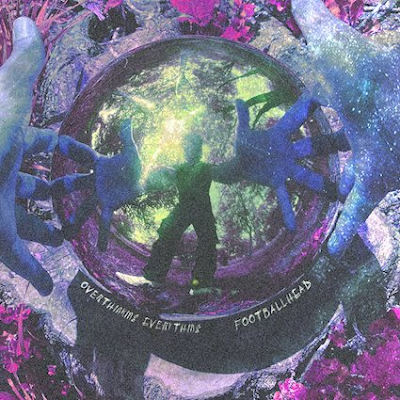
Footballhead - Overthinking Everything
Monday, 26 February 2024
Memory - Film Review
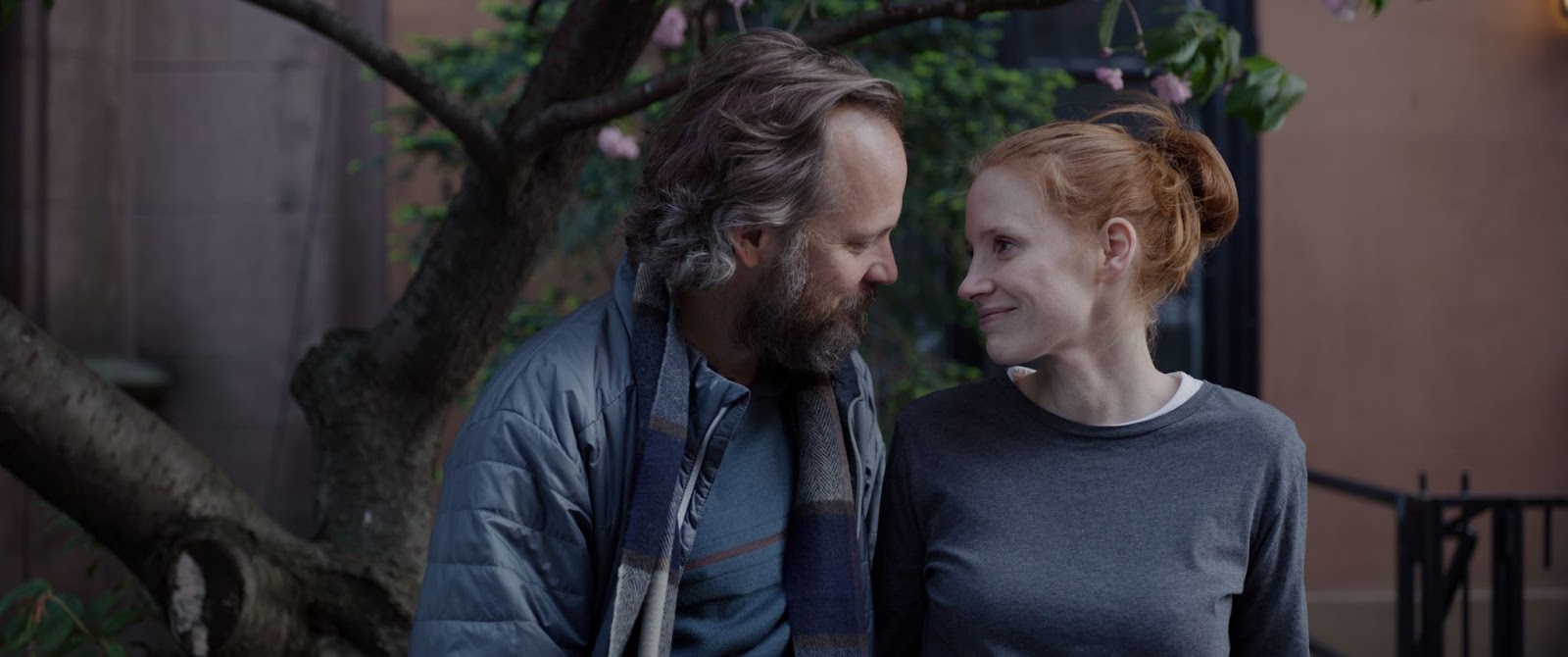
At the start of the film, we first encounter Sylvia (Jessica Chastain) at an AA meeting. She is a recovering alcoholic of 13 years and she has brought her daughter to the meeting for the first time, at the meeting Sylvia is being served platitudes from other people recovering from crippling addiction.
Shortly after, she attends a high school reunion with her sister, Olivia (Merritt Weaver). Feeling uncomfortable and wanting to go home, she heads for the elevated train where she is followed by Saul (Peter Sarsgaard) who then spends the night outside her home. The next morning Sylvia phones her support sponsor to pick him up.
A few days later they make contact and Saul does not remember following Sylvia home due to his short term memory problems relating to addiction. Saul requires day to day care while his brother and family work, Sylvia is a nurse at an adult day care facility and is asked by Saul's family to look after him.
From there, a kinship between the two and the comfort they feel in each other's company blossoms into an intimate relationship as time passes. Sylvia has long felt unsafe around men, this is due to being abused by her father from a young age, she resents her mother for supporting the father's behaviour and this led to Sylvia's alcoholic dependency.
Therein, lies part of the problem with the film, while it has two stellar lead performances from an outstanding Sarsgaard and always excellent Chastain who elicits the right level of vulnerability; the film does not hold your attention in terms of its low-key production design and overall bleak cinematography.
Case in point the big scene where Sylvia’s mum - the frightening Jessica Harper - and family confront her in Olivia’s home, the scene is blocked quite awkwardly with Mum’s back to the camera, like a confrontation in a theatre production it feels like the scene was shot hastily and without much care or perhaps the fractured haphazard approach is reflective of the breaking of memory amongst the lead characters.
The milieu and mise-en-scene displayed is very middle of the road and grey from the costumes of the characters, to the non-descript homes they live in, this is a New York set film but apart from key points like the elevated train this could be set in any American city which is part of the film's intention.
There are big points being raised in the film, ideas about addiction and how it grips the person and their families, the way the people who experience sexual assault and/or abuse are victimised further by people not believing their story to the warm solace hurt people find in each other.
The film has a slow cinema feel where an explosion of action or sound - in this case a hum of Procol Harem's 'A Whiter Shade of Pale' for the second or third time - jolts the viewer back to regain their attention. This is partly down to the performances of the other actors who are merely peripherals on the edges of the main leads, and the slow build of deep underlying emotion that never comes to the surface. Instead, our leads part and then are brought back together by the film's conclusion for an embrace that ends with that song again.
All in all, this is a film that has big intentions but is subdued in the execution and overall conclusion leaves the viewer wanting more than what was given despite the brilliant dual lead performances.
Wednesday, 31 January 2024
Peeping Tom
Released by StudioCanal Michael Powell's derided upon release but now lauded 1960 masterpiece is issued with a new 4K restoration release.
Starring Bohm and a plethora of British acting talent from the late 1950s, this is a rich and lush film ripe for the technical upgrades a restoration will provide.
His tale of voyeurism and a sympathetic serial killer, the film was released the same year as Powell's countryman Alfred Hitchcock's Psycho, a film that shares similar DNA and has had a shared revisionism to them both.
Carl Boehm elicits such a depth of vulnerability to the killer Mark, his aloofness and foreign-ness playing into the hands of the viewer. A criticism that would be aimed at Anthony Perkins' performance, the appeal of finding something within somebody evil made it seem unseemly for filmgoers, but the 1960s was a dawn of a new era of film-making with colour everywhere and new horizons abounding.
Having watched the film years ago, one forgot that the mother of Helen (Anna Massey), the girl downstairs who Mark takes a shine to, is in fact blind therefore she cannot be a victim of Mark. It is such a clever narrative idea in terms of character growth, development and a layer of intrigue for all.
As ever with Powell, there is a richness in the cinematography and the detail of production polish is paramount to the film being so well admired by all comers especially Martin Scorsese.
Powell does wonderful tricks with editing, sound design and a use of location - he borrows from Hitchcock in terms of building up tension such as with Moira Shearer's death where he constant moving puts us on edge as Mark hovers around her creating a murder scene without her knowing.
Peeping Tom is out on Blu-Ray/DVD from StudiocanalUK. Special features include an essay by Sir Christopher Frayling, a featurette Restoring Peeping Tom, intro by Scorsese, interview with Thelma Schoonmaker (2007), Powell's wife and an audio commentary by Ian Christie.
Monday, 29 January 2024
Natatorium
This new Icelandic thriller from debut feature director Helena Stefansdottir is one of the tensest films viewed in the last few years - blending influences from a range of sub-genres (haunted house; familial drama; psychological thriller) with directorial flourishes from Bergman, and Lars Von Trier. Family dynamism creates a hotpot of emotion that lends itself to film treatments.
The story revolves around a young girl who visits her grandparents in a town whilst she auditions for a drama group nearby. From the outset, her arrival prompts a family reunion of sorts as her parents attend to see her and old wounds and secrets are revealed amidst this troubled situation.
Similar to the Pinter play The Homecoming the insertion of innocence or returning figure disrupts the status quo. Another film this viewer was reminded of was Thomas Vinterberg’s classic Festen (1995) which was part of the Dogme movement with compatriot Trier. That film similarly revolved around a family gathering where a dark secret is slowly revealed prompting paranoia and scrutiny resulting in an explosion of feelings that have been long hidden within people.
The strengths of Natatorium stem from the production design and the claustrophobic environment of the mise-en-scene with little details expressing larger notions exponentially; this along with the single location that entraps the characters cut off from the world - a key trope and strength of 21st century genre pictures Ex-Machina (2014) and The Menu (2022)- with the protagonists all trapped seemingly (one character, Kalli, the uncle is very much bedridden) in one place and strive to move and yet are anchored by this position due to the pull of family.
As well as the dysfuntional family element, there is the use of an indoor pool with water that serves as the device for rebirth and baptism, therefore, the connotations of religion and mystery are apparent adding to the enigmatic quality of the film in general. There is a repeating trend in the film for people seeking to purify themselves by holding their breathe under the water as a rite of passage as well as a physical endeavour of strength and control.

The film does have that thread running through also with Elin Petersdottir’s matriarch Arora, attempting to illicit some sort of strangehold of control over her family no matter the cost; this has resulted in the children having addiction issues of their own which is laid out within the narrative.
Dark and brooding in equal measure but filmed with a quiet panache that is not overbearing, this is a film about the troubles of being a woman and the juxtapositions of beauty and ugliness and light with dark, and how darkness evades upon innocence.
Featuring a strong lead performance by youngster Ilmur Maria Arnarsdottir as Lilja and veteran Petersdottir as Arora, the matriarch of the family who cannot let go of her grip upon those she has born.
Technically astute due to cinematography and editing all firing on high cylinders of performance, Natatorium is a chilling tale that will garner attention due to the nature with which it presents its delicate subject matter.
Natatorium premieres at the Rotterdam Film Festival in the festival's Bright Future Category from 28th January.
Thursday, 25 January 2024
Italian Doc Season - Pure Unknown
Screening as part of the Second Italian Doc House season at Bertha Doc House
A collaboration between contemporaries, screenwriter Valentina Cicogna and director Mattia Colombo; this true crime documentary stars protagonist and forensic pathologist Cristina Cattaneo; who is portrayed as a fiercely passionate activist for the dead.
Working in Milan and administering autopsies to those who have passed on; Cattaneo is a unique person with a singluar voice. As she works, many bodies arrive with no identification or name - from the homeless, to the young and old, to migrants who seek a better life and die tragically in the sea.
Cattaneo and her team are stringent in the belief that all people deserve the right to a burial no matter who that person may be and what life they may have led. The lack of dignity to some dead is startling as the people who may have known these unknown people adds to the grief, even more startling is the faith that the grieving put in a television show over the police in the search for answers.
Much like Colombo's last film A Steady Job (screened at first Italian Doc House), this is a document to a time that is changing amidst a global pandemic. Cattaneo wears a mask in her work but due to the crisis, she and everyone she encounters is wearing a mask all except those she treats in death.
The engaging character of Cattaneo is one that keeps you involved with the film that is as concise and precise as the doctor. Shot with clarity and accomplishment, this film serves as a reminder that life is too short and no matter how it ends, respectfully the life should be cherished in its conclusion. There is a care and attentiveness required for the dead that we have lost in the land of the living - Cattaneo strains to make that point clear to her peers and students.
Special mention to the music by Zeno Gabaglio which offers a touching sombre piece to this sensitive topic which handles its subject matter with such dignity.
Pure Unknown screens at BerthaDocHouse on Saturday 27th January 3pm with a filmmaker Q&A afterwards.
My thanks to Stuart Haggas for the review opporunity.
Friday, 24 November 2023
Unnatural Death - Patricia Cornwell
Out from Little, Brown; the latest DI Scarpetta novel by prolific author Patricia Cornwell
Set in and around the old abandoned goldmines of Virginia, Scarpetta is called to the scene of two bodies left for dead to the naked eye they have been mauled and it is declared unnatural to begin with upon first inspection. But then the refined coroner begins her work and uncovers there is more than what appears on the surface.
There seems to be a lot of political back-baiting occurring due to funding of government departments as her team has been whittled down along with the unwelcome return of an old fiend which will test Scarpetta's loyalty to her loved ones.
This was my first Cornwell novel, and I won the opportunity to review this new release by way of a competition on X garnering a review copy. The experience has left me gratified and appreciative, Cornwell has created a character that is appealing and forthright. Someone who you would go into battle with and a female character who is intelligent and respected in her field. There is to be a television series soon starring Nicole Kidman in the Scarpetta role - that mix of icy distance and experience coming together.
The mark of any long running series of novels featuring recurring characters such as Lee Child's Jack Reacher, is the ability of the author to welcome in new readers (such as myself in this instance) and not feel lost due to the concise plotting and expert characterisation.
This story goes at a clip and covers a lot of narrative content, yet it is done with such surgical precision, it will leave readers old and new to the Scarpetta universe very much satisfied.
My thanks to Georgina Moore and all at Midas PR for the opportunity to read this latest novel.
Please follow all the bloggers on the #UnnaturalDeath blog tour.
About the Author:
In 1990, Patricia Cornwell sold her first novel, Postmortem, while working at the Office of the Chief Medical Examiner in Richmond, Virginia. An auspicious debut, it went on to win the Edgar, Creasey, Anthony, and Macavity Awards as well as the French Prix du Roman d’Aventure prize—the first book ever to claim all these distinctions in a single year. Growing into an international phenomenon, the Scarpetta series won Cornwell the Sherlock Award for best detective created by an American author, the Gold Dagger Award, the RBA Thriller Award, and the Medal of Chevalier of the Order of Arts and Letters for her contributions to literary and artistic development.
Today, Cornwell’s novels and iconic characters are known around the world. Beyond the Scarpetta series, Cornwell has written the definitive nonfiction account of Jack the Ripper’s identity, cookbooks, a children’s book, a biography of Ruth Graham, and two other fictional series based on the characters Win Garano and Andy Brazil. While writing Quantum, Cornwell spent two years researching space, technology, and robotics at Captain Calli Chase’s home base, NASA’s Langley Research Center, and studied cutting-edge law enforcement and security techniques with the Secret Service, the US Air Force, NASA Protective Services, Scotland Yard, and Interpol.
Tuesday, 14 November 2023
Observations on Celebrities watching Themselves
Two honest documentaries tell the tale of two global superstars on Netflix
The insatiable need for celebrity news has come to a head over recent years, the need to know every living detail of the famed and fabulous from what time they wake up to what they eat in their perfect lives. Now as myself and my generation get older, we are always looking back at periods of our lives and also aware that the famous never totally recede from the spotlight.
Two documentaries have recently appeared on Netflix and both offer opportunities for the subjects to tell their own story of their careers, both stratospheric and both everlasting in many people's eyes. One about a footballer who transcended his sport to the point of becoming a brand in his own right, and the other a pop star who has had two phoenix like returns from the flames.
The first to drop for our binge-worthy tastebuds was Beckham, about the eponymous footballer who came to prominence when still a teenager at Manchester United in 1996, won the treble in 1999 and then left for Madrid in the early 2000s when his name was so big that everybody could name him or recognise the player without even seeing him play live.
The four-part documentary directed by Fisher Stevens (Los Angeles neighbour), is produced by Beckham and so tellingly, this is the brand making sure the narrative is the one he wants to be told. Now this is not an accusation of manipulation, but the funniest bit when he confronts wife, Victoria, about the type of car her Dad would ferry her to school in and then promptly closes the door on her was reminiscent of another clip from 1996 post-Wimbledon halfway goal when his father, Ted, is being interviewed and the camera whips to a young David poking his head round a door making sure Dad is singing from the song sheet.
This paints a picture of a man who is reluctant about sharing too much information with a media industry that would attempt to tear him down following the red card he obtained in a crucial World Cup knockout match for England in 1998 as well as mocking him for his fashion style and the relationship with Posh Spice, which many thought would derail his potential but actually his unwavering commitment to being the best player on his team set him apart from others.
The Beckham documentary, should have served as more of a celebratory piece to a playing career that was better than people remember but a document that is not critical and still used the adage of what goes on in the dressing room stays in the dressing room ethos.
While it was good to reminisce about Beckham's career as a football fan, it was sobering to see the scrutiny his performance was under more than anybody else playing at that time. And yet the production did smack of a Country Life fluff piece with little or no blowback on the man himself
The second documentary of note, is that of pop star Robbie Williams, who was one-fifth of Britain's biggest band, Take That in the mid-1990s, then left the band to pursue a huge solo career at the turn of the Millennium which was record setting and yet came with a heap of problems from constant media scrutiny to drug abuse and two rehabilitations.
Produced by Asif Kapadia (Senna, Amy), this documentary is not produced by the person in question, meaning that Robbie Williams is purely the subject in question and under the microscope. The device of Williams' looking at his history on a laptop while in his underwear reclining on his bed serves as a sort of duvet day therapy session for the popstar, with him stopping proceedings on a few occasions because he knows what is coming next and is reluctant to watch it any further. And yet as the film is shot at his home, his daughter Teddy interrupts on frequent occasions meaning we get a sense of past breaking into the present, a future the younger Williams could not have imagined.
Williams' life and career has been one of meteoric rises and very low lows, from the heights of being key to a boy band success it is not forgotten he was a mere 16 years old when it started and yet he was in a band with twenty years old and he notes, that age gap is vast at that time. He was a child in an adult world.
Unsurprisingly, he seeked solace in ingesting anything he could get his hands on from alcohol to cocaine and ecstasy. His first rehab comes at the age of 20, and then begins a solo stint but in partnership with Guy Chambers who wrote all the songs together with on his first four albums culminating in huge successes, based mostly upon the huge hit that was 'Angels'.
Williams is surprisingly, quite self-effacing and funny when watching himself back and very resentful of the things he has done to people - from his bitter jealousy to Gary Barlow to his casting aside Chambers' swiftly to basically not being able to trust anybody when so prevalent in the public eye.
The third episode which focuses on a very intense European leg of a tour shows the physical and mental torture his body endures going from show to show and as a document it cleverly shows the deteoriation of a body from working to breaking down mentally with shots of steroids injected (big mistake) to looking like a zombie from day to day, yet the pressure to continue on the wheel is paramount as his stage takes up 93 trucks. And yet too much time is given to the disastrous release of 'Rudebox' and the whole series misses his swing band era which was a huge success to his career.
While Beckham's look back at his career was more celebratory, Williams' look back is a reminder that warning signs were ignored and that mental health in young men, something which has been brought to public consciousness following the pandemic. A lot more is gained from watching Williams dissect his breakdowns than Beckham breaking down a free kick routine.
There is also a social comment, as Williams admits he joined Take That unable to read or write with no qualifications from school, yet he went on to become an Ivor Novello winner for his work yet that inability to communicate properly perhaps led to his unwillingness to speak out and ask for help; whereas Beckham came from a good household, a decent education albeit entirely built around his footballing prowess - he was able to batten down the hatches due to the fraternity he had at Manchester United after the red card at France 1998 and focus solely on performing. For Williams he could only find solace in alcohol or medication due to his lack of trust of others and coming from nothing and no support network there from the start for him
All in all, two fascinating documentaries about two fascinating individuals who were on the front pages for both the right and wrong reasons. Nostalgia yes but tinged with lessons to be learnt.
Beckham and Robbie are both available on Netflix now
%20Ltd.%20All%20Rights%20Reserved.jpg)