Showing posts with label English Premier League. Show all posts
Showing posts with label English Premier League. Show all posts
Monday, 6 April 2020
Tottenham v Arsenal
This is the original post, read the full link at THE HISTORY BOYS website
In North London, there is a rivalry that stretches the length of Seven Sisters Road. At the South of it are Tottenham Hotspur, founded in 1882, two-time English League Champions, the first British team to win a European trophy and winners of the FA Cup eight times.
At the other end are Arsenal, recently of Highbury, but now at the Emirates Stadium in Islington. Founded in 1886 but not in North London, and there in lies the birth of the rivalry. Arsenal were founded by munitions workers in Woolwich, South East London as Dial Square before being renamed Royal Arsenal, then Woolwich Arsenal. The famous emblem and nickname of the club, the Gunners comes from the association with the munitions workers.
However, in 1914 after a flirtation with bankruptcy before the start of The Great War, they moved to a ground north of the river and dropped the Woolwich due to the transplant to become just Arsenal.
As our current socio-political climate with a mass global pandemic bringing professional sports to a standstill, the first World War suspended all sport until it reconvened in 1919. At the end of the 1914-15 season, Arsenal were languishing in 5th place of the Second division. The First Division was expanded to 22 teams with the two clubs atop the second division, Derby and Preston duly promoted. Yet Tottenham were relegated, with Arsenal promoted in their place.

Monday, 23 September 2019
VAR - Reinventing the Wheel

The Premier League has a problem, and I am not writing this as a disgruntled Tottenham Hotspur fan whose team lost the possibility of a 2-0 lead away at Leicester. We were still 1-0 up and conspired to lose a game we were in the ascendancy of. Tottenham as a team has problems, and you cannot blame VAR.
I also write this piece as a football referee, one who has done the job for 20 years. Not since the back pass rule have we seen such a stark change at the top of professional football - a rule change that is changing the nature of football so much that it is all we talk about at length.
I accept the VAR decision (eventually), yet I am flummoxed that the FA, UEFA and FIFA are treating the utilisation of video technology with such difficulty as if it is the first time anyone has seen such technology before, as if they are reinventing the wheel.
Football feels it is the global sport, and to a great extent they are right. It is played everywhere, even Greenland, with over 200 nations in its world rankings attempting to qualify for Qatar 2022 where the final 32 nations will converge for the ultimate accolade.

Yet there are smaller sports in terms of global reach and power that utilise their own version of VAR to a greater benefit of integrity and professional standards.
Cricket take the border line fine margins such as LBW appeals, run out and stumpings to be clear in those matters; yet they broadcast it to the paying public at the ground to show the decision, they are also involved then in the theatre of the moment. At this moment, the public at the ground for football are oblivious of the video being shown to the VAR officials - this is disrespectful and ignorant of the masses.

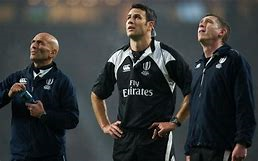
Rugby Union is enjoying its own World Cup in Japan, in the England game versus Tonga there were three possible tries in the first half; one given, one denied and one resulted in a kickable penalty. However, again the screen in the stadium was shown the footage; yet the difference is the referee is mic'd up talking to the man in the booth conversing on the decision at length but with intelligence and clarity to make sure the correct decision is reached.
It helps that rugby has a foundation of respect towards match officials, but the official is given the space to think and come to the correct conclusion. Unlike football where you would be encircled by both sides wanting their preferred outcome. In that instance you have 22 voices shouting at you and one in your ear, when you should be focusing on hearing the one in your ear. No wonder the pressure is so high, how can you concentrate when you have so many voices baying at you.

Yet the arrogance of football, as the global commodity it is which comes with a global currency is intrinsic to the problem. Football is a universal language as all high class sports are, a language that crosses boundaries, cultures and dialects to be played by all; yet the arrogance with which they have gone about implementing video technology - from the reluctance to utilise goal-line technology at World Cups to the unwillingness to address visual and verbal dissent towards highly pressurised match officials smacks of governing bodies standing still while the world sped up, even throwing the collective full VAR muscle at the Women's World Cup smacking of hypocrisy and sexism making the women mere guinea pigs for the more important male subjects.
Football is game that is simple to play, simple to coach and if done right, simple to referee. Yet the game has slowly been stripped off its values as bank balances swelled and popularity soared to unseemly levels.
While VAR will become more expected as creases are ironed out over the season - a number of games have gone by without incident - yet they need it to alter initial penalty decisions overturn errors and have a referee go to the video itself to see the error of his or her ways.
Football should realise it is not reinventing the wheel, just added a better tyre to help with the tread.
Tuesday, 26 February 2019
Thoughts on Liverpool
Liverpool Football Club has not won the top division title since 1990, there fans know this, all football fans know this, all of Manchester knows this. They have never won the Premier League title, whereas Manchester United has done, quite a few times. When Liverpool last won the League title it was their 18th triumph, the most in the English top ranks. Man United had only won six. Then the dawn of a new era heralded a changing of the guard and as Liverpool struggled to find a worthy successor to King Kenny Dalglish, United had Alex Ferguson to strike.
Man United now have 20 league titles in total, the 19th was cheered more than the 20th or the first under Ferguson's guidance in 1993 on that Monday night against Blackburn.
On Sunday, Liverpool were playing their game in hand over Manchester City (while they played in the League Cup final). This game was played at the old enemy's fortress Old Trafford - a place called the Theatre of Dreams but it has been anything but utopia recently under the stewardship of Jose Mourinho. Now Mourinho has gone, Ole Gunnar Solskjaer is riding the rocky ship and guiding the Red Devils to an unlikely Champions League position which in November seemed unfathomable.
Liverpool had the opportunity to go three points clear of Manchester City, an important landmark in this tight season and with Tottenham Hotspur having been defeated on Saturday at Burnley, the chance for breathing space was paramount.
However, the chance slipped by as Liverpool who have fluffed lines recently away at West Ham and at home to Leicester and showed fallibility in a league victory over Crystal Palace. In a game where they played virtually their full strength side bar James Milner at right back over an ailing Trent Alexander-Arnold; Man United had an injury crisis culminating with them committing all three substitutes in the first half (Ander Herrera, Juan Mata and Jesse Lingard) and Marcus Rashford playing 75 minutes with an injury of his own and having to stay on the field in vain, this forced Romelu Lukaku to play out on the wing while Rashford committed sprints when required.
Liverpool were playing against 10 men in the second half, and yet they could not breakdown a resolute defence led by Luke Shaw's impressive display in nullifying the threat of Mo Salah.
Yet there in lies a problem with Liverpool - the front three of Salah, Roberto Firmino and Sadio Mane - has been the lack of goal threat in times of stalemate. The reliance upon goals from the trio is a problem as the midfield trio that started against Man United - Jordan Henderson, Gigi Winjaldum and Fabinho - have only scored six goals all season, that is not enough for any side with title aspirations.
This is Klopp's dilemma in not being totally gung-ho, the midfield trio affords him stability with Andrew Robertson marauding down the left when allowed but that midfield triangle offers no creative inspiration to unlock resolute defences. Firmino went off injured to be replaced by the lacklustre Daniel Sturridge.
When the game demanded invention, Klopp took off the captain Henderson for Xherdan Shaqiri to hopefully create a chance that never came. The decision to withdraw Henderson made sense, the club captain coming back from injury had played 90 minutes midweek against Bayern Munich so resting muscles was Klopp's concern. However, the reaction from Henderson to being substituted ignoring both Klopp and the incoming sub spoke volumes of possible upheaval behind the scenes and the problem with player power as individuals feel they should remain untouched. Salah was substituted with 10 minutes remaining and he afforded no ill will - he must have known he did not give his best.
Liverpool had the opportunity to make a statement and give the title another twist and some distance; yet with 11 games remaining they are only one point clear with games remaining against Everton, Tottenham and Chelsea.
Manchester City are on a roll, they have won the first trophy of a possible unprecedented quadruple, players are coming back from injury and the rotation of the squad allows goals to be scored by many parties whomever starts games. For instance, in the final on Sunday the front three was Sterling, Aguero and Bernardo Silva; for the league game on Wednesday at home to West Ham you can anticipate a front three of Sane, Jesus and perhaps Sterling.
This rotation will afford Guardiola to maintain momentum while the options for Liverpool are thin and if individuals play with such impotency as Mane did at Old Trafford, the chance for Liverpool to gain that 19th title may be gone.
Man United now have 20 league titles in total, the 19th was cheered more than the 20th or the first under Ferguson's guidance in 1993 on that Monday night against Blackburn.
On Sunday, Liverpool were playing their game in hand over Manchester City (while they played in the League Cup final). This game was played at the old enemy's fortress Old Trafford - a place called the Theatre of Dreams but it has been anything but utopia recently under the stewardship of Jose Mourinho. Now Mourinho has gone, Ole Gunnar Solskjaer is riding the rocky ship and guiding the Red Devils to an unlikely Champions League position which in November seemed unfathomable.
Liverpool had the opportunity to go three points clear of Manchester City, an important landmark in this tight season and with Tottenham Hotspur having been defeated on Saturday at Burnley, the chance for breathing space was paramount.
However, the chance slipped by as Liverpool who have fluffed lines recently away at West Ham and at home to Leicester and showed fallibility in a league victory over Crystal Palace. In a game where they played virtually their full strength side bar James Milner at right back over an ailing Trent Alexander-Arnold; Man United had an injury crisis culminating with them committing all three substitutes in the first half (Ander Herrera, Juan Mata and Jesse Lingard) and Marcus Rashford playing 75 minutes with an injury of his own and having to stay on the field in vain, this forced Romelu Lukaku to play out on the wing while Rashford committed sprints when required.
Liverpool were playing against 10 men in the second half, and yet they could not breakdown a resolute defence led by Luke Shaw's impressive display in nullifying the threat of Mo Salah.
Yet there in lies a problem with Liverpool - the front three of Salah, Roberto Firmino and Sadio Mane - has been the lack of goal threat in times of stalemate. The reliance upon goals from the trio is a problem as the midfield trio that started against Man United - Jordan Henderson, Gigi Winjaldum and Fabinho - have only scored six goals all season, that is not enough for any side with title aspirations.
This is Klopp's dilemma in not being totally gung-ho, the midfield trio affords him stability with Andrew Robertson marauding down the left when allowed but that midfield triangle offers no creative inspiration to unlock resolute defences. Firmino went off injured to be replaced by the lacklustre Daniel Sturridge.
When the game demanded invention, Klopp took off the captain Henderson for Xherdan Shaqiri to hopefully create a chance that never came. The decision to withdraw Henderson made sense, the club captain coming back from injury had played 90 minutes midweek against Bayern Munich so resting muscles was Klopp's concern. However, the reaction from Henderson to being substituted ignoring both Klopp and the incoming sub spoke volumes of possible upheaval behind the scenes and the problem with player power as individuals feel they should remain untouched. Salah was substituted with 10 minutes remaining and he afforded no ill will - he must have known he did not give his best.
Liverpool had the opportunity to make a statement and give the title another twist and some distance; yet with 11 games remaining they are only one point clear with games remaining against Everton, Tottenham and Chelsea.
Manchester City are on a roll, they have won the first trophy of a possible unprecedented quadruple, players are coming back from injury and the rotation of the squad allows goals to be scored by many parties whomever starts games. For instance, in the final on Sunday the front three was Sterling, Aguero and Bernardo Silva; for the league game on Wednesday at home to West Ham you can anticipate a front three of Sane, Jesus and perhaps Sterling.
This rotation will afford Guardiola to maintain momentum while the options for Liverpool are thin and if individuals play with such impotency as Mane did at Old Trafford, the chance for Liverpool to gain that 19th title may be gone.
Tuesday, 5 June 2018
Gary McAllister

Full piece appears here
http://boxtoboxfootball.uk/gary-mcallisters-season-in-the-spotlight/
Gary McAllister is one of those players, that when people talk of them they are remembered fondly - not a bad word to be spoken of them, glowing praise radiates in odes to their past glories.
When people think of the Scottish midfielder what comes to mind firstly? A receding hairline or lack of hair altogether. A midfield maestro who could pick a pass with pin point accuracy. A reliable player who elevated every side he played for.
From his early career days for hometown Motherwell he left for Leicester City where in the then Second Division he drew acclaim before joining Leeds United in 1990. For many, McAllister was a key missing piece of a side that eventually won the First Division title, the last before the dawn of the Premier League and he was the lynchpin of a formidable midfield foursome of himself, Gordon Strachan, David Batty and the late Gary Speed - a best of British midfield.
Following a move to Coventry where he rekindled a partnership with Strachan, McAllister was nearing the end of his playing days and in July 2000 he signed a free transfer with Liverpool. To many an observer it was a strange signing for both the club to sign an ageing but gifted individual, and seen as a retirement move for the Scot taking the bigger payday to seat behind younger team-mates on the bench.
Yet the importance and quality of McAllister's dead-ball expertise came to fruition the longer the season went on culminating in a triumphant triumvate of trophies for the red side of Merseyside; in a season where they also finished third in the Premier League.
Starting with a League Cup triumph in Cardiff where Liverpool beat Birmingham 5-4 on penalties on 25th February. Birmingham were a Championship side at that time and came so close to causing an upset, yet the lottery of a penalty shoot-out fell in Liverpool's favour; tellingly McAllister scored the first penalty of the shoot-out, Birmingham missed their first attempt and momentum was with them.
From that game, Liverpool only lost two more games all season (a 2-0 defeat at Leicester and a 2-1 defeat at home to Leeds, who finished fourth and were on the crest of a great season themselves); most famously McAllister had the final say in the Merseyside derby on 16th April on Easter weekend at Goodison Park. An always tense match was locked at 2-2 when deep in injury time a free-kick was awarded to Liverpool the ball safely positioned some 40 yards away from goal.
Using his wealth of experience and intelligence, McAllister knowing the pitch was wet from rain took the decision to shoot for goal hoping for a shot on target might induce a goalkeeping error; a long run up was met by a shot on target and the ball found the corner of the net under the despairing arm of Paul Gerrard.
It was the first game, three days after the home defeat to Leeds, and the result galvanised Liverpool to go undefeated in the league for the remaining six games of the season to finish ahead of McAllister's former employer in the league.
McAllister had become the figurehead of the side surrounded by the burgeoning youth of England's finest - Michael Owen, Steven Gerrard and Emile Heskey. McAllister was the focal point of the side becoming as talismanic as Bryan Robson, Ray Wilkins and dare I say, Andres Iniesta. By being able to read the game with a brain, the game can slow down for you and he was able to see passes many would not.
McAllister became the shepherd of the new flock of superstars coercing the best out of this new breed of footballer in the soon to be christened Golden Generation with Owen himself taking over the mantle from Robbie Fowler. Credit should go to Houllier who was able to fit three midfielders like McAllister, Gerrard and Dietmar Hamann into an XI - Hamann could do the dirty work in front of a defence which allowed Gerrard and McAllister to express themselves fully with probing runs and assists.
McAllister's calm from the penalty spot was also seen as the responsibility would fall on his shoulders to convert the spot kick - there was never any doubt when he stood from 14 yards ready to give his side the lead.
Liverpool returned to the Millennium Stadium again in May to come from behind to defeat Arsenal with Michael Owen scoring twice in the final 10 minutes; McAllister himself came off the bench to help change the course of the tie. Trophy two had been gained.
A mere four days later, Liverpool heading to Dortmund to face Alaves in the final of the UEFA Cup. McAllister started this game and his influence was everywhere on the night. At the age of 36, McAllister was Man of the Match coolly converting a penalty in the 41st minute to give Liverpool a 3-1 half time lead. Despite the grit of Alaves to keep fighting and pulling back the tie, McAllister would have the final say.
With the game heading to a penalty shoot-out and Alaves down to 9 men; G-Mac stood over a free kick from the left wing; his quality of delivery was telling as an inswinging delivery was met by the fateful head of Delfi Geli who cruelly converted into his own net. With this being the dreaded period of Golden Goal, that settled and ended the match in an instant. Liverpool players swallowed up the Scottish veteran and jubilation rained on the field as Liverpool completed the cup treble. The first time ever an English side had won both domestic cup competitions and an European trophy in the same season.
McAllister's late season form means that it is his exploits that are more fondly remembered than that of the PFA and FWA Player of the Year Teddy Sheringham; many felt that McAllister's influence and far ranging appeal should have been acknowledged in some respect. However, to many Liverpool fans he is fondly recalled and for two months of 2001, Gary McAllister was perhaps the most important footballer in Europe.
Not bad for someone who was thought to be too slow for the quickening English Premier League.
Thursday, 8 February 2018
There's Bad, then there's Moussa
It seems like every time I go to Wembley to watch my beloved Tottenham Hotspur, I feel compelled to write a blog. This is good for thinking and putting thoughts down on paper. When I wrote before Christmas in criticism of Brighton's negative restrictive play in defeat, unfortunately this piece is again going to be in the negative.
However, it is not a negative piece about the FA Cup losing its lustre - seeing 7000 Newport County fans travel to London on a freezing evening shows that the competition will never lose appeal in the lower leagues because of days like this; it is not negative about Pochettino's team selection - this was necessary because of the forthcoming North London Derby three days away, it was correct to give Lloris, Vertonghen, Dier, Dembele a complete night off with the insurance policy of Eriksen, Alli and Kane on the bench.
No, this piece is about quite possibly the worst player I have ever seen wear a Tottenham Hotspur shirt which in watching the team for nearly 30 years I feel is quite a statement. I have seen some bad players - of varying positions and talent. Some could not step up to expectation and got found out (Neil Sullivan), some were not worth the exorbitant transfer fee (Sergei Rebrov/Dean Richards), some were just not good but showed endeavour (David Tuttle/Stuart Nethercott), some could be called donkeys but at least they produced (Gary Doherty) but never have we bared witness to a player of such staggering ineptness and cringe-inducing confidence. This player is more capable of passing the ball out of play than passing to a team-mate.

The player's name is Moussa Sissoko. The man who was paramount in France's gallop to the European Championship final in 2016, who put this same Tottenham side to the sword in a swashbuckling 5-1 defeat on the last day of the 2015/16 season in his last game for Newcastle United.
When playing for Newcastle, Sissoko played off the right wing and could run at the defence whilst dribbling at speed linking up with a front man effectively. This has not translated to the Spurs side which has featured numerous occasions of wasteful possession, misplaced passes and skewed shots. I have seen him unable to pass to a team-mate from three yards away, he runs into defenders thinking he can go through them like Superman however his feet are like two blocks of kryptonite when in possession. He runs ungainly, like a floppy limbed hurdler who has hit the penultimate obstacle in a 110m hurdle race falling unelegantly for the line and still landing five metres short of the finishing line.

Perhaps as a club we were guilty of signing a player who made our team look stupid on a bad day; he is capable of good days just not when wearing white. Perhaps he is not capable of succinct effective passing in a team used to counter-attacking at pace and precision.
It is a shame that this piece has to be written but when fellow supporters and viewers, keep uttering 'He's bad isn't he', 'He's awful' and words such as embarrassing are thrown about for a professional footballer it is important people are told. Sissoko will not (hopefully) be on the bench on Saturday afternoon, mostly because we have better players who will be better options.
Pochettino rung the changes last night to give players a breather from the workload of a season with continued involvement within three competitions; you trust that he will give the spectators a breather from Sissoko on Saturday.
Friday, 15 December 2017
Stubborn, Tense, Boring - English football on a Wednesday night
Having had the pleasure to go to Wembley Stadium, it might be a ball-ache to get to, but it is still Wem-ber-lee; to watch Tottenham Hotspur defeat Brighton 2-0 in the Premier League. It became quite apparent that there is a shifting between the top teams when they play at home versus the supposedly weaker teams of the division.
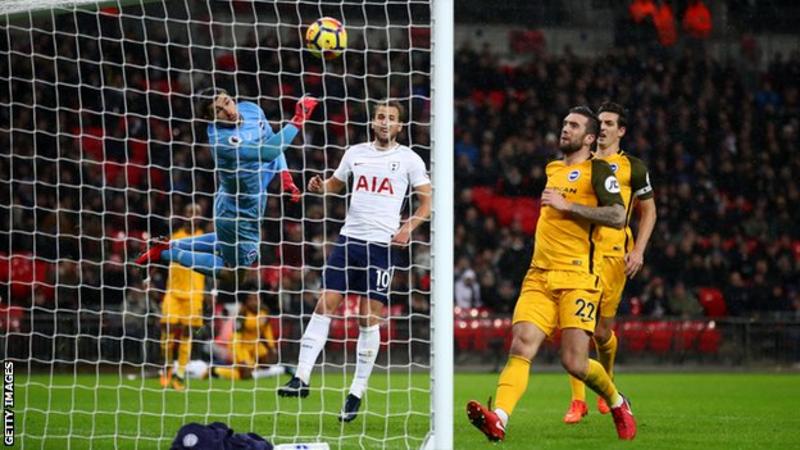
Tottenham especially have found it hard to break down disciplined defences at home on a wider pitch, coupled by a change in personnel and teams taking the calculated risk of defending for long stretches and hopefully be clinical in the final third should they ever reach it.
Dropped points at home to Burnley, West Brom and Swansea meant that Brighton followed the same song sheet; defend in two lines of four in defence and five in midfield with one lone striker running around forlornly.
Tottenham however seemed to play into their hands, perhaps a level of complacency, but also the re-introduction of Erik Lamela into the side following a long injury lay-off. What is most perplexing is that the Argentinian is a dominant left-footed player yet he drifts to the right hand side of the field, forcing him to stop and then cross allowing defenders to be ready to intercept passes by feet or head.
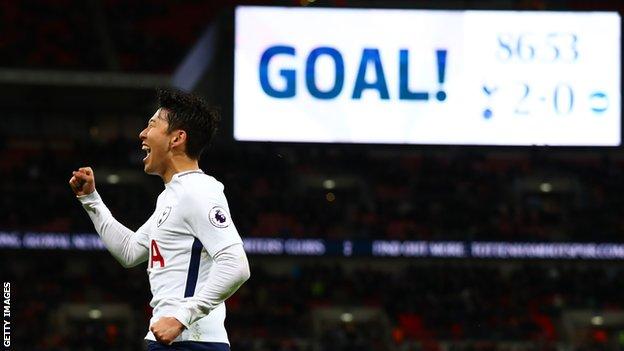
Son played with his usual zest running into channels but too often the team wanted and got the ball played to feet, not allowing pace in behind forcing defenders to turn and lumber into bad decision making.
Another surprise was the immobility of Harry Kane, who made little runs off the ball forcing midfielders - Harry Winks especially - to pass the ball continually sideways. The pace of Trippier might have unlocked the wing, and the team were slow to respond to the weakness of Brighton right-back Schelotto who showed little in the way of deftness and plenty of lead foot when up against Son and Rose down the left wing.
The lack of originality and imagination in breaking down a stubborn defence was indicative of the aural response to another backwards pass by Winks when there was space for him to move forward into and threaten the final third.

Is this a fear of making a mistake or a fear of taking responsibility? Once Winks was substituted for Dembele, there was an impetus within the side, seconded when Dele Alli arrived for a short 15 minute cameo which provided some drive.
Spurs appear to be a better side on the counter attack and soak up pressure themselves which is something they may well do versus Manchester City on Saturday night; however, there is a worry of this defence being able to sustain the constant barrage of City offence. The match should allow the opportunity to play in gaps between the defence and midfield with the ball at the feet of gifted players.
Tottenham will continue to have this problem, the first Premier League game at Wembley in the New Year will be West Ham; a team that soaked up Arsenal on Wednesday night followed by Everton and Sam Allardyce who did a number on Jurgen Klopp's Liverpool last weekend.

Yet Tottenham must come up with an answer to breaking down these stern defences if they want to maintain a Top four challenge whilst City runaway with the title. My worry is that Tottenham were boring on Wednesday night, although Brighton were frustrating in that they were two goals down in injury time away from home and they allowed Tottenham to pass to their hearts content and settle to concede no further. This is indicative of football in this day and age; West Brom away at Liverpool, Bournemouth at Manchester United all settling before the game plays out for a best case scenario of no goals and one point.
Tottenham especially have found it hard to break down disciplined defences at home on a wider pitch, coupled by a change in personnel and teams taking the calculated risk of defending for long stretches and hopefully be clinical in the final third should they ever reach it.
Dropped points at home to Burnley, West Brom and Swansea meant that Brighton followed the same song sheet; defend in two lines of four in defence and five in midfield with one lone striker running around forlornly.
Tottenham however seemed to play into their hands, perhaps a level of complacency, but also the re-introduction of Erik Lamela into the side following a long injury lay-off. What is most perplexing is that the Argentinian is a dominant left-footed player yet he drifts to the right hand side of the field, forcing him to stop and then cross allowing defenders to be ready to intercept passes by feet or head.
Son played with his usual zest running into channels but too often the team wanted and got the ball played to feet, not allowing pace in behind forcing defenders to turn and lumber into bad decision making.
Another surprise was the immobility of Harry Kane, who made little runs off the ball forcing midfielders - Harry Winks especially - to pass the ball continually sideways. The pace of Trippier might have unlocked the wing, and the team were slow to respond to the weakness of Brighton right-back Schelotto who showed little in the way of deftness and plenty of lead foot when up against Son and Rose down the left wing.
The lack of originality and imagination in breaking down a stubborn defence was indicative of the aural response to another backwards pass by Winks when there was space for him to move forward into and threaten the final third.
Is this a fear of making a mistake or a fear of taking responsibility? Once Winks was substituted for Dembele, there was an impetus within the side, seconded when Dele Alli arrived for a short 15 minute cameo which provided some drive.
Spurs appear to be a better side on the counter attack and soak up pressure themselves which is something they may well do versus Manchester City on Saturday night; however, there is a worry of this defence being able to sustain the constant barrage of City offence. The match should allow the opportunity to play in gaps between the defence and midfield with the ball at the feet of gifted players.
Tottenham will continue to have this problem, the first Premier League game at Wembley in the New Year will be West Ham; a team that soaked up Arsenal on Wednesday night followed by Everton and Sam Allardyce who did a number on Jurgen Klopp's Liverpool last weekend.
Sunday, 20 November 2016
Striker or Forward?
striker
ˈstrʌɪkə/
noun
- 2.the player who is to strike the ball in a game; a player considered in terms of ability to strike the ball."a gifted striker of the ball"
forward
ˈfɔːwəd/
adverb
adjective
- 1.directed or facing towards the front or the direction that one is facing or travelling."forward flight"
noun
- 1.an attacking player in football, hockey, or other sports.
These are the Oxford English dictionary definitions of the two terms. Football throughout its history is defined by the goals scored and the players who score them. Goalscorers are widely lauded and more fondly remembered in the annals of football; the Ballon d'Or (FIFA World Player of the Year) has been won by defenders and goalkeepers on only three occasions (Yashin, Sammer, Cannavaro).
The reason I want to ask this question is because of the way pundits and commentators refer to them during a game and in analysis. How would you describe someone like Diego Costa? Is he the same sort of player as Harry Kane? How would you differ between the categorisation of Lionel Messi and Cristiano Ronaldo?
This writer is hopeful that there is a way of distinguishing between the two based on the role in certain formations and the tactics employed by various managers throughout the years. For instance, I would categorise Ronaldo as a striker, one who is able to strike the ball well and scores goals. Messi therefore would be construed as a forward, he plays in the direction of the goal and is an attacking player; because he receives the ball some distance from the opponents goal and he travels towards it. Ronaldo, meanwhile, strikes the ball when he is near the goal making his late runs into the box and awaiting assists from his team-mates.
This is not an essay to say which one of those two amazing individuals is better than the other, that debate has gone on for far too long and they both are worthy of the praise they constantly receive with their place assured in the historical annals of the game.
My query is more so on how the positioning of these forward players is slowly changing as tactical mindsets alter in an ever changing football climate.
To go back to my earlier examples, Diego Costa by my definition would be a forward in both the current definition of an attacking player but also the forward in the mindset of British football as that strong individual who would lead the line up front, hold the ball up so supporting runners can join in the attack, distribute the ball to flying wingers much in the same vein as an Alan Shearer did do.

Harry Kane, meanwhile, is a striker in the vein that he is able of striking the ball well but fundamentally scores goals at a good conversion rate, able to score all manner of goals in differing varieties such as headers, curling shots, powerful drives much like Gary Lineker did or his current contemporary Sergio Aguero can.
Harry Kane, meanwhile, is a striker in the vein that he is able of striking the ball well but fundamentally scores goals at a good conversion rate, able to score all manner of goals in differing varieties such as headers, curling shots, powerful drives much like Gary Lineker did or his current contemporary Sergio Aguero can.
By my reckoning, a striker is the one who scores goals regularly and a forward is the number 9 who assists the number 10 in scoring more than him. Think of Mike Newell/Chris Sutton assisting Shearer at Blackburn or Peter Beardsley assisting Andy Cole at Newcastle United; all three players scored their fair few of goals but less than the striker.

A better example is probably the forward Niall Quinn playing in tandem with Kevin Phillips during his phenomenal 30 goal season in the 1999-2000 season, Quinn had 14 goals himself. That was the end of a three year partnership where Phillips scored 82 goals in 105 games, a ratio of 0.78 per game. That is a rate up there with the best of current prolific forwards such as Aguero and Kane.
So can we distinguish between a forward and striker so easily based on the number of goals they score, when you have the battle between Messi and Ronaldo going on and on, goal for goal? It may never be a clear distinction between the two but perhaps it is open for a longer and more thorough examination.
A better example is probably the forward Niall Quinn playing in tandem with Kevin Phillips during his phenomenal 30 goal season in the 1999-2000 season, Quinn had 14 goals himself. That was the end of a three year partnership where Phillips scored 82 goals in 105 games, a ratio of 0.78 per game. That is a rate up there with the best of current prolific forwards such as Aguero and Kane.
So can we distinguish between a forward and striker so easily based on the number of goals they score, when you have the battle between Messi and Ronaldo going on and on, goal for goal? It may never be a clear distinction between the two but perhaps it is open for a longer and more thorough examination.
Wednesday, 24 February 2016
Old Wenger

Do you remember that Friends episode when the other five find out that Phoebe has never seen the end of tear-jerking films such as Its A Wonderful Life and Old Yeller, never realising that Old Yeller is shot by his owner. Something struck me as odd last night listening to the reaction of the Arsenal v Barcelona Champions League tie where the Spanish holders won 2-0 to be in the driving seat before the second leg in three weeks time at the Camp Nou.
If Arsenal are eliminated it will be the sixth consecutive season they have been eliminated from the first knockout round of Europe's most prestigious competition without troubling their rivals. True, they have been unlucky in drawing the elite clubs. Yet that is always the risk you take in predominantly finishing second in the group stages.
It happened again this season, when Arsenal were on the back foot immediately after losing in Prague and then at home to Olympiakos. Yes, they finished second but the risk of drawing a Barcelona was very real.
What was surprising was the way Wenger are '95%' through today and how frustrated Barcelona would be that they did not firmly put the tie to bed with a more emphatic scoreline. Yet Wenger's honourable reaction to the defeat not making excuses and virtually falling on his sword for his players own failings was eyebrow raising.
Following the desperate performance at home to Hull City in the FA Cup at the weekend, which came less than a week after the euphoric home victory against Leicester City, you do wonder why Wenger struggles to motivate his players and why he fails so often with bad selection policies.
From playing Olivier Giroud as a lone striker when a quicker forward like Walcott or even hard working Danny Welbeck to press high up the field and pester the Barcelona defenders would have played into a gameplan. Instead the Giroud selection smacked of tried and tested, failing to see the necessity to innovate or try and disrupt Barcelona's tempo, too much respect was given to the Catalans.
Wenger strikes me as a manager on his last legs, one who is living off of past glories and bereft of inspiration in terms of formulating a plan, a manager too loyal to players who do not warrant it and a man who looks like he is running out of time.

The past two years of FA Cup victories have given him a stay of execution. The golden chalice is the Premier League title, something that has not been in his hands for 11 seasons. And now he stands on the brink of losing that to not only a competitor but his club's fiercest rivals, Tottenham Hotspur. A team led by a vibrant young manager full of tactics and an insatiable hunger to succeed.
Arsene Wenger seems to think he has a divine right to the title and to challenge for it, and yet with the failings of Chelsea, Manchester United and Liverpool as challengers the title was there for the taking for Arsenal, and yet he slipped on his lines and failed to get the purchases in either transfer window to support his injury prone squad.
Should he lose the title to Tottenham, there will be a huge sense of embarrassment and bemusement at the Emirates. He might well retire or be put out of his misery; and just like Old Yeller, Arsenal and Arsene never saw it coming.
Subscribe to:
Posts (Atom)