Showing posts with label football analysis. Show all posts

Friday, 15 December 2017

Stubborn, Tense, Boring - English football on a Wednesday night

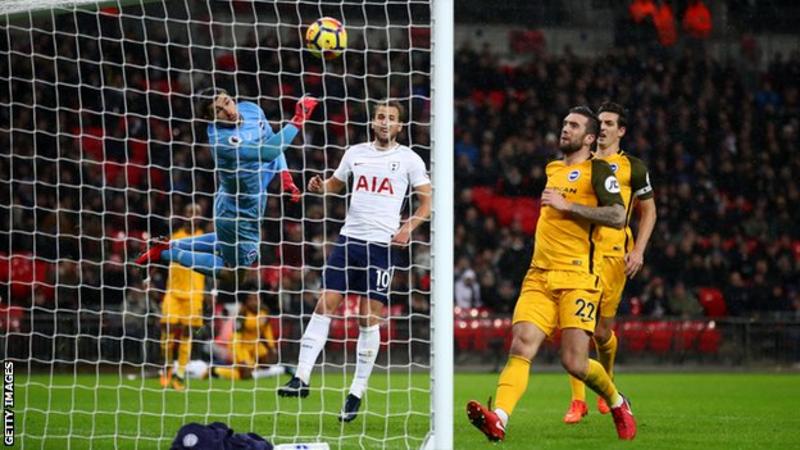
Having had the pleasure to go to Wembley Stadium, it might be a ball-ache to get to, but it is still Wem-ber-lee; to watch Tottenham Hotspur defeat Brighton 2-0 in the Premier League. It became quite apparent that there is a shifting between the top teams when they play at home versus the supposedly weaker teams of the division.

Serge Aurier (in the background, on the floor) scores for Tottenham

Tottenham especially have found it hard to break down disciplined defences at home on a wider pitch, coupled by a change in personnel and teams taking the calculated risk of defending for long stretches and hopefully be clinical in the final third should they ever reach it.

Dropped points at home to Burnley, West Brom and Swansea meant that Brighton followed the same song sheet; defend in two lines of four in defence and five in midfield with one lone striker running around forlornly.

Tottenham however seemed to play into their hands, perhaps a level of complacency, but also the re-introduction of Erik Lamela into the side following a long injury lay-off. What is most perplexing is that the Argentinian is a dominant left-footed player yet he drifts to the right hand side of the field, forcing him to stop and then cross allowing defenders to be ready to intercept passes by feet or head.

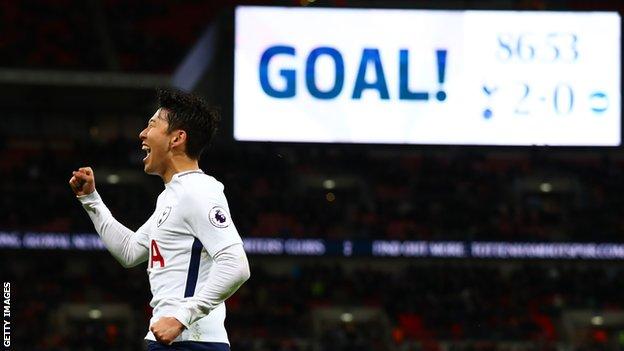
Son Heung-min

Son played with his usual zest running into channels but too often the team wanted and got the ball played to feet, not allowing pace in behind forcing defenders to turn and lumber into bad decision making.

Another surprise was the immobility of Harry Kane, who made little runs off the ball forcing midfielders - Harry Winks especially - to pass the ball continually sideways. The pace of Trippier might have unlocked the wing, and the team were slow to respond to the weakness of Brighton right-back Schelotto who showed little in the way of deftness and plenty of lead foot when up against Son and Rose down the left wing.

The lack of originality and imagination in breaking down a stubborn defence was indicative of the aural response to another backwards pass by Winks when there was space for him to move forward into and threaten the final third.

Image result for harry winks

Is this a fear of making a mistake or a fear of taking responsibility? Once Winks was substituted for Dembele, there was an impetus within the side, seconded when Dele Alli arrived for a short 15 minute cameo which provided some drive.

Spurs appear to be a better side on the counter attack and soak up pressure themselves which is something they may well do versus Manchester City on Saturday night; however, there is a worry of this defence being able to sustain the constant barrage of City offence. The match should allow the opportunity to play in gaps between the defence and midfield with the ball at the feet of gifted players.

Tottenham will continue to have this problem, the first Premier League game at Wembley in the New Year will be West Ham; a team that soaked up Arsenal on Wednesday night followed by Everton and Sam Allardyce who did a number on Jurgen Klopp's Liverpool last weekend.


Image result for chris hughton

Yet Tottenham must come up with an answer to breaking down these stern defences if they want to maintain a Top four challenge whilst City runaway with the title. My worry is that Tottenham were boring on Wednesday night, although Brighton were frustrating in that they were two goals down in injury time away from home and they allowed Tottenham to pass to their hearts content and settle to concede no further. This is indicative of football in this day and age; West Brom away at Liverpool, Bournemouth at Manchester United all settling before the game plays out for a best case scenario of no goals and one point.

Monday, 15 July 2013

The Stupid Footballer is Dead

The title is not a vendetta, and this is not a knife in the back versus the stupid footballing culture of young men getting lots of money too soon in the career.  Instead this small tome is a nice piece of intellectual and insightful piece of work by a former professional footballer.

Paul McVeigh, is a former Northern Ireland international who played in the top flight for amongst others Tottenham Hotspur and Norwich City.

McVeigh retired in 2010 after making his debut in 1996 at the age of 33.  That might sound a bit too early, yet McVeigh is now a highly respected motivational speaker and media analyst (www.paulmcveigh.co.uk) who is utilised by high ranking sides as a voice of reason and personality to speak to young players who are going through bad times.

Part autobiography, part memoir mixed in with the type of intellect seen previously in Matthew Syed's Bounce and Malcolm Gladwell's Outliers; McVeigh's book looks back on his own life lessons - such as turning up hungover for a reserve game, playing out of his skin in the first half and then hitting the physical wall after half-time.

Unlike present day players it seems McVeigh learnt from his mistakes and this is part of his theory into practice; he believes players need to put into practice mental preparation exercises as well as the physical conditioning and innate talent and skill at their disposal.

Each chapter has a mental framepoint exercise, where McVeigh mixes personal stories with mental exercises, ending with a personal appraisal of a role model. For example, Lesson Seven - Mix Intensity with Control where the author gives examples of Joey Barton, Mario Balotelli and Wayne Rooney as players who give into the red mist of anger from time to time, the role model he selects is Scott Parker.  A player who plays hard in training, and yet is a model professional off the field and like McVeigh has made the most of his ability to become a Footballer of the Year and England international.

McVeigh goes in depth with self-visualisation (which David James lived by) so players should imagine themselves scoring goals or saving them; focus on the game from day to day; by doing mental preparation it will improve your physical play.

My only concern would be when do young footballers get the time to do this self-assessment work on their own performance, players usually train for two hours a day and then go home.  Can they be expected to do this sort of homework when no-one is watching them?  He praises Paul Lambert immensely, and you can imagine Lambert was big on mental preparation for his young side as Aston Villa fought off the threat of relegation.

An especially enlightening story told is how Norwich lost at Leeds United due to a last minute mistake by Fraser Forster (now of Celtic).  Instead of reading the riot act to his side for losing all three points, he praised his side for doing so well and mistakes happen.  Forster felt better immediately, and his play at Celtic last season led to an England international call-up, Norwich then went on an unbeaten seven match run.  McVeigh's point is that by moving on to the next game and not focusing on the negative and instead focusing on the positive led to greater results.  Other managers would have crucified Forster and probably dropped him.

McVeigh says this was due to the time Lambert spent in Germany with Borussia Dortmund.  The perfect player for him would be a mixture of German mentality and technical ability of the Spanish footballers, particularly those from the Barcelona academy.

The Stupid Footballer is Dead is not a critique or an appraisal of the modern day footballer, more a plan of action to change the way footballers prepare for a game and then analyse their game to gain a further improvement. A must not only for football fans, but footballers themselves which is both accessible and riveting.

The book is out now from Bloomsbury Sport in paperback for £14.99

www.bloomsbury.com

Monday, 3 June 2013

The Future's Oxlade

England drew valiantly with Brazil 2-2 in the Maracana Stadium in Rio last night, and no doubt would have lost on penalties if this was a tournament match-up.

However, following on from the drab encounter against the Republic of Ireland last Wednesday, England came away with some much needed credit to their name after being described as going backwards as they stuck to a 4-4-2 formation.

In this day and age of fluency and flexibility, the requirement of players and coaches to adapt to in game changes must be prevalent and the need of utility and adaptability is paramount from all concerned.  Players need to have many strings to their bow and not just be very good at one facet of play.

Roy Hodgson should be applauded as well for going for broke in Brazil, with the Samba stars taking the lead  through Hulk, many expected either Brazil to push their advantage home or for England to wilt in the stifling conditions.

Yet the England manager decided to be bold and took the initiative substituting Glen Johnson for Alex Oxlade-Chamberlain of Arsenal, this allowed Phil Jones to revert to his more familiar right back position having been a part of England's three man midfield - along with Michael Carrick and Frank Lampard - and struggling to maintain possession.

This allowed Oxlade to play his preferred central position behind Wayne Rooney with James Milner and Theo Walcott threatening from the wings.

Oxlade was exceptional in his brief time on the field, he played with passion, a desire to get the ball and distribute it keenly and with intent to those around him.  Rooney appreciated this play to feet as for much of the first half - link play was disrupted by Walcott's wasteful possession and poor decision making.  Oxlade's injection of confidence to a flat-lining team paid dividends with him scoring his first international goal away from home, a crisply struck drive through a sea of players that left Julio Cesar no chance to thwart.

Oxlade's influence of counter-attacking had a hand in England's second goal scored by Wayne Rooney with a slight deflection - crisp quick passing from a Brazil corner led to link up between Walcott to Milner to Oxlade who freed Rooney to run with the ball and curl in a shot that with the deflection escaped Cesar for a quick turnaround lead.

England's lacklustre defence however, could not keep Brazil at bay and parity was restored when Paulinho converted a half-volley unmarked past Joe Hart, whose first half performance deserved more as he kept a rampant Brazil led by new Barcelona signing, Neymar and Chelsea's Oscar at bay with some fine saves and brave blocks.

Whilst this performance as a whole did not warrant a victory, it did give us a glimpse of England when let off the leash - an attacking threat which with the right personnel can be impressive and ask questions of any team, although this Brazil side is not the greatest vintage as they are going through changes themselves in preparation of hosting the World Cup next summer.

Call it is his lack of experience or perhaps the innocence of his play, but Oxlade-Chamberlain is a breathe of fresh air compared to his club-mate Theo Walcott who is a frustrating blend of expectation and a lot of overblown hyperbole.  Walcott has pace and speed to burn and yet unlike contemporaries Aaron Lennon and Gareth Bale, he seems unable to run with the ball at this feet nor be able to make a decision that does not involve shooting at goal.

If Lennon had not picked up another injury it was likely that based on his overall level of performance could have started one of these internationals, Lennon's final ball and delivery is vastly ahead of Walcott's yet Lennon does not have the shooting boots Walcott has something that is most helpful in an international tournament.  With Michael Owen retiring due to a series of hamstring injuries that caused him to slow down and end with a career somewhat unfulfilled, perhaps Walcott should take advantage of his potential now before his first serious injury causes him to slow down and burn out.

Whereas in numerous international appearances, Oxlade has shown himself to not be over-awed by the occasion and looks like the sort of individual who after another season in the battle of the Premier League will become a better player.

Albeit by this time next year as Hodgson runs the rule over his final 23 for the World Cup (should England qualify -fingers crossed), Oxlade will not be a secret weapon but nevertheless be the sort of player who can make an impact coming off the bench.

And in this age of rampant commercialism amongst football, pardon me if I use a pun.  For England, the future is bright, the future's Oxlade.

Thursday, 21 March 2013

Will AVB stop tinkering?

Being a Tottenham fan myself, I do try to not write damning pieces about our side and reserve my judgement to a sobering reflection across a pint or two with similar fans.

Over two weeks ago, Tottenham won the North London derby at White Hart Lane against rivals Arsenal 2-1 thanks to two goals in three minutes from Gareth Bale and Aaron Lennon.  Although they held on to the three points thanks in part to a solid rearguard led by captain Michael Dawson and Jan Vertonghen playing at centre back - the warning signs were there in the first half against the Gunners.

Until Gareth Bale scored the opener, it could be argued the lead came against the run of play with Arsenal enjoying the majority of possession and territory in midfield, albeit without engineering many chances of note.  The trio of Jack Wilshere, Mikel Arteta and Santi Cazorla over ran the midfield duo of Scott Parker and Moussa Dembele of Tottenham, until Spurs engineered a sleek passing interchange which led to Bale's neat finish.  Two minutes later, a defence splitting pass by Parker met Lennon on a run where he rounded goalkeeper Wojech Sczezeny to give a two goal cushion.

However, with Tottenham things are never easy or as easy as they should be.  Having gained a 10 point lead over Arsenal, Tottenham should have been aiming to catch Manchester City in second place and yet in the last two league games away at Liverpool and home to Fulham, Tottenham have contrived to lose six points when at least four were there for the taking to cement their position in third place and secure Champions League football.

Leading 2-1 away at Anfield with 20 minutes remaining, Spurs conspired to snatch defeat from the jaws of victory thanks to two lobotomised moments of defending.  Kyle Walker suffering from 'second-album syndrome' played an ambitious across the pitch backpass that left Hugo Lloris somehow attempting to clear the ball, which he missed and Stewart Downing easily converted.  Then Jermain Defoe toe-ended and skied a clearance twenty-five yards from his goal back into the penalty area, landing at the feet of Luis Suarez who was fouled allowing Steven Gerrard to convert the winning spot-kick.

After giving up the lead, Spurs struggled to create any noteworthy chances.  Then they lost at home to Fulham, thanks to a winning goal by returning Dimitar Berbatov.  In this goal, Tottenham again failed to create chances and met Mark Schwarzer in inspirational form in the Fulham goal.

What was most striking about the Fulham defeat was the bizarre formation and team selection employed by Andre Villas-Boas.  Having just survived a Europa League tie at Inter Milan on Thursday night after extra time from a seemingly comfortable position (see how it is never easy for Spurs); AVB started five players who played the entire 120 minutes of the Inter game.  And then seemingly played a hot-potch of the best available players in an eleven seemingly there to go and get the job done before the international break.

AVB might have been responding to Arsenal's 2-0 win away at Swansea on Saturday afternoon, yet Spurs are the form team and yet played in response to the team Fulham played.

AVB played Steven Caulker at right back to probably nullify Damien Duff or the running of Giorgios Karagounis or Bryan Ruiz; whilst Dawson and Vertonghen could contend with Berbatov.  Then he played Kyle Naughton at left back with Benoit Assou-Ekotto at left wing.  This strikes you as bizarre given how Naughton's form this season has been less than impressive and he is predominantly right footed also the positioning of Ekotto at left wing left him rather exposed and wasted, is he meant to supply cover for the youngster or be an out and out wide threat which he is not.

Elsewhere, Parker and Dembele played in front of the back four with Bale and Sigurdsson behind Emanuel Adebayor who played up front on his own.  This left Tottenham shorn of creative wing play; whilst Bale has been on fire, he needs to play on the left wing to terrorise whichever poor soul is playing right back.  Yet the absence of him, has led many to suggest and correctly that Aaron Lennon has been more important to Tottenham's great undefeated streak than the Welshman.

Lennon has been playing better in recent months, yet again though he has succumb to a niggling injury and his invention on the right wing in parallel to Bale on the left had led to many chances being created.  On Sunday, the idea was seemingly give Bale the ball and something may happen, clearly something did not.  Tottenham were too narrow and constricted which played into the hands of Fulham whose midfield was marshalled by Steve Sidwell and Ashkan Dejagah whilst Sascha Reither bombed forward when possible on his right wing, his run and pass set up Berbatov's winner.

AVB must have felt that Fulham could be defeated by simply turning up, which is unfair to under-estimate a Fulham side whose away form whilst poor belies the football they try to play under Martin Jol - quick passing, counter-attacking which Tottenham allowed them to do in the first half which gained them confidence.

An observation aimed at AVB would be why play Adebayor whose still is even more laid back than Berbatov, but who looked even more lethargic on Sunday after having played two hours on Thursday.  Although he scored the vital away goal, his form has been woeful and Sunday demanded a start for Jermain Defoe who is coming back from injury.

Also, why has Lewis Holtby been used less and less in the Premier League yet more in the Europa League.  Holtby has the industry to unbreak many defences yet he was an unused substitute on Sunday (three strikers were brought on instead - Defoe, Thomas Carroll and Clint Dempsey) in search of an equaliser and played only six minutes as a substitute at Anfield, again in search of an equaliser.

The loss of Michael Dawson at half-time to a hamstring injury was unfortunate and led to Caulker joining Vertonghen in the centre, yet the substitute was Clint Dempsey. The correct change would have been move Naughton to right back, Ekotto back to his preferred left-back position, Bale to left wing, Sigurdssson to right wing and Holtby in behind Adebayor or Defoe, yet AVB felt more forward power would overcome Fulham; a hard task against a veteran backline of Hangeland, Senderos and Schwarzer.
Tuesday, 6 November 2012

Thoughts on Mark Hughes

When you have two teams in early November who have not yet won a League game play each other, you think one side will take the bull by the horns and win the game given the opposition is as bad as you have been.

Watching the QPR game on Sunday afternoon however, you had two sides who have forgotten how to win a game.  Not without trying though, Reading were given a 4 goal head start against Arsenal during a League Cup tie and yet they failed to see the game out losing 7-5 in extra time.

Yet Reading have played some good stuff, they are full of tenacious individuals who you feel would throw themselves under the bus for Brian McDermott, who is not in a position of untenable pressure.  The expectations at Reading are more realistic than the tenants of Loftus Road.

For some reason, the owner of QPR, Tony Fernandes believes that the Hoops can be the next big noise in London and on a European stage.  Yet this is a side who four years ago were in the Championship - sacking managers left right and centre and until Neil Warnock was employed did the side get the much needed stability and eventual Championship title triumph resulting in a return to the Premier League.

In the first season back QPR suffered with these expectations, Warnock was deemed to be surplus to requirements.  Adel Taarabt who was talismanic during the the title campaign, was found out by Premier League's better defences and his own attitude problems did not help.

Now QPR have had a revolving door policy to talent, if we can find someone who is available and on paper you will be replaced.  Robert Green left West Ham hoping for a more lucrative contract, which he was given, yet is now warming the bench due to the signing of Julio Cesar from Inter Milan.  Tough choice to pick between a Champions League winner or an England international flop, although Cesar has been anything but solid lately, twice flapping at crosses/shots that led to conceding crucial goals.

However, for me the problem stems with the management.  Mark Hughes is the atypical mercenary manager, he has never stuck out a job.  His longest job was his first, when he managed Wales during 1999-2004 and nearly led them to qualifying for a major tournament for the first time since 1958 when he managed such talent as Ryan Giggs, Craig Bellamy, Robbie Savage yet he did not see them through.

Next was Blackburn Rovers where he led them to their best Premier League finish of 7th in 2007-08 (a position they have never returned to), and yet here was the first inklings of people's impression of Hughes changing. Every season he was in charge at Ewood Park, Rovers finished bottom of the fair play league.  A position QPR are sitting in now, as they have a player sent off every other game.  The red card away at Arsenal cost them a point, although Hughes is always quick to blame the referee.  When neutral observers would state that when you are bottom the rub of the green is never there for you.

Hughes left Blackburn for Manchester City during the summer of 2008 and was in charge until December 2009, when he was sacked for Roberto Mancini.  Hughes was in place when the money from the Saudis arrived and he signed players who are very much the spine of Mancini's side - Gareth Barry, Carlos Tevez, Joleon Lescott and he made the decision to start Joe Hart over Shay Given.  So perhaps the most influence Hughes has had is over another side to this day.

Next he joined Fulham in July 2010 after seven months of unemployment, he left Fulham after just one season although he gained them European qualification saying he wanted to further his experience. This upset Mohammed Al-Fayed, who judged Hughes to be a flop and a strange man.

The judgement of Hughes' managerial style is the same accusation that was levelled at Glenn Hoddle, a brilliantly gifted footballing individual capable of anything on the football field in terms of skill and invention; yet he is unable to shepherd similar youthful talent.  Remember QPR were very nearly relegated at the end of last season, even though they were sitting somewhat comfortably when Hughes replaced Warnock in January of this year.

The inability to communicate with players leads to a manager signing too many players, unable to get consistency in terms of selection and performance from his side.  You can imagine Hughes becoming bullish and frustrated with his players who are unable to fulfil the simplest tasks, remember the stories of Hoddle showing off his ability to pinpoint passes of 60 yards onto someone's toe or scoring ridiculous free-kicks.

Hughes own personal ability and ambition has never been in doubt, yet his unique way of communicating or lack thereof renders his head definitely on the block and probably two or three games away from the billionaire owner losing his patience and getting a better, more high profile manager in.  Hughes joined QPR because the money was good, and the players would sign for big pay cheques.  Maybe he is learning that it is hard to motivate lesser than good players who are being paid handsomely.

Thursday, 11 October 2012

England v San Marino Preview

Roy Hodgson is at the start of his first tournament qualification experience with England.  Having experienced a tournament proper without the burden of slugging through deepest darkest away days, he is sampling over the next five days the best and worst of international football.

On Friday night in front of a full house Wembley Stadium, Hodgson will be sending his team out to score goals goals goals against the feeble San Marino, who have not scored in four years and not won since their only international victory against Liechenstein in 2004.  Along with Bhutan and the Turks & Caicos Islands, San Marino are the lowliest ranked country under the umbrella of FIFA.

Hodgson must send out a team who firstly will find the game a test and be motivated to compete against semi-professional footballers.  Hopefully the home crowd can help suck the ball into the net.  However, like any England manager, Hodgson has to contend with selection headaches.  Already deprived of Steven Gerrard and Glen Johnson through suspension; you can now add Frank Lampard (knee) and Ryan Bertrand (throat) to that list, as well as the ongoing furore surrounding Ashley Cole's supposed punishment for his tweeting against the FA last week.

Hodgson also lost captain John Terry to international retirement yet has gained newly installed captain, Wayne Rooney to the side after he missed the Macedonia/Ukraine games owing to the large gash he suffered on his left leg.

So what should Hodgson do with his formation?  The loss of both Gerrard and Lampard has deprived Hodgson a chance to look at one without the other following on from another dismal performance together at home to Ukraine.  This may give Tom Cleverley a chance to cement a position in the side, or alternatively allow Rooney himself to play off a front man such as Welbeck where he can gather the ball from clubmate Cleverley or Carrick and dictate play with his enthusiasm and zeal.

Who should play up front with Rooney, or in front of him?  Club mate Danny Welbeck has a good partnership with Rooney as the start of last season showed, yet the purchase of Robin Van Persie at Old Trafford has meant less starts for Welbeck who often plays on the wing coming into play rather than an out and out forward meaning a dip in form.  Perhaps Andy Carroll is the answer, returning from a hamstring injury, a 60 minute burst against the minnows of Marino where his height and strength will be overbearing may be the right result.  Then just when they have seen the back of that man mountain on comes the wily Jermain Defoe who is scoring consistently for Tottenham, and is known for scoring late junk goals in one-sided defeats against tired defenders.

But what of the wings, should he play both Alex Oxlaide-Chamberlain and Theo Walcott from the start to bomb down both wings and offer support alongside Welbeck/Carroll with Rooney sitting deeper.  Personally, the sight of Carroll nodding headers down for free runners will be a good one and a certain amount of variety to proceedings.

As for the defence it picks itself right now owing to Terry's withdrawal, yet I would be prone to rest Ashley Cole and play the more in form, Leighton Baines of Everton who is in a rich vein of form and offers quality from set pieces and can get forward when necessary.  As does his right back counterpart Kyle Walker who is full of attacking threat but does not refuse to defend, unlike Johnson.

Suggested starting XI: Hart - Walker, Lescott, Jagielka, Baines - Carrick, Cleverley, Rooney - Walcott, Carroll, Oxlaide-Chamberlain

Follow me on twitter: @JamieGarwood

Monday, 3 September 2012

Lamenting Liverpool

Liverpool FC are supposedly in crisis, they have one point from there first 3 games. They have failed to score in two of those games, they gifted the one point to their opponent in the other.  They have just offloaded a certain striker.  Yet this is Liverpool, they play to full houses, they still have quality in the squad yet this is a crisis.

You may detect a whiff of sarcasm in that opening paragraph, mainly because this is not a crisis.  This is a team in transition.  Over the summer, the decision was made to inject fresh blood into brand Liverpool by the Fenway Sports Group (FSG) led by John Henry, who owns the Boston Red Sox.

They sacked legend Kenny Dalglish and hired Brendan Rodgers from Swansea City, who elevated the southern Wales team from the Championship to the Premier League; leapfrogging Cardiff and playing football that was both beautiful and profitable.  Rodgers employed the tactic of tika-taka football like Barcelona, using a lot of possession to frustrate opponents yet being clinical with finishing; in their first season in the Premier League, they were safe with something to spare winning many friends and respect from fans.

Rodgers needed to get some talent in, yet for some reason the funds that were available to King Kenny - who bought Carroll, Downing, Henderson, Adam - were seemingly this time unavailable to Rodgers.  Rodgers did manage to bring one stalwart of his Swansea side, Joe Allen with him; and they were able to swat away admirers of Martin Skrtel, Daniel Agger and Luis Suarez to remain at the club.

Now Rodgers has a side with general quality, but no impact players apart from Andy Carroll on the bench, then Liverpool made the costly decision of letting him go to West Ham on loan for the season.  Carroll's debut for the Hammers on Saturday for an hour before an untimely hamstring injury, showed him at his best. A fearsome aerial target who brought fear to the Fulham defence, his mere presence led to two goals coming from set pieces as West Ham maintained a 100% home record.

Liverpool on the same weekend at home to Arsenal looked toothless and lifeless in attack.  Rodgers system of 4-2-3-1 is all well and good for keeping possession and soaking up pressure but if you do not have the right people doing the right jobs it will come with no end result.

The problem for Rodgers and most importantly Liverpool is that they have a personnel issue.  The players there are not the right ones for the job.  At Swansea, he had men like Neil Taylor, Leon Britton, Gylfi Sigurdsson who could do a job in linking up with Nathan Dyer and Wayne Routledge whose pace was second to none, whilst Danny Graham would be that goal poacher up front.

Liverpool unfortunately have a midfield general in Steven Gerrard who has always been more combative than  creative; he is good in a fight but he has never had a good touch and his wayward pass led to Arsenal's first breakaway goal.  That goal was also helped by a wayward defensive display by Glen Johnson at right back. Whilst Rodgers must like the idea of having Johnson bombing forward, he must not neglect his defensive duties that left Messrs Skrtel and Agger exposed as Lukas Podolski scored his and Arsenal's first goal of the season.

Also, Pepe Reina is having a bad time or crisis in confidence.  In midweek he dropped a shot from a Hearts player into the net, adding to the number of goalkeeper errors occurring so far this season; but he was to blame for allowing Santi Carzola to seal the game on 68 minutes as he was down too slowly and it ricocheted into his net.

Rodgers would be better served, using Martin Kelly when available at right back and morph Johnson into a right winger like Gareth Bale did for Tottenham in those nights against Inter Milan. With Johnson and Stirling down two wings you have the pace of Dyer and Routledge replicated.  It does bear a question as to why they did not pursue Scott Sinclair who has been sold to Manchester City, when he clearly wanted away.  Whilst Allen is a good player, he will not win you matches like Sinclair possibly can.

So is Rodgers to blame for raiding his former club for the wrong players?  Liverpool are not in crisis, they just maybe put themselves in that position.

Monday, 27 August 2012

Premier League Week 2 review

The one thing I hate most about the Premier League and the 24 hour sponsored Sky Sports News coverage, is the need for status and position amongst fans.  After one game, we have to suffer the Premier League table with teams on top based on the fact they scored more goals than other victorious sides.  My belief is that the relegation zone should not be thrust into our screens until the start of December, when the games come thick and fast which can influence the position based on injuries and colder weather.

After the first week, though those happiest with there work obviously were the teams who won, some more convincingly than others; Swansea, Fulham, Everton, West Brom and Chelsea were over the moon; whilst Man City were lucky to get past newly promoted Southampton, with a 3-2 victory but the loss of Sergio Aguero for a suspected month due to a knee injury.

So week 2 is not really week 2 for Chelsea, who played there third weekend game at home to Reading early due to their involvement in the European Super Cup in Monaco on Friday.  After an initial scare and blunder by Petr Cech, Chelsea came back from 2-1 down to win 4-2.

So what else happened this weekend?

1. Chelsea lay down a marker
Okay, Newcastle had less than 48 hours to prepare for this game due to their own European travels.  Yet they came up against a confident Chelsea side, thanks in part due to the creative invention of Eden Hazard who is making everyone look better around him.  Fernando Torres is looking hungry, due to him being top dog and not having to compete with Didier Drogba.  Juan Mata is being given creative licence without doing much with it due to Hazard's great first week in England.  Defensive solidity remains in the form of Gary Cahill in spite of John Terry's neck injury which ruled him out.  Three wins from three is nothing ominous, but is still a good start.

2. Is Rooney's injury a blessing in disguise?
Wayne Rooney suffered a severe gash on his inner right thigh above the knee due to an errant stud by Hugo Rodallega in injury time during Man United's 3-2 win over Fulham.  Rooney started on the bench, as Ferguson granted Robin Van Persie a start on his home debut.  Rooney is set to miss a month of action, including both of England's World Cup qualifiers in September.  Yet for Ferguson, this could be a god send to a side to integrate a new style of forward into the United way without the trouble of rotating and worrying if they can co-exist.  RVP can go about his business, and build up some good links between himself, Ashley Young, Nani and the impressive Shinji Kagawa.

3. Teams refuse to be beaten
West Bromich Albion will consider the first week a great one. Steve Clarke's side followed up their home victory on opening day versus Liverpool with a point at Tottenham thanks to a last minute equaliser by James Morrison that prompted an 11 man bundle in the centre circle, a sign of Baggie resilience and togetherness.  In spite of a torrent of Tottenham attacks from Gareth Bale and Jermain Defoe, Spurs could not get the second goal. Clarke threw on Romelu Lukaku whose size and power worried Vertonghen in defence.  This resilience must be instilled by Clarke, a defender himself who refused to be beaten himself as a player, in contrast to Mark Hughes at QPR who has chosen to build his side from the front rather than shore up his leaky, creaky defence.

4. Arsenal are nearly in crisis
Okay, two games and two points would be fine.  You have not lost a game yet, but you have not won a game either.  You seem to be difficult to break down in defence, yet you have not scored a goal either.  The departure of Van Persie was expected, and the tight wad Wenger did spend money on Lukas Podolski and Oliver Giroud as suitable replacements; yet Arsenal seem to miss that creative impetus in their midfield with the continued absence of Jack Wilshere.  Alex Oxlaide-Chamberlain is coming on, yet the enigmatic Theo Walcott is again awol without warning.  Due to recent history, a point at Stoke is not bad considering no players were injured, but the lack of goal threat less than last week versus Sunderland will be a worry.  But only a worry if they go to Liverpool and fail to score next week.

5. Liverpool still can self-destruct
Last season, Liverpool endured a terrible season yet they somehow still won a trophy.  The omens are better for this season, Brendan Rodgers has entered hoping to instil the Swansea ethic to Anfield and bringing Joe Allen with him will be a good move.  Rodgers started in coaching with youth, so Raheem Stirling will prosper under him.  Yet Liverpool with all the belief in them in front of the home faithful played very well against the Champions Man City in a 2-2 draw, yet somehow conspired to throw away victory.  A fumble off of Martin Kelly fell to the feet of Yaya Toure to poke home the first equaliser.  Then having regained the lead thanks to Luis Suarez's beautiful free-kick, goalscorer Martin Skrtel played a blind backpass aiming for Pepe Reina which was both soft and off target, except straight to Carlos Tevez's feet who easily rounded the stranded keeper for his 100th PL goal.

6. Laudrup > Rodgers
Michael Laudrup must think this PL lark is easy, considering he has been at the helm for two games, eight goals and none conceded.  Like Rodgers, Swansea keep the ball in possession making it difficult to win the ball of them, then soak up any pressure thrown their way followed by a brisk counter-attack and ruthlessness in front of goal.  Swansea punched above their weight last season, getting goals from many people but in new signing Michu they have a goal-snatcher in the Lineker vein; who can sniff up mistakes or score crackers as well.  The 3-0 victory at home to West Ham was helped by two defensive lapses, yet the dominance was not something you would have seen from Rodgers' side last season.

Monday, 25 June 2012

England v Italy review

So once again, lady luck proves to not be an England fan as Roy Hodgson becomes the latest England manager to succumb to the dreaded penalty shootout.

England lost 4-2 on penalties after 120 minutes of stalemate football, as England struggled to create chances against a strict Italian defence led by the mighty Gianluigi Buffon in goal.  England were thankful themselves for the continued form of Joe Hart in goal, as he kept at bay his club team-mate, Mario Balotelli and the engineer Andrea Pirlo who was unanimous as man of the match.

Pirlo dictated the pace of the game, able to pull the strings and orchestrate the action at a pace he suited in his advancing years.  He was helped by the fact that he had two midfielders along side him, this meant that Steven Gerrard and Scott Parker were outnumbered in midfield allowing Pirlo a total freedom of the Kiev pitch.

Yet England looked lacking in ideas and originality, unable to create anything, not getting anything from the wide men, relying on set pieces to count as attacking opportunities.  So where did we go wrong?

1. Wayne Rooney failed to step up
Whilst it would be unfair to single out one man for England's defeat on a shootout, Rooney was expected to return to the England side full of vigour and intensity following his two match suspension.  He can be forgiven for ring rust in the first game against Ukraine, in which he scored, yet his anonymity for much of the two hours of football cannot be.  Rooney was in his fourth tournament, and yet it still feels that he has been unable to replicate good club form to an international platform.

2. Injuries ruined England's gameplan
The dual injuries to Frank Lampard and Gareth Barry denied England the opportunity to fully employ Roy Hodgson's gameplan of flooding the midfield.  If Barry had been fit, he would have joined Gerrard and Parker in the centre able to combat the three man Italian midfield, and also allow Gerrard to support the front pair more often; something missing from the game.  Too often Young and Rooney were isolated with lack of support runners.  Lampard's form for Chelsea at the end of the season was mightily impressive with his mix of stern defence, tackling and bombing runs into the box.  Lampard would also have been a definite penalty taker last night.  Barry and Lampard's presence would have allowed the opportunity to rotate and rest Parker's ailing ankle ligaments; the fact that Jordan Henderson was his substitute spoke volumes.  The introduction of the Liverpool player at the bar where I watched the game, was met with a mixture of 'Oh no not him' and sighs

3. England need creativity
England were seemingly hoping to soak up the pressure from Italy, and possibly counter them on the break with the pace of Young and Welbeck.  Yet too often the final ball was poor and by the end England were hoofing the ball from Hart to Andy Carroll, a good ploy has Carroll won plenty of ball but had no options when he gained possession.  England need a player with a creative streak in him like Paul Gascoigne or Glenn Hoddle,someone who can run at people with the ball from midfield with an air of fearlessness whilst being assured, sadly that player was also one who was injured, Jack Wilshere.

4. Defence is key
Hodgson in his six games thus far has had four clean sheets; he has a pedigree of sorting out this problem.  He was helped by having a Championship winning keeper defender combination in Hart and Joleon Lescott, two Champions League winners in John Terry and Ashley Cole, and the reliable Glen Johnson who has grown in this tournament.  It would have been interesting if Kyle Walker had been fit what impact his darting runs down the right would have made.  Yet with Terry in the twilight of his years and pace alluding him, England have backups in Gary Cahill, Phil Jagielka, Michael Dawson and Phil Jones.  Thankfully also they have a world class goalkeeper for the next 10 years.

5. The FA picked wisely
The FA should be pleased with their appointment of Hodgson over Harry Redknapp, Hodgson did what was expected of him by getting England out of a difficult group.  He showed some tactical acumen as you would expect but also got a rub of some green and allowed the squad to display some harmony and unity from a press that were not expecting the world. You imagine if Redknapp was in charge, the gameplan would have been more gung-ho which can lead to it blowing back in your face.
Hodgson has laid the groundwork, now in conjunction with the FA and the new St.Georges Park complex opening in Burton; the head coach must have a say on what must be done technically to improve England in terms of ball retention, possession and ball retrieval.  At times Italy had three people swarming over Ashley Young to win the ball back; this is something Spain do effectively also.

Next for England is the qualification for Brazil 2014 in Group H involving Ukraine, Poland, Montenegro Moldova and San Marino. Whilst we should qualify as group winners and worst make a play-off, the away trips will be a big test of character for much of the squad.  Whilst we will not win the World Cup, and no European team has ever won a World Cup when it has been held in the Southern Hemisphere (you can include both Mexico World Cups in that also); the omens may not look good but then they did not four weeks ago.  Roy did the best he could do and so he should be applauded for that, having served himself with such distinction and class thus far.

Tuesday, 12 June 2012

England v France review

England have not had a great record in opening games of the European Championships; they have failed to win on numerous occasions.  Even Euro 1996 on home soil started with a less than thrilling 1-1 draw with Switzerland.

Monday night they opened Euro 2012 with the daunting task of playing France in Donetsk, Ukraine.  Following two 1-0 friendly wins, it was also Roy Hodgson's first competitive fixture as England manager.  Since being appointed 42 days previously, Hodgson has had little time to prepare the team due to Chelsea's Champions League exploits, mounting injuries and even Wayne Rooney's suspension for the first two games means continuity has been amiss.

However, England performed well drawing 1-1 with the ever improving French team who are being steered by Laurent Blanc and extended their unbeaten run to 22 games.

England took the lead on the half hour when Joleon Lescott headed in a free-kick, yet the lead did not last long as Samir Nasri replied on 39 minutes fizzing a shot by clubmate Joe Hart, who maybe should have covered his near post better.  One rule of goalkeeping, never be beaten at your near post.

With the group England are in, having the France game first was a blessing.  You can focus all your efforts on that one game, to garner a positive result and England did enough with potency to maybe snatch a win; James Milner had a glorious chance in the first 15 minutes when he rounded Hugo Lloris and with the goal at his mercy could only slice wide. Admittedly, the ball was on his weaker left foot yet the ball should have been tucked away easily.

England played with a definite defensive midset; once the goal was scored they like Chelsea did against Barcelona famously - set about having two banks of four when they did not have the ball making it difficult for France to get round them.  Yet this came back to bite them as they sat far too deep, inviting pressure and possession.  Nasri's goal came from a shot that was not shut down quickly enough, he had ample time (too much time at this level) to get the ball out from under his feet and blast the shot in.  A good accurate shot, Hart may have been blinded by bodies but the ball could maybe have been pushed round the post.

This was a shame as minutes previously, Hart pulled off a brilliant point blank save from Alou Diarra and he looked assured at other long-distance shots from Karim Benzema later, yet he nearly had egg on his face by a Franck Ribery in the second half when an opportunistic shot nearly sneaked in at Hart's near post; something you would not have expected.  Luckily, the curse of bad England keeper performances in tournament play did not appear.

The team England played was set out to flood the midfield and combat the creative influence of Nasri, Yohan Cabaye and Ribery who played with free licence behind Benzema.  England had Scott Parker and Milner play in holding roles, with captain Steven Gerrard just ahead hoping to give him room to roam and support Danny Welbeck up front, whilst Ashley Young and Alex Oxlaide-Chamberlain patrolled the wings.

Teenager Chamberlain started off brightly, being direct and showing intent to attack the full backs, yet he petered out by the end and it was no surprise he was substituted, the picking up of a caution did not help his freedom.  Young did well and showed his experience, yet he was not helpful in linking up with Welbeck who ran tirelessly.  The front three at times seemed to be fighting on their own; one attack in the second half had Young on the left wing, with possession but only two targets near the area.  This can be considered a missed chance as France left a lot to be desired in their defensive scheme; Glen Johnson got a lot of joy down the right wing and Ashley Cole sometimes found himself of acres of room on the left wing - a sign that France play too narrow and too often down their left side with Patrice Evra overlapping Ribery.

There was hope that Gerrard would be talismanic during this tournament, due to being entrusted with the captaincy and not having to take turns of going forward with Frank Lampard (injured but clearly missed), Gerrard does not time his runs into the box like Lampard expertly does so, or like Cesc Fabregas did for Spain's goal against Italy on Sunday.  Gerrard at times looks laboured with his running, and got tired by the end.

Whilst England's defence was stout and solid, the French did not offer much though you expect the French to improve as the tournament go on.  However, both sides should be wary of the other sides in the group.  Ukraine and Sweden served up a great encounter as the co-hosts won 2-1.  Ukraine have the home support, play with a unity of a team and now have a folk hero scoring goals, Andrei Shevchenko scoring two well-taken headers to cancel out Zlatan Ibrahimovic's opener.

Sweden who play England next on Friday 15th looked good in defence and Zlatan looked deadly at times, they will be a tough team for England to break down.  Something England will struggle to do so if they play the same team as expected; ultimately, England (like Sweden) need to win the game to consider reaching the quarter finals meaning the game could well be open as both teams seek a victory.  If the game is open, this could suit England with their pace up front.  A victory over Sweden would be welcome, as having to play Ukraine last and if a victory is needed then would be a tough task irrespective of the returning Wayne Rooney.