Wednesday, 25 May 2022

No Time To Die


The final entry in the Daniel Craig era of playing 007 came and went in November of 2021 after much fanfare and delay in release due to a pandemic that even MI6's finest could not contain.

Much was expected of the film with it being Craig's last foray in the tuxedo with us wondering would he be sipping on a martini by movie's end and how would they cope with the end of this window.


After finally getting to watch the film on Amazon Prime following the purchase by the global firm of the MGM catalogue, me and my wife tucked in on a Friday night after our six-month old went to bed and pressed play. For me it was as enjoyable a film watching experience I can recall in recent times, a joy of cinema going and a pleasure to watch capable film-makers marshal the telling of a story in homage and respect to a movie icon.

Icons are those rare beings, they stay with us no matter, they live on even when we pass, and the character James Bond has gone through six different iterations from the birth in 1962 under Sean Connery to the present date. We have known for some time this would be Craig's last performance as Iain Fleming's creation, and it does not disappoint.


A gripping pre-credits sequence focusing on Madeleine's youth where her mother is killed by a masked intruder to her home in Norway, then we are thrust into a romantic getaway for Madeleine and Bond in Italy which is quickly disrupted by Spectre with the ghosts of Bond's past - Vespa specifically - looming over him.

This leads to a dissolution of their relationship and a parting at a train station, we are then thrust five years into the future. Bond is living in Jamaica - a nod to where Iain Fleming wrote his character - he is essentially off the grid and retired from his job, when he is approached by an old friend, Felix Leiter (Jeffrey Wright) of the CIA who asks him to do a favour in Cuba. Therefore, the globe-trotting so familiar to a Bond film commences. Bond drops into Havana, where he meets Paloma (Ana de Armas - spellbinding in a brief 15 minute role), to take down a Spectre meeting. A great set piece follows culminating in a sinking at sea that Bond evades.


This leads Bond to return to London and meet M (Ralph Fiennes), who re-assigns him but without his moniker due to his retirement. This is the first of many permutations to make the viewer aware of the changes to Bond is having to endure be they an ever-changing world or the culmination of ageing as father time does not wait for anyone.

Throughout the film, you get the sense of Bond's ageing from how it takes him that little bit longer to recover from explosions he seems disorientated after a bomb explodes at a cemetery, with him struggling to regain his balance and equilibrium. Certain situations you get the sense of him struggling to comprehend and process the predicament such as a sinking ship, yet this is Bond we know he will triumph.


The climax of the film is so well handled as it portrays Bond as not merely an immortal icon but a man like all of us, fallible to mistakes, guilty of being overconfident and yet sentimental when love comes into the room.

No Time To Die is a fine send off to the Daniel Craig era, a self-reflexive work not just on his five films but the Bond oeuvre as a whole with a positive message to the importance of legacy and family heralded by the final song 'We Have All The Time in the World' by Louis Armstrong, originally performed in George Lazenby's solo outing On Her Majesty's Secret Service. You have to make time for family no matter what your job, even a world-saving spy needs a break from time to time.

No Time To Die is available to view on Amazon Prime. But I wish I saw it in the cinema.

Tuesday, 24 May 2022

Saul David Interview - Crucible of Hell


My interview with Saul David from 2020, in regards to his CRUCIBLE OF HELL book about the last great battle of WW2, Okinawa.

  • What was the genesis for you to cover this vital battleground and portion of WW2? It actually came out of my last book, The Force, about an American/Canadian special operations unit that carries out its first mission in the Aleutian Islands against the Japanese. It reminded me how little I knew about the Pacific War, and it sparked my interest. At around the same time I read an excellent book about Truman’s first year as president, which begins with Roosevelt’s death a few days after the invasion of Okinawa and climaxes with the decision to use atomic bombs to end the war against the Japanese. Quite a baptism of fire, for which Truman has not received the credit he deserves.

  • Do you feel as a historian, is the Pacific part of the war somewhat overlooked in terms of importance? Yes, certainly in the UK. We tend to think the war ended with Germany’s surrender, and the attention we give to VE Day (as opposed to VJ Day) is proof of that. Actually, there was no guarantee the war was going to end in 1945: most experts assumed it would carry on until late 1946, at the earliest, but Hiroshima and Nagasaki changed all that. There was a lot of very brutal fighting in the Pacific, and a number of hinge moments (Midway, Guadalcanal and the Battle of the Philippine Sea all come to mind), and it was far from a foregone conclusion.


  • What amount of research did you do to gain the parts about each individual story where you go into such detail as mentioned? Research took me to archives in the UK, the US and Japan. I was very luck to find a lot of first-hand material that hadn’t been used before at the US Marine Corps archives in Quantico. It’s not an easy archive to gain access to: I had to get special dispensation from the British Foreign Office. But it was worth it. I also got wonderful material from the Truman and Eisenhower Presidential Libraries, including the diaires of the US commander Simon B. Buckner, and found some heart-breaking first-hand accounts of civilians in archives and museums in Okinawa.

  • How long did it take to get the structure/draft right moving from American/Japanese perspectives? I was determined from the start to tell the story from all perspectives: American, Japanese and Okinawan, and also from ordinary people and soldiers up to generals, presidents and emperors. The best way to do this, I thought, was to keep shifting perspective in short, dramatic chapters. Most are 2,000-3,000 words long, which are quite short for a history book, but they give the reader a sense that the story is moving at pace.

  • Have you always enjoyed history from an early age? Yes. I blame my father. He’s a great reader of military history and often discussed battles and generals over dinner with friends. I guess I wanted to contribute, because I started reading books about Victorian warfare by George MacDonald Fraser (the historical novelist and creator of Flashman), the biographer and historian Christopher Hibbert (author of The Great Mutiny), and others. I then moved on to books about the classical world: Alexander the Great, Hannibal, Julius Caesar, that sort of thing.

  • What is your lasting impression of the WW2 in the Pacific? The savagery of the fighting, which took me by surprise. It’s as bad as anything you see on the Eastern Front, which is usually the benchmark for barbarity in war. This can make some chapters of Crucible of Hell difficult to read – they were certainly difficult to research – but it’s important for historians to record the unvarnished facts, and for the public to read them.

  • Was dropping the bomb on Hiroshima the only course of action left for Truman and the USA? Yes, in many ways I think it was. Of course, he had options. But all of these had been discussed by his senior political, military and scientific advisors, and rejected. They were united in their belief that if he didn’t drop the bomb, and demonstrate to the Japanese its terrible destructive power, the war would have continued for up to another year, and cost both sides millions of casualties. Other possibilities have been suggested: starving the Japanese out, waiting for the Russians to make a military contribution to Japanese defeat, using a demonstration explosion. None of them would have been enough to convince the militarists at the heart of the Japanese government to agree to unconditional surrender.  
  • How long do you think the war would have carried on for before an eventual surrender by Japan? Up to another year.
  • What has your life been like in this Covid-19 world? Being a writer has it been okay or have you missed researching extensively? Actually, I hate to admit this, but lockdown has been good to me because it’s enabled me to write without distractions. I was incredibly fortunate in terms of timing in that, when the first lockdown began, I was part of the way through one book – the authorized World War II history of the Special Boat Service – so was able to finish that in June. Normally you’d need to spend up to a year researching the next book. But I’d already done that research the year before – at the same time that I was working on Crucible of Hell – and was ready to move seamlessly from writing the SBS book to the new one, Devil Dogs, the story of a company of US Marines fighting its way through the Pacific. I’m already 75,000 words in and should finish it in early 2021.
  • Can you talk about your relationship with your publisher William Collins? I’ve been published by a lot of the great names in British publishing, and some excellent non-fiction editors: Richard Beswick at Little, Brown, Eleo Gordon at Viking Penguin and Rupert Lancaster at Hodder & Stoughton. My current publisher, Arabella Pike at William Collins, is the perfect fit: hugely-experienced, much admired in the business, and from a military background. Her father, Hew Pike, commanded 3 Para in the Falklands. She understands the military mindset, and has publishes some wonderful military history by authors like Max Hastings and Patrick Bishop. I’m delighted to have joined her stable.
  • What advice do you have for budding young historians? Don’t get bogged down in detail, however fascinating you might think it is. Add plenty of colour, keep the story moving at pace, and place people at the front and centre of your narrative. Readers like to imagine what it might have been like to be present at a dramatic moment in history. Help them to realize that.
  • What are your hopes moving forward? To publish my next book in ‘normal’ times, so I can give it the publicity push – talks, interviews, events – that it deserves. I’m bursting with ideas for new books, so watch this space.
  • What are you working upon now? Devil Dogs (see above). I’m also editing my history of the SBS. I was the first historian to be given access to the secret SBS archives in Poole. The book – provisionally titled ‘SBS: Silent Warriors – The Authorized Wartime History’ – will be published in September 2021.  A donation from the sale of each book will be made to the SBS Regimental Association, which looks after former and serving SBS operators and their families.
My thanks to Saul David for his time in this interview, and I can only apologise for not posting it sooner. 
Crucible of Hell is one of the best books I have read in recent years and is available still on all formats.

Friday, 20 May 2022

Superman Returns - You'll Believe a film can fail


Superman is the archetypal superhero, a man who is the strongest man alive, he almost has an out of this world persona considering he is from the planet Krypton yet much like the British institution of Doctor Who, the depiction of Kar-El/Clark Kent has gone through some significant changes over the history of the visual medium since Superman first appeared in comic books in the 1930s.

The best portrayal of Supes remains that of Christopher Reeve in 1978 when you truly did believe a man could fly when Richard Donner took the reins of changing cinema and introducing the world to the idea of intellectual property.

Reeve donned the cape four times until 1986's woeful Quest for Peace. After that there were many hopes and ideals for a new Superman on the big screen, we were afforded a television adaptation with Dean Cain in The Adventures of Lois and Clark as well as a much touted adaptation by Tim Burton starring Nicholas Cage.


After several failed reboots, Bryan Singer gave us Superman Returns, a film that acts as a sequel to the original Superman and Superman II, events in the film coming straight afterwards that. Superman has disappeared for five years and returns to Earth with Lex Luthor (Kevin Spacey) released from prison and more meddling schemes afoot; Lois Lane (Kate Bosworth) has moved on and is engaged to Richard White (James Marsden), nephew of Daily Planet Editor, Perry (Frank Langella).

The film was made in Australia in 2004 by Warner Bros. and released in 2006. It cast the then (and still) unknown Brandon Routh as the Man of Steel and there in lies part of the problem and fondness of this new adaptation.

Singer - a director whose legacy has now become somewhat tainted - is a very capable director as his work in another superhero universe attests to, and while the X-Men films somewhat broke the mould by taking something that everybody said was unfilmable and making something legitimate and beloved.

In this instance, Singer chose a commodity such as Superman and instead of refreshing or giving Supes a new lease of life, what we got was a darker red on the pants and cape and a film that was very sentimental towards the legacy of Reeve's performance and the film that it came from. Routh, like Reeve, was an unknown when cast and the hope was that this lack of knowledge of his work would lead to a sense of wonder of how good the performer is, and yet the script is so besotted with the idea of Superman having to be with Lois and Superman is so concerned with Lois that it is hard to believe he cares about anybody else in his adopted world.


The use of Luthor is interesting and also looking back difficult due to the casting of the now tainted Spacey, his interaction with Kal Penn and Parker Posey are the better moments as ultimately the role of Routh lets this film down.

That may be unfair on Routh, yet his lack of charisma and effusiveness, is very apparent in a plodding film where set-pieces are few and far between with a domestic love triangle more to the fore, there is a chamber set quality within a would-be blockbuster. The pace of the film is too slow and the palette of the film is too pale for something that is meant to depict a patriotic and wholesome red, white and blue pastels.

Even though it took a $391m gross worldwide it was only the 9th highest grossing film of that year, and looking at that top ten list of films it makes for interesting reading as there is a sea change towards intellectual property and no pun intended when we say sea change as top of the list is the Pirates of the Caribbean: Dead Man's Chest, a sequel itself. The rest of the Top 10 consists of three other sequels (Mission Impossible 3, Ice Age: The Meltdown, X-Men: The Last Stand). Interestingly, every film on the list all had sequels, spin-offs, prequels made after it - the only original film was an animated one, Cars. The movie business was becoming a world of unoriginality and repeated models.

Yet despite that worldwide box office, there was no sequel as the film had hoped and left. Instead we were treated to another reboot helmed by Zach Snyder with Henry Cavill taking over from Routh in Man of Steel - which did just as much business but for me is a poorer film, so much darker in tone and conviction with huge metropolises being destroyed for the sake of it. Cavill while very good for the role, does not have the emotional heft required for the man from Krypton.

Superman Returns is a film that was fairly admired upon release, it currently has a 75% approval rating on Rotten Tomatoes, yet it is now somewhat forgotten about, this is partly due to it being devoid of any big wow marquee, shake the walls moments in the film and the involvement of both Singer and Spacey in the production. 

However, it very much marks a demarcation point in the production of superhero movies - you could not make something noble and worthy, it had to be louder and bombastic than the last and make the superheroes as questionable as the villains they attempt to take down; this is very hard to do with the most noble of those in Superman.

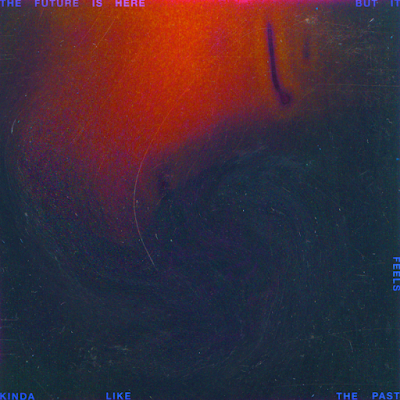
Annie Hamilton - the future is here but it feels kinda like the past


New album by Australian Annie Hamilton out today (May 20th) via PIAS

Annie Hamilton debut studio album is a reach for the mainstream, it feels like the title of the album suggests, a work that is something you may have heard before but is fresh and new.

A dreamy journey that is full of juxtapostions, raw but soft in her vocal delivery, electronic but stripped back, real but fantastical. Hamilton has taken the chance that the pandemic gave to look inwards and has created a work that is universal, escapist and nostalgic.


Opening single 'Providence Portal' is a harbinger for the album, soft melancholic keyboards with her wonderful vocals soon married by a slowly thudding drumbeat underneath. This promises to be an album you want to go back to and listen to again immediately.

Hamilton states, 'It's about the passing of time, how sometimes it flies by and sometimes it drags on forever and we're always looking ahead wanting something more or wallowing in nostalgia', this writer has heard similar platitudes from the artist SOAK, about the impact the pandemic has had on her personally.

'Exist' is the lead single, anthemic but has an internal monologue by the character Hamilton is portraying running through it, as if she is having a conversation with herself.

Working in collaboration with Pete Covington and Jake Webb (Methyl Ethel), Hamilton has created moments of emotion that every listener can relate to. Harking back to the debut album of Ladyhawke, this has little prisms of pop piercing throughout the work. 

Highs of the album include the trippy 'Night Off' and the panoramic 'Labyrinth', in this album that maintains its thread and course throughout the eleven tracks. It is a beautiful joy to listen to this shimmering work from a brand new artist.

Part dream pop and shoegaze, part indie-pop, part electronica, this album has a little bit of something for everyone. If you are fans of Mint Julep or Julia Jacklin you may know what I am talking about.

the future is here but it feels kinda like the past is out now from PIAS Recordings.

Annie Hamilton will headline a show in London on July 31st at The Social, London

My thanks to One Beat PR for the review opportunity.


Monday, 16 May 2022

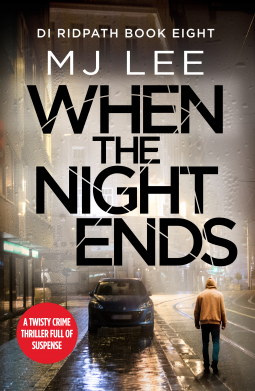
When The Night Ends - MJ Lee


The Eighth book in the DI Ridpath series is out from Canelo Crime on 9th June

Ridpath is back and this time it's murder. Sorry, I was doing that silly voiceover you used to hear at the end of Columbo/Perry Mason episodes.

Yet those famous detectives are renowned for many things, one is their tenacity and never giving up - their desire for justice and truth amongst a world where every obstacle is put in front of you.

Author MJ Lee is a prolific novelist, one who has hit upon a star vehicle in the literary world, a returning hero who has an everyman quality, a stickler to uncover the truth in some plots that are brilliantly written all the while set amidst an ever changing world as government changes and pandemics take a grip of the world.

Ridpath is one of those characters that is a joy to journey with from investigation to investigation; in this tale he has to figure out how a prisoner died alone in his cell after seemingly falling over and hitting his head. The death occurred three years ago, a lot has happened before Ridpath in his role as working for the Coroner re-opens the case. Many have given statements and some have been moved sideways in their career as they deal with their role - from Saunders who has been stuck on desk duty due to being station agent when the death took place. Ridpath's intention to investigate a fellow police officer does not sit well with others in Greater Manchester Police (GMP) as anybody who watches Line of Duty can attest, internal affairs are not favoured in the police force; police should catch criminals not cops. But what if the criminals are cops?


This leads Ridpath to collide as always with his nemesis Turnbull, a man who detests Ridpath and his maverick streak. Yet Lee goes to great lengths to show that Ridpath does play well with others, respected by others especially when in partnership with Emily Parkinson and Sophie, they prefer Ridpath's candour and commitment to proving things right.

The case as always has its twists and turns, with bodies appearing from nowhere, witnesses being either unable to source or turning up cold; the spectre of organised crime looms over the case and that is where Lee is so good at bringing in factual information to his fictional storylines. While reading it you might think some of it is too good to be true and the fact as always is that truth is stranger than fiction.

This reader devoured the book in a few sittings, this is partly due to the knowing the rhythm established so effectively by the author yet this was an enjoyable read throughout - crisp, clean and intelligent crime writing with a real hero at the heart of the action.

When The Night Ends by MJ Lee is out from Canelo Crime from 9th June

My thanks to Canelo for the review opportunity via NetGalley.


Thursday, 14 April 2022

The Empty Room - Brian McGilloway


Brand new thriller from novelist Brian McGilloway out from Little Brown Group

McGilloway returns following last year's excellent BLOOD TIES with another standalone novel, this time focusing on the disappearance of a daughter from her small Northern Irish village, leaving her Mum distraught at the thought she may have been abducted and subsequently murdered.

McGilloway is a writer of high intellect and all his novels are paced so well. In this novel it is written from the point of view of the mother Pandora, we follow her as we find out about the daughter, Ellie, missing and then the investigations by police before news comes to shake her to her core; from the dissolution of her marriage to the loss of friendships. The plot tells us as much about instant coverage of media and calls to mind other abduction scandals that have hit the headlines in this social media age, for example, Shannon Matthews.

Written with clarity and precision, McGilloway does not disappoint again with his new work, at times gut wrenching in the emotional pull of the narrative, the depiction of walking grief for Pandora is so brilliantly handled you can only hope the book reaches a wider audience.

THE EMPTY ROOM is available now on all formats.

Thanks to the author for arranging a review copy.


Monday, 11 April 2022

Dynamite & Davey


New book on two legends of British wrestling, out now from Pitch Publishing

Out in April comes the new book from Steve Bell, via Pitch Publishing, and he tells the story about perhaps the two most influential British wrestlers of all time - Tom Billington and David Smith, universally known as the British Bulldogs.

Bell splits the book into three portions compromising of the Dynamite Kid, the elder of the partnership whose unique brand of gymnastic flair and wrestling prowess toom the world by storm across all countries from the native World of Sport on ITV to the hallowed turf of Japan before settling at Stampede Wrestling in Calgary, Canada. 


The second part shows Davey Boy Smith's equal rise to fame as four years younger than Tom, and then following his fellow Lancastrian to Calgary where they took the territory by storm before coming to the attention of Vincent Kennedy McMahon and the World Wrestling Federation.

The third act of the book deals with the many setbacks suffered by both men, from poverty to rehab to the untimely death of Davey Boy from cardiac arrest in 2002 and Tom's death on his 60th birthday in 2018.

The British Bulldogs arrived in the WWF as a tag-team entity, shortly after the inaugural Wrestlemania in 1985, they were skyrocketed up the rankings as they became firm fan favourites culminating in a successful title claim at Wrestlemania 2 versus the Dream Team (Greg Valentine and Brutus Beefcake).

Yet due to Dynamite's first serious injury, their reign had to be curtailed dropping the belts to the Hart Foundation (Bret Hart and Jim Neidhart) in January 1987, something Dynamite clamoured for and promised despite his serious injury. The attempts to return to the mountain top were seemingly thwarted by backstage politics and the ambition to work with better quality opponent, the Bulldogs wanted more flexibility to work in Japan yet tied to an exclusive WWF contract their movements were restricted and earning power, Tom especially felt hamstrung and displeased. Their eventual departure in late 1988 after an altercation with the Rougeau brothers ended with Jacques knocking several of Tom's teeth out with a sucker punch, this chapter of the book is enlightening to show the high esteem the Bulldogs were held backstage while the Rougeaus were not so.


Bell writes with such clarity from the multitude of sources at his disposal and he is clear to paint the double act as pioneers in the field of tag team wrestling, admired by many with their use of double teaming in their move set from Davey Boy gorilla pressing Dynamite and dropping him onto a prone opponent. 

Cleverly, Bell also writes at length on the long period of development for the Bulldogs and especially Dynamite in Stampede Wrestling and the overall influence of the Hart family upon them from ring psychology to gaining respect from the Canadians as outsiders with Billington practically being adopted as one of their own. Markedly, you are reminded that the Bulldogs firmly belonged in the tradition of kayfabe, that facet of wrestling is real and that storylines should be incorporated into the wrestlers life off screen, for example, you do not talk to heels or interact. Dynamite thought valiantly but sometimes lines can be blurred especially when injuries are suffered and self-prescribing pain relief is used.

For the lay fan, the Bulldogs were fan favourites and Davey Boy's run in 1991-93 as a babyface culminating in headlining Summerslam at Wembley stadium opposite Bret Hart, yet one of the most fascinating aspect of the book is the delving into Dynamite's heel run in Stampede, a facet of their ring personality they wanted to adopt in WWF but to no avail. Yet interestingly, Davey Boy's return to the WWF in 1991 led to him trademarking the British Bulldog name, leaving Dynamite in the cold somewhat and causing friction between the two.

Their influence being smaller in stature to say the behemoths of Hulk Hogan the World Champion always caused a taste of resentment for Dynamite, and when he was out of the loop he would not watch WWF programming. So when Davey Boy offered an olive branch in 1992, one of the first things he told him was that Bret Hart was the champion, Dynamite's response was 'North American champion right', he could not believe Bret was the main man now. It was due to Bret's expert storytelling in the ring that led to him being given the brass ring and the figurehead of the company, something unheard of in the steroid heyday of the company. Following the steroid saga in 1991, WWF needed a new face and Bret was that, yet the Hitman would not be where he was if not for the diligence and work he put in Calgary with Tom Billington. 

Sadly, both of the Bulldogs' lives were tainted by the tar of tragedy as the workload of wrestling day-in, day-out with little respite for the body and mind leads to substance abuse of pain medication both prescription and recreational as well as copious alcohol consumption. Dynamite suffered a back injury that ultimately led to him being confined to a wheelchair, while Davey Boy sustained a cardiac arrest, an autopsy showing an enlarged heart.

For two dynamic and athletic personas, whose ability became forebearers and influential to many wrestlers such as Owen Hart and Chris Benoit (two men's whose tragic early departures are touched upon in the book), it is a shame that their lives were so tragic in their conclusion when their influence and performances brought such joy to many.

The British Bulldogs remain one of the most influential tag teams in wrestling history, duos of today such as Young Bucks and FTR use tandem offense to devastating effect, the Bulldogs and the Hart Foundation were there at the start of it for those teams to stand upon their shoulders.

This is a book this reader can heartily recommend for wrestling fans old and new, a treasure trove of back stage gossip, some stories you know and some you might not, you will come away with a greater understanding of the psyche of a professional wrestler and how quickly the pot of gold that can fall in your lap can so cruelly be taken away just as quickly.

Dynamite and Davey is out now from all book providers here 

My thanks to the author Steve Bell for the opportunity to preview this book for an honest review.