Showing posts with label Q&A. Show all posts

Tuesday, 7 April 2020

Brian McGilloway Q&A


The Last Crossing

Last week I reviewed the new release from Brian McGilloway, the New York Times Bestselling author, with his new thriller The Last Crossing. A stand alone novel that looks at how actions can have ever lasting consequences.

After excitedly reading the book, the author granted me the pleasure of an interview which I can share with you now.


What was the genesis of The Last Crossing following your series of books, why a standalone novel now?


With each book, I simply write the story I want to tell. Usually, that fits in to one of the two series, but with this book it didn’t. I liked the idea of looking at 3 ordinary people who do something terrible for what they all believe to be justified reasons and who have to face that again 30 years later. I was interested in how each would have changed, how what they had done would have changed them, and the manner in which each had attempted or failed to reconcile themselves with what they had done. From the beginning, I knew this wasn’t going to be a police procedural, nor did I want it to be.


How easy was it to juggle the two timelines was it like writing two stories at same time or separately then edited?


No, I wrote one straight into the next using concatenation where the final phrase of one chapter opens the next. It was to create continuity between past and present and also to link the two more closely. It’s a technique used in a medieval poem called The Pearl which I’ve tried to use a few times before – most obviously in Little Girl Lost where I had two narratives connected in this way in the first draft. After hitting a block about three quarters of the way through, I realised it wasn’t working for that book and removed both it and the entire second narrative. I’ve been wanting to use it since and thankfully, in this book, the technique suited the structure and theme more obviously and finally worked for me. I found using it helped create impetus in the actual writing of the novel.


You are from Londonderry, the Troubles was more a way of life than a snapshot, was it easy to write about from memory having been born there?


I love Derry and am very proud to have grown up there. It suffered a lot through the years of violence to the extent that its personality and sense of identity have been changed by it in some ways. That reflects the way in which all of us who grew up through it were similarly changed by it in ways – some more obviously than others. The book, I hope, reflects the various gradations of impact the violence had on the various characters.


The story is about looking back at life's regrets do you have any?


I suppose we all have moments of wondering ‘what if?’ – the Road Not Taken moments. With the story between Tony and Karen, I’d say the influence of Tom Waits’ Martha is there – someone looking back on how their life’s course has gone in a completely different course from the one they’d expected and how we react when faced with that realisation as we meet someone we once loved. Larkin’s Dockery and Son deals with a similar moment of terrible clarity. My own regrets tend to focus on friendships lost more than choices not made – we all make our choices and live with them after all. I’m very lucky and blessed in so many ways, it would be churlish to regret.


What are your hopes for the book? 


It’s a book of which I’m quite protective. I just hope it finds any kind of readership and finds kindred souls to whom it speaks. It’s a challenge to get people reading Northern Irish fiction, so finding someone who’d not ordinarily have read fiction from here would be a bonus!


Did the speed and economy of the book come from editing or down to the jumping back and forth of timelines to induce this whip crack nature of looking back and forward ?


I suspect it’s a reflection of how I write. The book was written very quickly once I got started – and benefitted from the support of a number of friends and crime writing peers who read it and encouraged me along the way. I tend to write in short bursts – maybe an hour or so per day – and aim to keep things moving. I get bored with slow narratives myself, if I’m honest.


Do you miss teaching full time?


No – I still teach full time. I took a sabbatical for two years when my kids were younger to help look after them but have been back teaching for 5 years now. I still love it – though it does make writing a book a year almost impossible for me at least, thus the longer break between books. The characterisation of the younger character in the novel who drives the other three around was informed by great advice from a group of my former students who’ve all kept in contact with each other and me. It’s a privilege to introduce young minds to great literature for the first time and to spend your days talking about books you love.


What advice would you give to any would be authors?


Trust your instincts. Read widely, but don’t try to guess the market or write for the market – instead produce a work of which you are proud and can stand over and it’ll find a readership eventually. Writing is about connecting with a reader – the size of the readership will vary from book to book, but the essential connection stays the same and that’s the important bit.


How have you coped with self-isolation?


We’ve four kids so with six of us in the house altogether it’s been pretty busy. Plus I’m still teaching remotely, so the days pass quickly enough. I’ve great plans to get another book written and to read loads: I’m chipping away slowly at both…


My thanks to Dome Press for the review opportunity.

Thursday, 2 April 2020

Andy De Emmony Q&A


Director Andy de Emmony
My Q&A with director, Andy De Emmony, back in 2011. De Emmony is directing now THE NEST on BBC One starring Martin Compston and Sophie Rundle.
1. What firstly drew you to the film?

 I loved 'East is East', and found it quite daunting but on this occasion you get a more three dimensional character of George and it serves as a bookend to the first film. Ayub wanted to complete after the first film and it felt fresh even though it is the same family but on a different journey.

2. What do you remember of the original, 'East is East'?

I remember being drawn to the family aspect, and that generational gap within a family and where do you fit in.  But also the use of comedy as a release valve for the emotion presnt.

3. What was your working relationship with Ayub Khan Din?

We had a very good working relationship with Ayub, they came to me to collaborate after Damien O'Donnell did not chose to be involved.  And in spite of the autobiographical content he did not see it as a biopic, and instead lets just make the film work which gave us a lot of freedom.

4. What were the pros and cons of shooting in a foreign country?

 I found it quite daunting to work in India, but a pro was the manpower which allowed you flexibility (The house built by George in the film was built in 5 days by this manpower) and the long days allowed us to shoot longer in the days in comparison to England.  A pro would be the language barrier, as about 20% of the script is in Punjab and in the end it came down to reading looks of actors, and even some of the actors who spoke Punjab in the film had to have voice coaches for certain scenes. 

5.What happened to Jimi Mistry's role? And were you impressed by the debutant Aqib Khan

Jimi Mistry's role was written bigger, but the focus was on Sajid the youngest, his story and journey.  And Aqib was brilliant, he had a temperament that fitted the character and he was helped by the components and good actors we put around him.

6. Is there going to be a third film?

The producer, Leslee Udwin, has always seen the film as a possible trilogy and there is a proposal in place if people connect to this film like they did 'East is East'

7. How do you react to criticism of the film being 'quaint' or 'too much like a sitcom'.

I think when you make a film about a family it is hard to contain it and I hope the audience can reconnect and new audiences connect with these characters and laugh with them.  I felt if we had made a sweeping political statement about Pakistan, the family story and emotional bond would have been lost in the mix.

8. What have you been up to recently and what is next?

I have been shooting commericals in Australia, but we are waiting for funding [like most people in Britain] for a film written by William Boyd ('Chaplin', 'Any Human Heart') called 'The Galapagos Affair', based on John Treherne's novel, which we hope we start shooting soon.

Friday, 27 March 2020

FACS Interview


FACS release their third album on 27th March from Trouble in Mind records, I had the pleasure of interviewing Brian Case, guitarist of the band and a Chicago native. Read my review of VOID MOMENTS here

  • What is the history of FACS and what is he MO of the group?

FACS formed out of the ashes of Disappears, no real trajectory or mission in mind just wanted to continue making music in relatively the same direction we were headed with Disappears. In that regard, there was no real MO other than letting things play out as they happen and not forcing any ideas into a certain box. That said, we like playing with limitations and having self-imposed constraints.

  • How did the three of you come together?

We've all been friends for almost 20 years at this point, mostly through our various bands playing together over the years and community spaces like Empty Bottle and the Rainbo Club. We've all been working musicians that whole time so it was easy to connect and use our shared interests/experiences to make something together.

  • How long was the recording process for this album?


Three days to track, I think it was about three days mixing as well but we weren't there for that part.

  • Do you go in with an idea of what you want to record or does it come together when you start in the studio?

We try and leave room for both. It's nice to go in and get warmed up with what you know, ideas with some structure or familiarity, but we like to leave as much time to experiment and get uncomfortable or out of our zone. They're equally important in our process.

  • What did you listen to when you were growing up?

It was just what I had access to, my parent's record collection, mostly radio. By the time I was a teenager I was almost exclusively listening to whatever Dischord Records was releasing, mixtapes by friends, The Smiths, Sonic Youth.

  • What do you listen to nowadays?

It's all over the place, I'm as curious as ever but I'm still as much influenced by my initial sources as I ever was. Today I listened to Wayne Phoenix, Alternative TV, Shabaka and the Ancestors, The Native Cats, Alabaster Deplume, and Fugazi (so far).

  • What is your hope for the album now the power of touring has been restricted?

I just want people to listen to it, hopefully in one sitting with no distractions. We don't really have an agenda other than making music and challenging what we think it is we do. Even touring, which we love, is not the priority, it's moving forward and making something unexpected or unknown.

  • How do you see the music industry changing due to Covid-19? Are you worried as recording artists?

I'm hoping C-19 changes everything, the whole world. We all need to wake up and look at what we do day to day and figure out how to make things sustainable for the future. In this country there's a lot that needs to be broken down and rebuilt, the music industry included. I hope this forced self isolation is the first step in people looking outside of their own immediate field of vision for a way to move the world forward. We're the virus.

  • Chicago Deep Pan or New York slice?

Chicago Deep Dish is trash, disgusting. New York slice is supreme. That said I will never live anywhere else, I firmly believe Chicago is the best city in the world, NYC being a close second.

Go seek out merch and material from FACS bandcamp page here.
Void Moments is out now on all formats

My thanks as always to One Beat PR for the review opportunity.

Thursday, 17 May 2018

Rose Gold Interview with David Barker


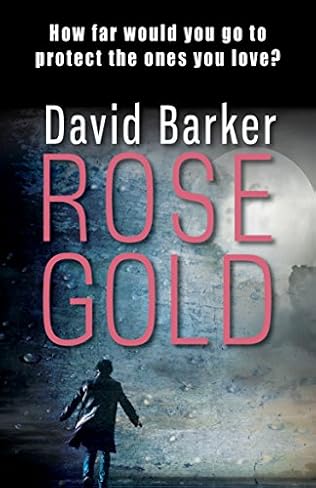
book cover of Rose Gold

David Barker returns with the sequel to his hit novel, Blue Gold, featuring the returning characters of Sim Atkins. This is Rose Gold, I had the pleasure of being to ask Mr. Barker some questions for the #blogtour of Rose Gold.


You have come to writing later in your life, how did this come about?

I’ve always enjoyed writing, even while I was working as an economist. It’s a challenge to convey complex information in a fashion that is succinct, easy to understand and interesting. I had thought about a change in career towards financial journalism but more recently decided that I wanted to stretch myself and try my hand at creative writing.

What was the gestation of Blue Gold and Sim Atkins?

In my previous role I did a lot of research into commodity markets, and one recurring theme was the notion that fresh water would become a precious resource over the next 20 years. I realised that a world war for water would be a great setting for a novel and suddenly I knew what the opening and closing scenes would be for a story.

How long did the first book take to complete, how many drafts?

From that very first idea to the published book hitting shelves, it was about seven years. Talking to other authors I have come to realise this is not uncommon for first novels, especially because most of us write our debuts while working full time. And I think it was the ninth draft that went to print. The biggest changes happened between drafts one and two, which occurred after I had attended the Faber Academy novel-writing course.


What is your normal working day like, do you have a daily word target?

There are certain times of the year when I am just trying to think of new ideas for sticking points in the current project or for completely new future projects. At other times, I am focusing on the promotional side of things. But when I am in first-draft mode, then yes, I try to aim for 2000 words a day. I often get that done by lunchtime (I’m an early riser), so will tend to spend the afternoon reading novels. As Stephen King says, an author should split their time evenly between reading and writing.


What did you like to read growing up, there is a lot of Fleming in your work?

Funnily enough, I did not read a lot of his novels. I loved Douglas Adams, both his Hitch Hiker books and the Dirk Gently series. I read quite a bit of fantasy: Stephen Donaldson and, of course, Tolkien. And I enjoyed Frederick Forsyth’s global thrillers.

What do you read now?

An eclectic mix. I appear on a monthly Radio Berkshire show called Radio Reads, and we review a new book that can be chosen from any genre. I attend a local book club that focuses on Sci-Fi and Fantasy, so that’s my second book of the month. I normally find time for a third book each month, and that varies a lot. I get invited to quite a few book launches so often pick-up the latest best-seller then, or I’ll try to read something from one of my fellow Urbane authors.

Can you talk about the relationship with Urbane Publications?

They are a fantastic independent publisher with big ambitions. They are very supportive, without being proscriptive about what or how you should tackle your latest project. And one thing that really helps their books stand out is the beautiful design detail (in the physical book). For example, in my latest book Rose Gold, there is a double-page spread at the start of each of the three parts, showing a black background and a moon at a different stage of its cycle. In my first novel, Blue Gold, there were faint water droplets in the background of every page.

You have one more book in the trilogy to write, can you give anything away?

It’s called White Gold, and it should be out in May 2019. Something happens to Sim in Rose Gold that becomes the main driving force of his story arc in the final book (no spoiler alerts). But I also wanted to give more time and space to his old partner, Freda Brightwell, who was a big hit with female readers from book one, so you’ll see a lot more of her. And of course, the baddies are bigger and badder than ever!

What will you write after the trilogy is complete?

I’m not entirely sure yet. I have a couple of ideas that are rattling around inside my brain, but both are completely different to the Gaia trilogy.

Any advice for would be scribes?

Keep going – it’s a long slog to complete a novel, and even once it’s finished it’s a tough road to publication. Don’t be put off by the knock-backs or stumbling points. And don’t forget to write with passion – if you try merely to emulate some book trend that’s currently successful, chances are your own voice will disappear along with the fire inside your belly.
Rose Gold is out from Urbane Publications now on all formats

Monday, 10 July 2017

Interview with David Barnett, author of 'Calling Major Tom'

IMG_1168
Author David Barnett of 'Calling Major Tom'


Calling Major Tom is one of the most highly rated and beloved books of 2017, following its paperback publication from Orion Publishing on Thursday 29th June, NextToTheAisle was granted an interview with the book's author, David Barnett.


- What was the genesis of the book?
Well, I’ve mentioned this several times before, but the main inspiration came from a true-life event when the British astronaut Tim Peake made a wrong-number call to a grandmother in the UK at Christmas 2015, which amused me and made me wonder what would have happened if that conversation had continued, which is the basis for Calling Major Tom. But I suppose the real-life story behind that is the fact I was made redundant from my job in summer 2015 and embarked on a freelance journalism career. When the idea for the book came to me and I started discussions with Orion, who were setting up their new imprint Trapeze, it meant I was in a good position to devote the time to writing the book.

Image result for calling major tom david barnett


- Where did the idea for a fish out of water come about, by plot, by character?
I knew Thomas was going to be incredibly grumpy, and I knew that he needed to be away from everyone else, so that was the starting point. But I also knew that readers tend not to take to a character who’s curmudgeonly for no reason, so Thomas had to have had a life that had led him to being like that, and unfolding the reasons for his grumpiness formed a big part of writing the novel.

- I first heard of your book, a few months after David Bowie's passing, was this an unlikely accident or did you re-edit due to his passing?
No, it all came about at the same time, really. The Tim Peake incident happened just a couple of weeks before Bowie’s death, and when the latter happened - like Thomas in the book, I awoke on my 46th birthday to hear the news - it all seems to fit seamlessly together and helped to formulate Thomas’s character. He’s grumpy but he’s not a monster - he has excellent taste in music, and Bowie’s death, along with some more personal bad news, is one of the motivating factors that propels him into the position where he becomes the first human to make a solo mission to Mars.

Image result for david bowie
David Bowie, the original Major Tom

- How long did the whole process take?
It was very quick, really. Because the idea consolidated itself very quickly I was off and writing at the beginning of 2016 and I think I’d delivered the finished manuscript by the end of July, with obviously some copy edits after that. But the ebook was released in January 2017, just shy of a year that I’d first begun conversations with Sam Eades at Trapeze about the idea.
- You have a good sense of character and dialogue of differing ages of characters, how did you capture that?
I think as a writer you have to be interested in all kinds of people, and observe them, and take notice of them. We usually all have family, friends, work colleagues, neighbours etc of varying ages, social classes, ethnicities etc etc and it’s just a case of being interested in people. All the best fiction is about people, and a good writer really needs to be able to get under the skin of all kinds of people to know what makes them tick.

- David Bowie hangs over the book and provides a soundtrack as you read, what other influences did you have?
Music was important - in fact, I recently put together a playlist of most of the music referenced in the novel (including Chris De Burgh’s Lady In Red… that was from another character, Thomas would be appalled). You can find it here: https://davidbarnett.wordpress.com/2017/06/26/calling-major-tom-the-playlist/. But I think I wanted the novel to feel as contemporary as possible, so there are references to Brexit etc. But one of the biggest influences was my hometown of Wigan. That’s where the Ormerod family who Thomas makes contact with live, and I wanted to try to portray a working class family as ordinary, normal people… so much of contemporary fiction seems to focus on middle class characters, I wanted to show the lives of people like those I grew up around.

Image result for tim peake
Tim Peake's accidental phone-call supplied inspiration
  
- How pleased have you been by the response to the book?
Well, it’s early days yet, as the paperback only came out at the end of June, but the response to the ebook was phenomenal. I was amazed at how much of a chord the story and characters seemed to strike within a wide range of people, and there were some utterly fantastic reviews (such as yours!) from book bloggers, who I see as an absolutely vital part of the book culture for getting the word out about books to readers.
  
- You come from a journalism background, do you find the key to avoid block is to keep writing in any format?
Yes, the day job is still freelance journalism, so any given day will find me writing features for the national newspapers and magazines, working on fiction, doing a bit of lecturing at a local university, so I’m always writing, and while the writing isn’t always fiction, it’s like exercise. If you go to the gym you might do cardio or work different muscle groups, but it all contributes to overall physical fitness. It’s the same with writing. Journalism and fiction use different writing muscles, but ultimately it’s all writing, and that’s what’s important - to keep writing.

- What are you working on now?
I’m working on a new novel for Trapeze, which is called The Lonely Hearts Cinema Club, and which will be published by Trapeze in summer 2018. It’s set in a quirky rest home on the Lancashire coast, which takes in students to fill empty rooms and make a bit of money, and is a bit of a mystery, a bit of an inter-generational clash, a bit of a story about loneliness and growing up… or not.


Calling Major Tom is out now on Paperback from Orion Books
Follow David Barnett on his website www.barnettmedia.co.uk/ or on Twitter @davidmbarnett